

Maddy summaryHR 4965, the Kimberly Vaughan Firearm Safe Storage Act, requires the Attorney General to create voluntary best practices for safe firearm storage in homes, businesses, vehicles, and other locations within 180 days of enactment, with public input. Starting January 1, 2025, firearm manufacturers must include a "SAFE STORAGE SAVES LIVES" notice with each new handgun, rifle, or shotgun, directing buyers to the public website with these guidelines. The bill also establishes a $10 million annual grant program for states and tribes to fund public programs distributing safe firearm storage devices (like locked containers) and requires grantees to use at least 75% of funds for these programs. It does not mandate storage for individuals but provides resources and information to promote safer practices.
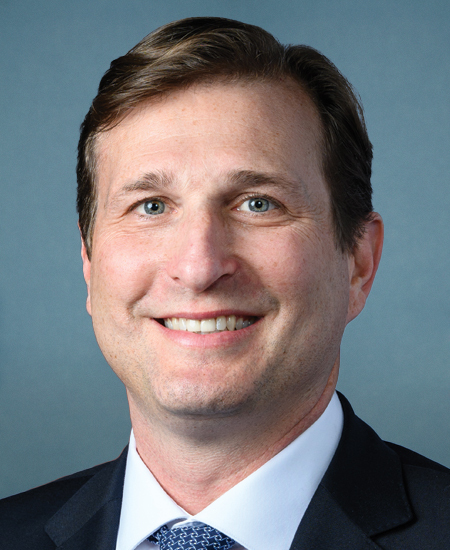
Rep. Daniel S. Goldman
Sponsored bills
Maddy summaryThis bill establishes new federal requirements for employers to prevent heat-related illness and injury among workers. It mandates that employers provide safe work environments by implementing specific measures, including access to cool water, scheduled rest breaks in shaded areas, employer-paid cooling equipment, and training for employees and supervisors on recognizing heat illness symptoms. The Secretary of Labor must create these standards within one year, requiring employers in high-heat occupations (like construction, agriculture, and outdoor labor) to adopt engineering controls, administrative schedules, and health protocols. Key provisions include ensuring hydration, rest, and language-accessible training, while preserving existing safety protections and allowing for updates as scientific evidence evolves.
Nonrestrictive Offshore Wind Act or the NOW Act This bill repeals certain requirements that the Department of the Interior must meet before issuing a lease for offshore wind development. Under the Inflation Reduction Act of 2022, Interior may not issue a lease unless (1) an offshore oil and gas lease sale has been held in the year prior to issuing the lease, and (2) Interior offers a specified minimum acreage for offshore lease sales in the previous year. The bill repeals those requirements.
Comprehensive Legislation for Expanding and Advancing Nonrestrictive Energy Act or the CLEAN Energy Act This bill repeals certain requirements that the Department of the Interior must meet before issuing an onshore wind or solar right-of-way for wind or solar energy development on federal land. Under the Inflation Reduction Act of 2022, Interior may not issue a right-of-way for such development unless (1) an onshore oil and gas lease sale has been held in the 120 days prior to issuing the right-of-way, and (2) Interior offers a specified minimum acreage for oil and gas lease sales in the previous year. The bill repeals those requirements.
Maddy summaryThis bill clarifies legal pathways for victims of terrorism to collect judgments against foreign states that sponsor attacks. It removes barriers by updating references in federal law to ensure victims can pursue claims under Section 2333(d)(1) without being blocked by prior legal interpretations. The bill also expands the definition of "national of the United States" to include U.S.-organized entities for these cases, making it easier for more victims to qualify. These changes apply to all pending or future lawsuits filed after the bill's enactment.
Maddy summaryHR 4900, the Fair College Admissions for Students Act, bans colleges receiving federal financial aid from favoring applicants based on family connections to donors or alumni. Specifically, it amends the Higher Education Act to prohibit institutions from giving preferential treatment in admissions to students whose parents or relatives donated money to the school or are alumni. This applies to all colleges participating in federal student aid programs under the Higher Education Act. The rule takes effect for the second award year starting after the bill's enactment date.
Maddy summaryHR 1776, the End Tuberculosis Now Act of 2023, would amend U.S. foreign assistance law to strengthen global tuberculosis (TB) programs. The bill requires U.S. assistance to align with the World Health Organization's End TB Strategy, aiming to reduce TB deaths by 95% and incidence by 90% by 2035. It mandates annual reporting on TB diagnosis and treatment progress, prioritizes research for new diagnostics and treatments, and emphasizes integrating TB services into primary health care. The legislation affects U.S. government agencies, global health partners, and countries with high TB burdens, particularly focusing on low- and middle-income nations.
Maddy summaryHR 4854, the Fair Legal Access Grants Act, provides federal grants to states, localities, and tribes to help people seeking extreme risk protection orders (ERPOs) access legal resources. It directly affects individuals eligible to petition for ERPOs - court orders temporarily removing firearms from people deemed a risk to themselves or others - and the legal aid organizations supporting them. The bill authorizes $50 million annually (2025-2031) for grants covering legal counsel, multilingual resources, training for legal/medical staff, and community legal aid subgrants. It specifically ensures states can fund services to help petitioners navigate ERPO processes without federal court interference, while clarifying that federal courts cannot review state ERPO cases unless a false petition was filed.
Maddy summaryHR 4852, the "IDs for an Inclusive Democracy Act," requires the Social Security Administration to create and issue free federal identification cards within three years. These cards would be accepted like state driver's licenses for most purposes, including voting and accessing services, and must include a gender option for "X" (unspecified/other identity) alongside male and female. The bill mandates the U.S. Postal Service to handle applications through existing passport-like processes, with free photography and mail-in options, and establishes a Task Force to develop security features and accessibility guidelines. It also sets special validity rules: cards for minors expire at age 18, while those for seniors 65+ remain valid indefinitely after their 10-year term.
Maddy summaryHR 4889, the Raise the Wage Act of 2023, would gradually increase the federal minimum wage for most workers to $15.50 per hour by 2027, with specific annual targets: $9.50 starting in 2023, rising to $11.00 after one year, $12.50 after two years, and $15.50 after four years. It would also phase out the separate lower minimum wage for tipped employees (starting at $6.00/hour) by aligning their pay with the regular minimum wage by 2028, while requiring employers to let workers keep all tips. The bill includes similar phased increases for workers under 20 and transitions toward fairer wages for workers with disabilities under special certificates, which would sunset after 2028. Future annual increases after 2028 would tie the minimum wage to the median hourly wage of all workers.