

Maddy summaryHRES 955 is a resolution commending Taiwan for its democratic election history and supporting Taiwan's democratic institutions. It recognizes Taiwan's transition to democracy since the late 1980s, including 7 presidential and 9 legislative elections held since then, all deemed free and fair. The resolution specifically expresses support for Taiwan's upcoming January 13, 2024, elections and condemns interference by the Chinese Communist Party. It affirms U.S. commitment to a strong partnership with Taiwan across multiple domains and supports Taiwan's self-defense and liberty. As a procedural resolution, it does not create new law but formally expresses congressional support for Taiwan's democratic development.
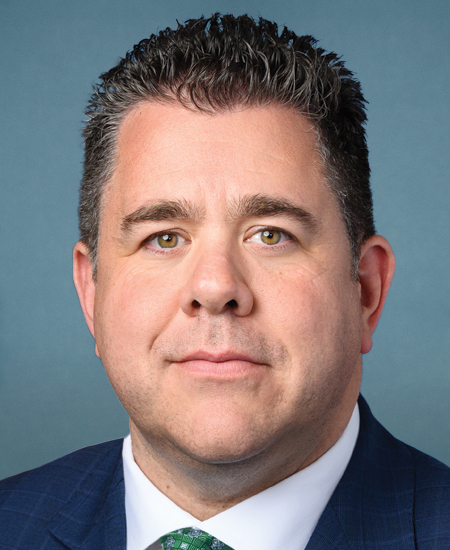
Rep. Nick LaLota
Sponsored bills
Maddy summaryThe Affordable Connectivity Program Extension Act of 2024 allocates $7 billion in funding for the Affordable Connectivity Program (ACP) during fiscal year 2024. The ACP provides subsidies to low-income households to help cover the cost of internet service and connected devices like laptops or tablets. This funding ensures the program can continue supporting eligible households throughout the year, with the money remaining available until fully spent. The bill extends existing program funding without changing eligibility criteria or service requirements.
Maddy summaryThis bill designates the U.S. Postal Service facility at 86 Main Street in Haverstraw, New York, as the "Paul Piperato Post Office Building." It updates all official references in federal law, maps, and documents to reflect this new name. The bill does not change postal services, funding, or affect any specific group of people; it solely modifies the facility's official designation. This is a routine naming resolution with no substantive policy provisions.
Maddy summaryThis House resolution (HRES 933) symbolically opposes New York’s Clean Slate Act, which automatically seals certain criminal records (misdemeanors after 3 years, some felonies after 8 years) for eligible individuals. It argues the law would prevent employers from accessing background checks during hiring, though the resolution itself has no legal effect. The resolution urges New York to prioritize crime prevention and public safety over this policy, citing concerns about employer access and recent crime statistics. (Note: This is a non-binding expression of opinion, not a legislative change.)
Maddy summaryThis bill reauthorizes and extends funding for programs addressing substance use disorders and opioid addiction, including residential treatment for pregnant and postpartum women, first responder training, and community recovery initiatives. It increases funding levels for these programs, adds xylazine to Schedule III of controlled substances, and requires a study on remote monitoring for patients prescribed opioids. The bill also expands Medicaid coverage requirements for medication-assisted treatment and mandates reporting on mental health condition data alongside substance use disorder data, directly affecting individuals with substance use disorders, healthcare providers, and state and tribal governments.
Maddy summaryThis bill extends the authorization period for the Department of Homeland Security's Countering Weapons of Mass Destruction Office from 5 to 7 years. It does not change the office's core mission but adds two new requirements: (1) a 180-day report on employee engagement plans, and (2) a one-year review by the Comptroller General on the office's program prioritization and coordination. The extension specifically excludes sections related to the Chief Medical Officer and medical countermeasures programs (sections 1931-1932). The bill primarily affects the DHS office's operational timeline and internal accountability, with no new policy changes for external stakeholders.
Maddy summaryThis bill designates the United States Postal Service facility at 298 Route 292 in Holmes, New York, as the "Sheriff Adrian 'Butch' Anderson Post Office Building." It updates all federal references (including laws, maps, and documents) to use this new name for the location. The bill has no policy changes or financial impact - it solely commemorates Sheriff Adrian "Butch" Anderson through a building designation.
Maddy summaryThe Saving Vet Halls Act of 2023 authorizes the Department of Veterans Affairs to provide grants to eligible veterans service organizations (like local VFW or American Legion chapters) for repairing or upgrading existing facilities or technology at their locations. Organizations must submit a detailed plan for their proposed improvements and cannot use funds for new construction. Grants are capped at $75,000 per organization annually, and recipients cannot receive another grant for five consecutive fiscal years. The bill allocates $10 million in funding to support these facility and technology upgrades for veterans service organizations nationwide.
Maddy summaryThe Mobile Post Office Relief Act requires the U.S. Postal Service to deploy mobile retail units in areas where a postal retail facility temporarily closes and meets specific criteria (such as being more than half a mile from the nearest facility and not having provided retail services in the past 60 days). Within three business days of the closure (or 30 days for existing closures), the Postal Service must provide essential services like selling packaging materials, handling post office box mail, and processing address changes via mobile vehicles. This applies to residents in the geographic area served by the temporarily closed facility until the facility resumes operations. The bill ensures continued access to basic postal services during closures that meet its defined conditions.
Maddy summaryHR 4666 requires the Small Business Administration's Inspector General to submit quarterly reports to Congress on fraud related to specific COVID-19 loans. These reports must detail the number and total value of covered loans, new fraud cases, resolved cases, and fraud types. Covered loans include those under SBA's 7(a) or 7(b) programs during the CARES Act-defined pandemic period. The reporting requirement ends two years after the bill's enactment and uses existing SBA funding without new appropriations.