

Maddy summaryThis bill amends the Federal Employees' Compensation Act to include physician assistants and nurse practitioners as eligible providers for injured federal workers. It defines "other eligible provider" as a nurse practitioner or physician assistant within their state-authorized scope of practice. The law updates key sections to replace "physician" with "physician or other eligible provider" for treatment, certification, and claim processes. The Secretary must finalize implementing regulations within six months of enactment.
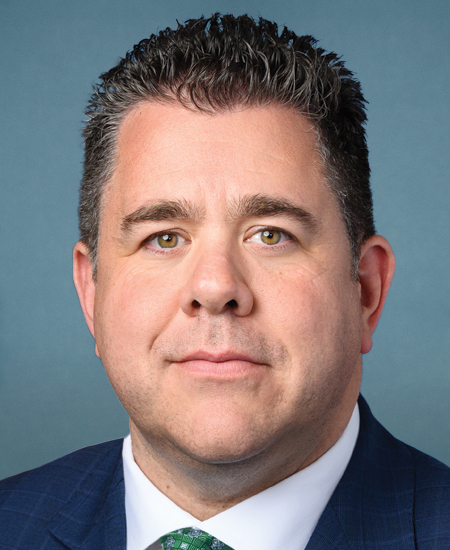
Rep. Nick LaLota
Sponsored bills
Maddy summaryHRES 1317 designates the week of June 24-July 3, 2024, as "National Tire Safety Week" to promote public education on proper tire maintenance, such as checking tire pressure and tread depth. It encourages American motorists to learn about these practices, which can prevent accidents by reducing tire-related failures like underinflation or worn treads. The resolution expresses congressional support for this observance but does not create new laws or regulations. It aligns with existing tire safety recommendations from the U.S. Tire Manufacturers Association.
Maddy summaryHRES 901 is a U.S. House resolution expressing support for democracy and human rights in Pakistan. It calls on the U.S. President and Secretary of State to collaborate with Pakistan to uphold democratic processes, human rights, and the rule of law. The resolution urges Pakistan to protect freedoms of speech, assembly, and press, and to avoid arbitrary detention or suppression of political participation. It also condemns efforts to undermine Pakistan's electoral or judicial systems, including harassment of citizens during protests or interference with elections.
Maddy summaryHR 5012 (SHINE for Autumn Act of 2023) authorizes federal funding to improve stillbirth research and data collection. It provides $5 million annually for states to collect standardized stillbirth data (including risk factors) while protecting privacy, $1 million annually for developing public educational materials and data collection guidelines, and $3 million annually for medical fellowships training pathologists in perinatal autopsy and stillbirth research. The bill directly affects state health departments, medical professionals (like obstetricians and pathologists), and families who experience stillbirth by improving data quality for future research. It requires federal reports on guidelines and program effectiveness within five years but does not provide direct medical care or financial assistance to families.
Maddy summaryHR 537 authorizes a Congressional Gold Medal to honor 60 diplomats who saved Jewish lives during the Holocaust by issuing visas and passports against their governments' orders, risking expulsion and personal danger. The medal will be presented to the next of kin of these diplomats, alongside representatives from their home countries, and permanently displayed at the United States Holocaust Memorial Museum. The bill also permits the sale of bronze duplicates to cover production costs, with proceeds going to the U.S. Mint. This legislation recognizes the diplomats' humanitarian actions without creating new government programs or altering existing laws.
Maddy summaryHRES 965 is a non-binding resolution calling for the immediate release of Ryan Corbett, a U.S. citizen wrongfully detained by the Taliban in Afghanistan since August 2022. It directly affects Corbett (held in poor conditions without charges) and other Americans detained by the Taliban. The resolution demands the Taliban release Corbett unconditionally, urges respect for his human rights, commends Qatar’s role as U.S. protecting power, and condemns the Taliban’s practice of detaining U.S. citizens. It does not create new law but formally expresses congressional support for Corbett and other wrongfully detained Americans.
Maddy summaryThe SPEED through Screening Act requires the Transportation Security Administration (TSA) to develop strategies within one year to reduce physical patdowns and the need for passengers to remove items (like shoes, liquids, medical devices, or religious headwear) during airport security screening, without compromising security. Key provisions include studying next-generation technologies (such as non-contact scanning), assessing feasibility for allowing more liquids on planes, and collecting anonymized screening data to track progress. The bill directly affects all air travelers, particularly those with disabilities, medical devices, or religious items, by aiming to make security screening less invasive. It mandates specific actions but does not change current security rules, instead focusing on research and data collection to inform future improvements.
Maddy summaryHRES 1215 is a non-binding resolution calling on elected officials, civil society leaders, and educators to promote public awareness of Jewish American contributions. It urges these groups to condemn antisemitism, educate communities about Jewish Americans' historical and cultural impacts (including in science, civil rights, and arts), and support safety measures for Jewish communities. The resolution cites a 140% rise in antisemitic incidents in 2023 as context for its call to action. It does not create new laws or funding but seeks to elevate recognition of Jewish American heritage through education and public engagement. The resolution is directed at officials and leaders to foster broader understanding, not at specific policy changes.
Maddy summaryThis bill establishes the Aviation Security Checkpoint Technology Fund (ASCT Fund) within the Department of Homeland Security. It directs $250 million annually from aviation security fees (for fiscal years 2025-2029) to fund TSA's procurement, deployment, and maintenance of new security checkpoint technology at airports. The TSA Administrator must provide regular reports to Congress on how these funds are used for technology deployment. The bill also repeals a previous section of aviation security law that previously governed these fees. The fund directly affects TSA operations and airport security technology upgrades.
Maddy summaryThe Alzheimer’s Accountability and Investment Act (HR 620) requires the National Institutes of Health (NIH) Director to annually submit a budget estimate for Alzheimer’s-related initiatives - including personnel needs - directly to the President for review and then to Congress. This budget must be prepared after public comment and submitted without changes by the Secretary of Health and Human Services or the Advisory Council. The bill directly affects the NIH’s budget reporting process for Alzheimer’s research and programs, mandating transparency in how funds are allocated. It does not change funding levels but establishes a specific annual reporting mechanism to improve accountability.