

Maddy summaryHR 8312, the Combat Veterans Pre-Enrollment Act of 2024, creates a 3-year pilot program allowing eligible combat veterans to pre-enroll in the VA healthcare system before separating from active duty. It directly affects service members who would qualify for VA healthcare upon separation and meet specific combat-related service criteria under existing law. The bill establishes a mechanism during the 180 days before separation, requiring coordination between VA, Defense, and Homeland Security to facilitate pre-enrollment. The program includes reporting requirements for participation rates, demographics, and a GAO evaluation of effectiveness after the pilot ends in 2027.
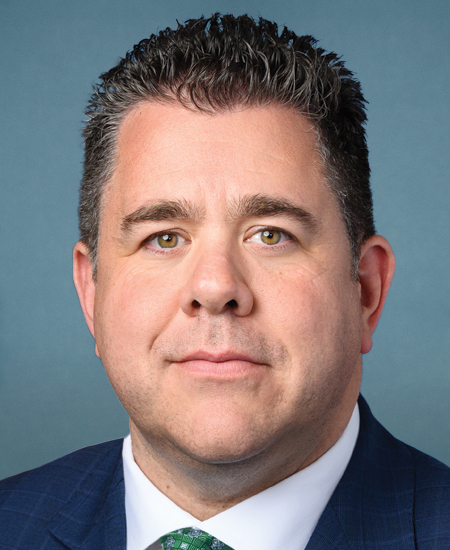
Rep. Nick LaLota
Sponsored bills
Maddy summaryThe HOPE Act of 2024 would establish HOPE Accounts, tax-advantaged savings accounts for paying qualified medical expenses. These accounts would allow individuals to save for medical costs with tax-free growth and distributions, with contribution limits of up to $4,000 per month for self-only coverage or $8,000 for family coverage. To qualify, individuals must have minimum essential health coverage and cannot have other health savings accounts like HSAs or FSAs. Contributions are generally not deductible but may be excluded from gross income for lower-income individuals, and distributions for qualified medical expenses would be tax-free. The bill also includes rules for employer contributions and coordination with existing health savings mechanisms.
Maddy summaryHR 9374, the Stand with Israel Act, prohibits U.S. federal funds from being used to support the United Nations or its entities if they restrict Israel's full participation as a member state. The bill specifically blocks funding for any UN body that expels, downgrades, or suspends Israel's membership or limits its ability to participate equally with other nations. This affects U.S. government contributions to the UN, requiring the Department of State and other agencies to halt funding for such UN actions. The key mechanism is a new provision in the UN Participation Act that mandates this funding restriction whenever Israel's UN participation is impaired.
Maddy summaryThe Save our Safety-Net Hospitals Act of 2024 modifies Medicaid payment rules to better support hospitals serving large numbers of low-income patients. It removes a restriction that previously prevented some safety-net hospitals from receiving full reimbursement for care provided to these patients. The bill allows these hospitals to count payments from Medicare and other programs when calculating their Medicaid reimbursement, ensuring they are fully compensated for services. This change applies to fiscal years beginning October 1, 2021, and prevents states from recouping past payments made under the old rules.
Maddy summaryThe Safer Skies Act of 2024 requires certain smaller airlines to adopt the federal security screening program currently used by larger carriers. Specifically, it mandates that airlines operating passenger planes with more than 9 seats (that do not use TSA checkpoints, offer individual seats in advance with public schedules) must comply with the Aircraft Operator Standard Security Program within 360 days of enactment. The Transportation Security Administration must revise its rules to enforce this new requirement. This directly affects regional carriers that currently skip standard airport security screenings but serve passengers under these specific operational conditions. The bill extends existing security standards to cover these previously exempt airlines without creating new security protocols.
Maddy summaryHR 9274, the SHAWL Act, establishes two new Smithsonian museums: the National Museum of the American Latino and the American Women’s History Museum. It authorizes both museums to be located within the National Mall’s "Reserve" area, overriding prior restrictions, and requires federal agencies managing potential sites to transfer jurisdiction to the Smithsonian after notifying congressional committees. The bill mandates that both museums accurately represent diverse cultures, histories, and viewpoints within Latino and women’s communities through exhibits and programs, requiring input from a broad range of community experts. It also requires the Smithsonian to submit biennial reports to Congress detailing compliance with these representation requirements.
Maddy summaryHRES 1394 is a non-binding resolution celebrating the U.S.-India partnership based on shared democratic values, religious pluralism, and human rights, while highlighting the contributions of the Indian diaspora in the United States. It specifically recognizes the 50th anniversary of BAPS Swaminarayan Sanstha's community work, including its spiritual centers (mandirs) and volunteer efforts across the country. The resolution does not create legal obligations but formally acknowledges these ties and achievements.
Maddy summaryThis bill requires Transportation Security Officers to complete annual, specialized training focused on assisting passengers with disabilities, separate from general security training. It expands access to expedited security screening for passengers with disabilities or medical conditions, including in dedicated lanes. Most significantly, it establishes free enrollment in the TSA PreCheck program for veterans who lost a limb, became paralyzed, or have permanent blindness requiring mobility aids (verified through VA care), with TSA and the Department of Veterans Affairs coordinating outreach and implementation.
Maddy summaryHJRES 165 is a congressional resolution seeking to block a Department of Education rule issued in April 2024 that updated protections against sex discrimination in schools receiving federal funding. The resolution aims to disapprove this specific rule (published as 89 Fed. Reg. 33474), which would have required schools to address sex-based discrimination in educational programs. If passed, the rule would no longer be in effect, meaning schools would not need to comply with its requirements. This resolution directly affects all schools and educational programs receiving federal financial assistance, as it targets the implementation of the new nondiscrimination standard.
Maddy summaryThe 9/11 Responder and Survivor Health Funding Correction Act of 2024 makes several key changes to the World Trade Center Health Program that serves 9/11 responders and survivors. It allows licensed mental health providers (not just physicians) to conduct mental health evaluations for program participants and extends the time period for adding new health conditions from 90 to 180 days. The bill also adjusts enrollment calculations by removing deceased individuals from program counts and provides $2.97 billion in new funding for fiscal year 2024 with a minimum annual funding level of $20 million for 2025. These changes aim to improve access to care while ensuring stable, long-term funding for the program that provides medical services to those affected by the 9/11 attacks.