Retirement Parity for Student Loans Act of 2021 This bill allows certain employer-sponsored retirement plans to make matching contributions for an employee's student loan payments as if the loan payments were salary reduction contributions to the retirement plan.
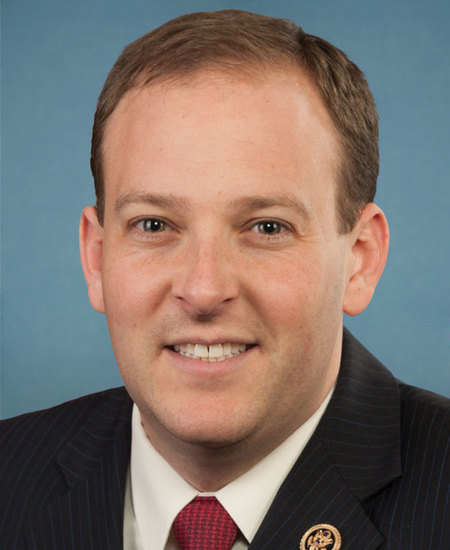
Rep. Lee M. Zeldin
Sponsored bills
Honoring All Veterans Act This bill adds the following as a mission statement for the Department of Veterans Affairs: "To fulfill President Lincoln's promise to care for those 'who shall have borne the battle' and for their families, caregivers, and survivors."
Mark Takai Atomic Veterans Healthcare Parity Act This bill includes veterans who participated in the cleanup of Enewetak Atoll in the Marshall Islands between January 1, 1977, and December 31, 1980, as radiation-exposed veterans for purposes of the Department of Veterans Affairs presumption of service-connection for specified cancers. Under a presumption of service-connection, specific conditions diagnosed in certain veterans are presumed to have been caused by the circumstances of their military service. Health care benefits and disability compensation may then be awarded.
Pain-Capable Unborn Child Protection Act This bill establishes a new criminal offense for performing or attempting to perform an abortion if the probable post-fertilization age of the fetus is 20 weeks or more. A violator is subject to criminal penalties—a fine, a prison term of up to five years, or both. The bill provides exceptions for an abortion (1) that is necessary to save the life of the pregnant woman, or (2) when the pregnancy is the result of rape or incest. A physician who performs or attempts to perform an abortion under an exception must comply with specified requirements. A woman who undergoes a prohibited abortion may not be prosecuted for violating or conspiring to violate the provisions of this bill.
PFC Joseph P. Dwyer Peer Support Program Act This bill requires the Department of Veterans Affairs (VA) to establish the PFC Joseph P. Dwyer Peer Support Program to make grants to eligible entities for peer-to-peer mental health programs for veterans. Eligible entities include (1) a nonprofit organization that has historically served the mental health needs of veterans; (2) a congressionally chartered veteran service organization; or (3) a state, local, or tribal veteran service agency, director, or commissioner. The VA shall establish an advisory committee to create appropriate program standards.
Life at Conception Act This bill declares that the right to life guaranteed by the Constitution is vested in each human being at all stages of life, including the moment of fertilization, cloning, or other moment at which an individual comes into being. Nothing in this bill shall be construed to authorize the prosecution of any woman for the death of her unborn child.
This bill excludes from gross income, for income tax purposes, a taxpayer subsidy provided by a state or local government to a resident for the purchase or installation of any wastewater management measure intended solely for the taxpayer's principal residence.
Chiropractic Medicare Coverage Modernization Act of 2021 This bill expands Medicare coverage of chiropractic services to include all services provided by chiropractors, rather than only subluxation corrections through manual manipulation of the spine.
Sandy Duplication of Benefits Fairness Act This bill expands the applicability of the waiver of the prohibition against duplication of benefits for disaster relief recipients following Superstorm Sandy. Under current law, the waiver period extends from January 1, 2016, through December 31, 2021. This bill begins that period on October 1, 2012, through December 31, 2021. This change would permit individuals who suffered losses resulting from Superstorm Sandy and who initially applied for and received federal benefits, including Small Business Administration disaster relief loans, to receive additional federal benefits, including funds under the Department of Housing and Urban Development Block Grant for Disaster Relief (CDBG-DR), without having to repay such additional benefits.

Affordable Housing Credit Improvement Act of 2021 This bill revises provisions of the low-income housing tax credit and renames it as the affordable housing credit . The bill increases the per capita dollar amount of the credit and its minimum ceiling amount beginning in 2021 and extends the inflation adjustment for such amounts. The bill modifies tenant income eligibility requirements and the average income formula for determining such income. It also revises rules for student occupancy of rental units and tenant voucher payments, and prohibits any refusal to rent to victims of domestic abuse. The bill further modifies the credit to increase state allocations of the credit; repeal the qualified census tract population cap; prohibit local approval and contribution requirements; increase the credit for certain projects designated to serve extremely low-income households; increase the credit for certain bond-financed projects designated by state agencies; eliminate the basis reduction for properties that receive certain energy-related tax benefits; and increase the population cap for difficult development areas (i.e., areas with high construction, land, and utility costs relative to area median gross income). The bill also includes Indian and rural areas as difficult development areas and modifies other requirements relating to casualty losses, acquisition credits, and foreclosures.