

Mining Regulatory Clarity Act This bill allows mining operators to use federal lands for activities ancillary to mining, such as waste disposal, regardless of whether those lands contain mineral deposits valuable enough to be mined (mineral validity). It also establishes the Abandoned Hardrock Mine Fund. The bill addresses a 2022 decision in the U.S. Court of Appeals for the Ninth Circuit related to the Rosemont Copper Mine in Arizona (commonly known as the Rosemont decision , described further in CRS Report R48166 ). The court held that mining claims are only allowed where mineral validity has been established and that mill site claims are more appropriate means for establishing a mining waste disposal site under the Mining Act. The bill allows a mining operator to (1) locate and include within its plan of operations as many mill site claims (e.g., areas for waste rock disposal) as are reasonably necessary for its operations, and (2) use or occupy public land in accordance with an approved plan of operations. Additionally, the bill requires any revenue generated from fees for such mill site claims to be deposited into the Abandoned Hardrock Mine Fund. The Department of the Interior must use the fund for certain abandoned hardrock mine reclamation activities.
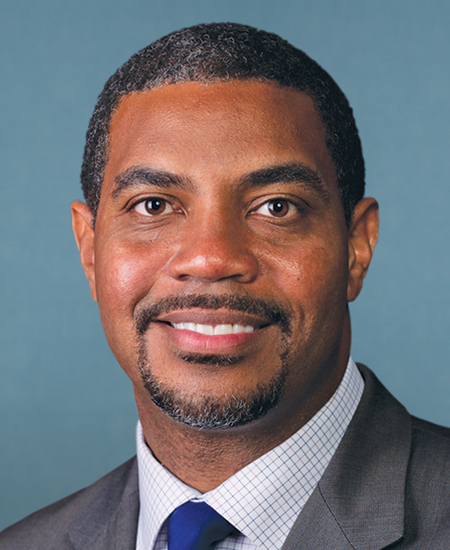
Rep. Steven Horsford
Sponsored bills
Lower Colorado River Multi-Species Conservation Program Amendment Act of 2025 This bill establishes an interest-bearing account for the nonfederal contributions for the Lower Colorado River Multi-Species Conservation Program, a cooperative effort between federal and nonfederal entities in Arizona, California, and Nevada. The program works to recover multiple species listed under the Endangered Species Act. Currently, the pace of funding exceeds the pace of work. The bill allows the nonfederal contributions deposited in the fund to be made available, without further appropriation, for the program in the future. However, amounts derived from interest earned on amounts in the fund are subject to the availability of appropriations.
Maddy summaryThis bill, titled the Healthcare is Human Act of 2026, creates a tax credit for licensed health care professionals who work in qualifying facilities, including Veterans Affairs medical facilities and those located in health professional shortage areas. The credit amount varies based on the number of hours worked each month, ranging from $300 to $500 per month depending on whether the professional works between 80-120, 120-160, or more than 160 hours of qualifying health care services. To receive the credit, professionals must work at least 80 hours in at least 8 months during the tax year, and their modified adjusted gross income must not exceed $200,000 for single filers or $400,000 for joint filers. The credit is available for taxable years beginning after December 31, 2025, and expires after December 31, 2030, with a requirement for a Government Accountability Office study to evaluate its impact on health care retention and access.
Maddy summaryThis bill grants the Secretary of Homeland Security the authority to move unspent money between different accounts within the department during a government funding shutdown. The provision specifically allows transfers of funds from the One Big Beautiful Bill Act to other DHS accounts, but prohibits moving money to the Office of the Secretary, Immigration and Customs Enforcement, or Customs and Border Protection. Additionally, the bill prevents the use of transferred funds to hire new employees during a lapse in appropriations. This measure aims to provide flexibility in managing existing resources while maintaining restrictions on certain departments and hiring activities.
Maddy summaryHRES 1107 is a House resolution urging the President to issue a proclamation flying the U.S. flag at half-staff to honor Rev. Jesse Jackson. The resolution recognizes his civil rights leadership, including founding the Rainbow PUSH Coalition and his presidential campaigns in 1984 and 1988, which advanced racial equality and economic justice. This symbolic gesture directly affects the President (as the one who would issue the proclamation) and the public, who would observe the flag at half-staff.
Maddy summaryHRES 1106 is a non-binding House resolution honoring the life and legacy of Rev. Jesse Louis Jackson, Sr., a prominent civil rights leader and activist. The resolution recognizes his lifelong work in advancing equality through organizations like Operation PUSH, his leadership in the anti-apartheid movement, and his historic presidential campaigns in 1984 and 1988. It expresses condolences to his family and calls on all Americans to continue his legacy of promoting civil rights and unity. As a commemorative resolution, it does not create new laws or affect any policies.
Maddy summaryThis bill, known as the Direct File Act of 2026, would establish a government-run online system allowing taxpayers to prepare and file their individual income tax returns for free. The legislation prohibits the Treasury Department from entering into agreements that restrict its ability to provide tax preparation or filing services, and it voids any existing contracts with such restrictions. The program would use IRS data to simplify filing, include customer support, be available in multiple languages, and allow users to file even if they are not required to. It also enables taxpayers in participating states to file state and local returns alongside their federal returns, with funding provided to states that meet certain standards.
Maddy summaryThe DISCLOSE Act of 2026 aims to increase transparency in election spending and prevent foreign influence. It expands the ban on foreign money to cover federal, state, and local elections, including ballot initiatives and judicial nominations, and criminalizes using corporations to conceal these funds. The bill mandates that organizations spending over $10,000 on campaign-related activities, such as independent expenditures or judicial nomination advocacy, disclose their beneficial owners and top donors. Additionally, it establishes new "Stand By Every Ad" disclaimers for political communications, requiring the highest-ranking official to approve the message and, for certain ads, list their top funders. These provisions directly affect non-candidate organizations, individuals involved in political and judicial nomination spending, and foreign nationals.
Maddy summaryThis bill reauthorizes and modernizes Trade Adjustment Assistance programs to help workers, firms, communities, and farmers affected by trade-related job losses. It extends program funding through 2033 and expands eligibility to include teleworkers, staffed workers, and public agency employees. Key provisions increase financial benefits, add new allowances for childcare and job search, require inflation adjustments to benefit amounts, and establish new outreach requirements to ensure underserved communities receive adequate support. The legislation also creates a new community assistance program providing grants for strategic economic development planning and expands technical assistance for businesses seeking adjustment support.
Critical Mineral Consistency Act of 2025 This bill modifies the Energy Act of 2020 to expand the definition of critical minerals to include critical materials designated by the Department of Energy (DOE). Under current law, DOE's critical materials list contains certain materials that are essential for energy, including those on the critical minerals list of the U.S. Geological Survey (USGS). The USGS's list, which contains certain minerals that are essential to the nation's economic or national security, is not required to include the materials on DOE's list. Currently, both lists include minerals with a high risk of supply chain disruptions, and both DOE and USGS must conduct a variety of efforts to ensure a secure and reliable supply chain of the minerals. By expanding the definition of critical minerals , this bill requires the USGS to include on its list the materials on DOE's list. Within 45 days of DOE adding a mineral, element, substance, or material to its critical materials list, the USGS must update its list to include such mineral, element, substance, or material.