

Maddy summaryThis bill protects living organ donors from insurance discrimination by prohibiting life, disability, and long-term care insurers from denying coverage, raising premiums, or altering policy terms solely because someone donated an organ while alive. It also updates the Family and Medical Leave Act to include recovery from organ donation surgery as a qualifying health condition, allowing donors to take protected leave for this purpose. Additionally, the bill requires the Health and Human Services Secretary to update public educational materials about living donation benefits, risks, and insurance protections within six months of enactment. These changes directly affect living organ donors, insurers, employers, and healthcare systems by ensuring fair access to insurance and workplace leave.
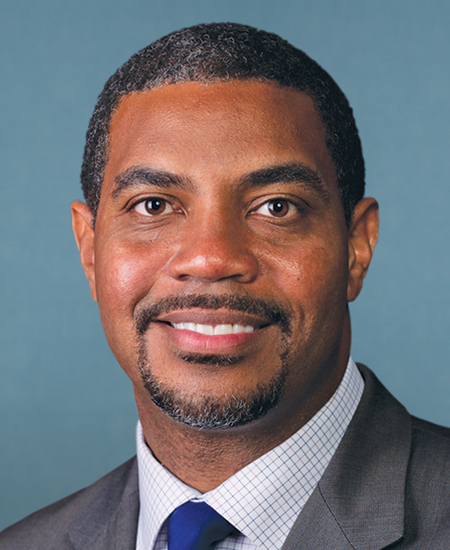
Rep. Steven Horsford
Sponsored bills
Maddy summaryHR 2955, the Stop Institutional Child Abuse Act, establishes a Federal Work Group to improve data collection and best practices for youth in residential programs (like therapeutic schools, treatment centers, and group homes). The Work Group, composed of federal agency representatives and diverse stakeholders, must develop national data standards, create risk assessment tools, and issue biennial reports with recommendations to enhance safety, reduce restraints, and expand community-based alternatives. It directly affects youth with mental health, substance use, or disability needs placed in these facilities, as well as agencies overseeing them. The bill also mandates a National Academies study to examine funding, oversight, and barriers to community care. These mechanisms aim to standardize data tracking and promote less restrictive, trauma-informed care for youth in residential programs.
Water Infrastructure Sustainability and Efficiency Act or the WISE Act This bill requires each state to use a certain percentage of funds it receives for capitalization of its clean water state revolving fund for projects to address green infrastructure, water or energy efficiency improvements, or other environmentally innovative activities.
Performing Artist Tax Parity Act of 2023 This bill modifies the above-the-line tax deduction for the expenses of performing artists (including commissions paid to managers or agents) to provide for a phaseout of such deduction for taxpayers whose adjusted gross income exceeds $100,000 ($200,000 for joint return filers). The $100,000 phaseout threshold is adjusted for inflation annually for taxable years beginning after 2023.
Raise the Age Act of 2023 This bill establishes new restrictions on the sale or transfer of certain semiautomatic firearms to individuals under 21 years of age. Specifically, this bill makes it unlawful for a licensed gun dealer, importer, manufacturer, or collector to sell or deliver a semiautomatic center-fire rifle or semiautomatic center-fire shotgun that has (or has the capacity to accept) an ammunition feeding device with a capacity of more than five rounds to an individual who the licensee knows or has reasonable cause to believe is under age 21. The prohibition does not apply if the individual under age 21 is a full-time law enforcement officer or active-duty member of the Armed Forces. The bill also requires the Federal Bureau of Investigation to report on the operation of its public access line, including a description of information sharing protocols and recommendations for improving such protocols.
Maddy summary# Summary of the National Apprenticeship Act of 2023 This proposed legislation establishes a comprehensive framework to modernize and expand apprenticeship programs in the United States, creating a National Apprenticeship System designed to address current workforce needs and increase opportunities for underrepresented populations. ## Key Provisions ### System Framework - Establishes clear quality standards for apprenticeship, pre-apprenticeship, and youth apprenticeship programs - Requires programs to meet specific criteria including: - Minimum 2,000 hours of on-the-job learning (with flexibility for some occupations) - Structured related instruction (minimum 144 hours per year for time-based programs) - Progressive wage scales - Safety training and equipment - Equal opportunity for participation ### Program Types - **Apprenticeship Programs**: Time-based, competency-based, or hybrid models for full-time workers - **Pre-apprenticeship Programs**: Designed to prepare individuals without meeting minimum qualifications for apprenticeship - **Youth Apprenticeship Programs**: For high school students, integrating academic and work-based learning ### Diversity & Inclusion Requirements - Requires programs to actively recruit and support nontraditional apprenticeship populations: - Women, minorities, individuals with disabilities - Long-term unemployed - Individuals impacted by the criminal or juvenile justice system - Foster and former foster youth - Individuals with barriers to employment ### Registration & Oversight - Requires formal registration of programs with a registration agency - Mandates annual performance data collection and reporting - Establishes procedures for program review, technical assistance, and deregistration ### Grant Program (Title II) - Authorizes $4 billion over five years ($400M-$800M annually) for competitive grants - Funds will support: - Creation and expansion of apprenticeship programs in high-demand sectors - Encouraging employer participation, particularly with small- and medium-sized businesses - Supporting intermediaries (national and local) - Strengthening educational alignment with secondary and postsecondary systems ### Evaluation Requirements - Mandates independent evaluations of grant programs - Requires collection of disaggregated data by program type and demographic factors - Focuses on measuring outcomes including: - Program completion rates - Employment rates in related fields - Wage growth - Increased participation of underrepresented groups ### Conforming Amendments - Repeals outdated sections of the American Competitiveness and Workforce Improvement Act of 1998 - Amends the Immigration and Nationality Act to align with the new apprenticeship system This legislation represents a significant investment in workforce development, aiming to create a more inclusive, high-quality apprenticeship system that responds to 21st-century labor market needs while expanding opportunities for historically underrepresented groups.
Maddy summaryThe Young Americans Financial Literacy Act would create federal grants to fund centers of excellence that develop and deliver research-based financial education programs for young people aged 8-24. These programs would teach essential money management skills like budgeting, saving, debt management, and financial decision-making, with a focus on accessibility through digital and traditional methods. The bill authorizes $27.5 million to $55 million annually (through 2025) for these centers, prioritizing programs serving at-risk youth, families, and communities facing financial challenges. Centers must use evidence-based approaches, address unique needs (e.g., student loans, predatory lending), and report annually to Congress on their outcomes.
Maddy summaryHR 1788, the "Goldie’s Act," strengthens USDA enforcement of the Animal Welfare Act. It requires annual inspections of all regulated animal businesses (like dealers, research facilities, and exhibitors) and mandates immediate, humane confiscation of animals suffering due to violations, while prohibiting owners from destroying animals during this process. The bill increases civil penalties to $10,000 per violation, requires hearing panels including veterinarians, and mandates that penalties consider business size and violation severity. It also requires USDA to share violation records with local animal control within 24 hours.
Maddy summaryThe Water Affordability, Transparency, Equity, and Reliability Act of 2023 establishes a new trust fund funded by increasing the corporate tax rate from 21% to 24.5% to support water infrastructure and affordability programs. It allocates funds to clean water programs (42%), safe drinking water funding (42.5%), household water wells (1%), colonias assistance (0.5%), Indian health services (3%), and water operator job training (0.5%). The bill requires the EPA to conduct a study and submit a report on water affordability, discrimination in water services, public participation in regionalization, and data collection related to service disconnections. It includes specific provisions for colonias, household water wells, and job training programs for water system operators to improve water access and equity.
Maddy summaryThis bill establishes a comprehensive framework to address environmental justice by requiring federal agencies to identify and address disproportionately adverse environmental and health effects on communities of color, low-income communities, and Tribal and Indigenous communities. It creates a White House Environmental Justice Interagency Council to coordinate federal efforts, mandates that agencies develop environmental justice strategies, and requires consideration of cumulative impacts in permitting decisions for pollution sources. The bill also establishes grant programs for environmental justice communities, creates training requirements for federal employees, and includes specific provisions for safer cosmetics and economic revitalization in fossil fuel-dependent communities. These provisions aim to ensure fair treatment and meaningful involvement of all people in environmental decision-making processes, directly affecting federal agencies and communities disproportionately burdened by environmental hazards.