

Maddy summaryThe Housing Market Transparency Act (HR 8500) requires the Department of Housing and Urban Development (HUD) to collect and publicly share detailed data about low-income housing tax credit properties. Specifically, HUD must gather information from states - including development costs, ownership details, habitability records, and reasons for property sales or disposals - and make most of this data available annually. This affects HUD, state housing agencies administering tax credit programs, and owners of properties using the federal low-income housing tax credit (Section 42 properties). The law aims to improve public visibility into how these affordable housing properties are managed and maintained over time.
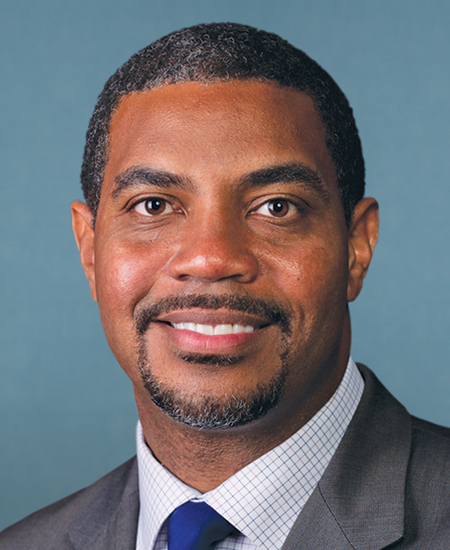
Rep. Steven Horsford
Sponsored bills
Maddy summaryHR 5754 renames the U.S. courthouse at 350 W. 1st Street, Los Angeles, California, as the "Felicitas and Gonzalo Mendez United States Courthouse." The bill updates all federal references - such as legal documents, maps, and records - to use the new name. This is a ceremonial designation with no policy changes or direct impact on citizens or laws. The bill solely affects the courthouse's official name and related federal paperwork.
Maddy summaryHR 8469, the Diverse Cybersecurity Workforce Act of 2024, requires the Cybersecurity and Infrastructure Security Agency (CISA) to establish a new program within its existing education initiative. The program targets underrepresented groups in cybersecurity, including racial and ethnic minorities, women, veterans, people with disabilities, older individuals (40+), those from low-income backgrounds, and people with nontraditional educational paths (like community colleges or HBCUs). CISA must tailor outreach to schools, unions, community colleges, and local workforce offices to promote cybersecurity careers in these communities. The bill authorizes $20 million annually (2025-2030) and mandates annual reports to Congress on the program's impact on workforce diversity.
Maddy summaryThe Public Service Freedom to Negotiate Act of 2024 establishes federal minimum standards for collective bargaining rights for public employees and supervisory employees. The Federal Labor Relations Authority will determine if each state's laws "substantially provide" for these rights, and if not, federal standards will apply to that state. These standards include the right to self-organization, collective bargaining, recognition of labor organizations, and procedures for resolving disputes. The bill preserves existing collective bargaining agreements and excludes certain employee categories like emergency services workers from some provisions.
Maddy summaryHR 8423, the Elder Pride Act of 2024, creates a new grant program under the Older Americans Act to support LGBTQI older adults and other protected-class older adults living in rural areas. The bill authorizes $5 million annually for grants to states, tribes, nonprofits, or community organizations to fund specific activities like reducing isolation, improving cultural competency among service providers, expanding non-discrimination policies (including for gender identity and intersex traits), and providing sexual health services (including HIV care). Grants must supplement, not replace, existing state or local funding for these services. The program requires grantees to partner with local organizations and report annually on activities to Congress.
Maddy summaryThe Rights for the TSA Workforce Act of 2024 would transition Transportation Security Administration (TSA) employees, particularly screening agents, from TSA-specific personnel rules to the standard federal government personnel system under Title 5 of the U.S. Code by December 31, 2024. The bill prohibits changes to current personnel policies for covered employees until the transition date and ensures no reduction in pay or benefits during the conversion process. It preserves certain benefits like law enforcement availability pay for Federal air marshals and maintains collective bargaining rights for screening agents. The bill also requires various reports to Congress on recruitment, implementation, diversity, and workplace safety to be submitted within specified timeframes.
Maddy summaryThis bill expands a tax exclusion for military personnel by adding remotely piloted aircraft (drone) crews to the list of service members whose combat zone pay is excluded from federal income tax. Specifically, it modifies IRS tax code to include "the operation of a remotely piloted aircraft in a combat zone" and "intelligence, targeting, or command and control" work certified by the Defense Secretary as directly supporting combat operations. The change applies to compensation received after the bill's enactment for service periods after that date. It directly affects drone operators and support staff serving in designated combat zones who previously might not have qualified for this tax benefit.
Maddy summaryHRES 1180 is a non-binding resolution recognizing the importance of diversity, equity, and inclusion (DEI) efforts in medical education. It affirms that a diverse medical workforce better serves the nation's diverse patient populations and supports medical schools in fostering inclusive environments to improve health equity. The resolution highlights existing disparities in health outcomes and representation, such as Black and Hispanic patients experiencing higher rates of chronic conditions compared to White patients, and notes that current medical school demographics (e.g., 10.8% Black or African American matriculants in 2023) do not reflect U.S. population diversity. It does not create new laws or funding but symbolically endorses DEI initiatives as essential for enhancing patient trust, clinical learning, and equitable care delivery.
Maddy summaryHR 8238 requires the U.S. Secretary of Defense to consider Taiwan for defense industrial cooperation under the Taiwan Relations Act. It directs the Secretary to evaluate Taiwan's eligibility for defense research funding, memoranda of understanding, and cooperative projects focused on supply chain resilience and defense needs. The bill mandates a 180-day feasibility study assessing strategic benefits, legal aspects, and specific defense capabilities (like Taiwan-developed items needing U.S. components or U.S. defense products Taiwan cannot supply). This study must be submitted to congressional committees and will inform future defense industrial agreements between the U.S. and Taiwan. The bill affects U.S. defense policy and Taiwan's defense industry by establishing a formal process for exploring deeper defense cooperation.
Maddy summaryThe CROWN Act of 2024 prohibits discrimination based on hair texture or style commonly associated with race or national origin, such as braids, locs, cornrows, twists, or afros. It directly affects individuals - particularly people of African descent - who face workplace, school, housing, or public accommodation discrimination due to natural or protective hairstyles. The bill expands existing federal civil rights laws (like Title VI, the Fair Housing Act, and Title VII) to explicitly include hair-based discrimination, requiring compliance in federally funded programs, housing, employment, and public spaces. It clarifies that grooming policies targeting these hairstyles violate anti-discrimination protections without creating new legal standards.