

Maddy summaryThe LET'S Protect Workers Act increases civil penalties for employers who violate labor and workplace safety laws. It significantly raises fines for child labor violations (up to $700,000 for serious injuries/deaths), wage and hour violations (up to $50,000 per violation for repeated/willful violations), and workplace safety violations (up to $800,000). The bill also increases penalties for farmworker protections (to $30,000), mine safety violations, and unfair labor practices (up to $100,000). New provisions require employers to pay penalties, with withdrawal orders for mines that fail to pay fines. These changes apply to violations occurring on or after January 1, 2025, with some provisions taking effect immediately.
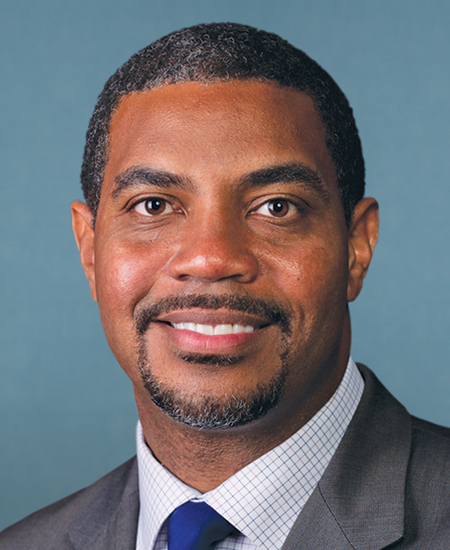
Rep. Steven Horsford
Sponsored bills
Maddy summaryHRES 1375 is a non-binding resolution recognizing extreme weather as a critical threat to children's health and well-being, emphasizing that children face unique vulnerabilities due to their developing bodies, higher exposure to pollutants, and heightened risks during events like heatwaves, wildfires, and poor air quality. It expresses Congress's view that solutions must be developed and deployed rapidly and equitably, with specific attention to children's physical and mental health needs. The resolution suggests concrete measures such as improved air filtration in schools, accessible public alerts for extreme heat, expanded cooling centers, and better infrastructure for child-friendly emergency spaces, though it does not create new laws or mandates.
Maddy summaryHR 9065 would expand the federal tax credit for energy-efficient home improvements to include room air conditioners that meet Energy Star Most Efficient criteria. Homeowners purchasing qualifying units would be eligible to claim the credit, directly affecting those making energy-efficient home upgrades. The bill amends the tax code to specifically list these AC units as "qualified energy property" under the existing credit program. This change applies to units installed after the law takes effect.
Maddy summaryThis bill amends a section of law governing Department of Veterans Affairs (VA) employee compensation to clarify that disputes over whether an employee received the correct pay amount under existing rules are not considered "adjustment of compensation" under the statute. It specifically excludes grievances challenging pay accuracy from the definition of "establishment, determination, or adjustment of employee compensation." The change directly affects VA employees covered under Section 7421(b) who might file such pay-related grievances. The bill makes a technical clarification to streamline how these disputes are categorized within VA's compensation process.
Maddy summaryHRES 1355 is a non-binding resolution supporting the designation of July 10 as Journeyman Lineworkers Recognition Day. It honors lineworkers who maintain electrical infrastructure under hazardous conditions, including during disasters, and commemorates Henry Miller, the first president of the International Brotherhood of Electrical Workers, who died on July 10, 1896, while troubleshooting an electrical outage. The resolution encourages public recognition of these workers' contributions but does not create new laws or policies.
Maddy summaryHR 8941, the "No Tax on Tips Act," creates a new tax deduction for workers who receive cash tips. It allows employees to deduct the full amount of cash tips they report to their employer (via statements required under tax law) from their taxable income, reducing their overall tax burden. This deduction applies to both itemizing and non-itemizing taxpayers and is exempt from standard limitations on miscellaneous deductions. The provision takes effect for taxable years beginning after December 31, 2024, directly benefiting service industry workers like servers and bartenders who rely on cash tips.
Maddy summaryThis bill bans developers and deployers of AI algorithms from using them to deceive voters about election procedures (like voting locations or registration rules) or intimidate people from voting. It requires clear disclaimers - such as "AI Disclaimer: This output was generated by artificial intelligence" - on AI-generated election content, including fake candidate videos or altered voting information. The law sets safety standards for election-related AI, requiring developers to ensure algorithms are "safe and effective" before use. The Federal Trade Commission enforces these rules, with violations potentially leading to fines or up to one year in prison.
Maddy summaryHR 8514, the Veteran Education Assistance Adjustment Act, increases the annual stipend for books and educational supplies under the Post-9/11 GI Bill from $1,000 to $1,400 for veterans using these benefits. It also establishes an automatic annual cost-of-living adjustment starting in fiscal year 2025, tying future increases to the difference between two 12-month Consumer Price Index (CPI) periods. This adjustment applies to stipends for books, supplies, equipment, and other educational costs covered under the VA's Post-9/11 Educational Assistance Program. The bill directly affects veterans enrolled in degree or certificate programs who receive education benefits through the VA. The key mechanism ensures the stipend grows with inflation, reducing the financial burden of educational expenses over time.
Maddy summaryThe STRIVE Act of 2024 requires the Government Accountability Office (GAO) to report on racial, ethnic, and gender disparities in veterans' disability benefits within 180 days of enactment, using data from the 2023 GAO report (GAO-23-106097) that found Black veterans (especially Black men) face 14% lower benefit approval rates than White veterans. It also mandates the Department of Veterans Affairs (VA) to submit a 3-year plan within 365 days to address these disparities, based on the GAO findings. The bill focuses on improving data collection and transparency, requiring the VA to publicly report annual progress on implementing its plan. This directly affects Black, female, and veteran applicants whose benefit approvals may be impacted by systemic disparities.
Maddy summaryThis bill creates a federal framework for "extreme risk protection orders" (ERPOs) that temporarily remove firearms from individuals who pose a risk of harming themselves or others. Family members or law enforcement officers can petition a federal court for a temporary order (up to 14 days) based on probable cause, followed by a hearing within 72 hours to determine if a longer-term order (up to 180 days) is warranted. The bill requires clear and convincing evidence of risk at the hearing and mandates respondents to surrender firearms to law enforcement within 48 hours. It also includes provisions for reporting, training law enforcement on ERPOs, and a federal grant program to support state ERPO implementation, without preempting state laws.