

Maddy summaryThis bill, known as the Critical Access Hospital RIP Act of 2026, aims to protect rural hospitals from losing their special status due to new road construction. It directly affects facilities designated as critical access hospitals that might otherwise fail to meet population requirements because a nearby highway or bridge was recently built or improved. The law mandates that if a facility qualifies for designation but fails the population test solely because of a completed roadway project, it will still be considered to meet the requirement. By ignoring the impact of these specific transportation upgrades, the legislation ensures these hospitals can continue operating without being forced to close due to infrastructure changes.
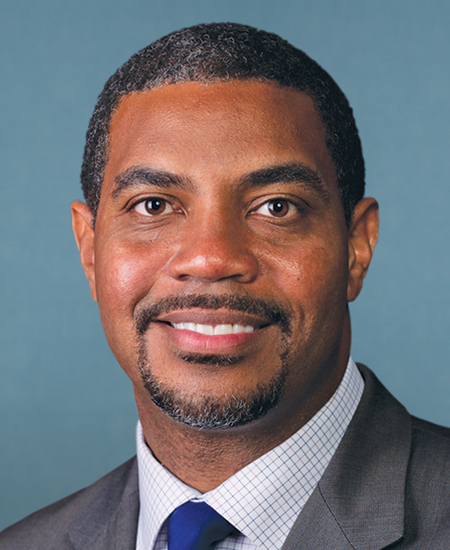
Rep. Steven Horsford
Sponsored bills
Maddy summaryThe Precious Metals Parity Act amends tax rules to treat precious metals the same way as foreign currencies for regulated investment companies. Specifically, it updates the Internal Revenue Code to include gold, silver, platinum, and palladium bullion when calculating how these companies report income. This change ensures that investment funds holding these specific metals are taxed consistently with those holding foreign currency assets. The provision applies to taxable years starting after the law is enacted.
Maddy summaryThis bill, titled the No Presidential Self-Serving Lawsuits Act of 2026, prevents the current or former President of the United States from filing civil lawsuits against the federal government. It specifically invalidates an existing settlement agreement between a former President and the Internal Revenue Service and bars the use of federal funds to create compensation for such lawsuits. Additionally, the legislation authorizes the Treasury Secretary to recover any money already spent in violation of these new restrictions. The primary goal is to stop a President from using taxpayer money to settle legal disputes with the government they lead.
Maddy summaryThe Bipartisan Transparency for American Taxpayers Act prohibits the use of federal funds to pay claims submitted to the Anti-Weaponization Fund. This fund was established by the Department of Justice on May 18, 2026, and the bill specifically bars any money from being used for these payments. The legislation directly affects the Department of Justice and any individuals or entities seeking reimbursement from this specific fund. By restricting funding sources, the bill aims to prevent taxpayer money from being spent on claims directed to this newly created entity.
Maddy summaryThis bill authorizes the U.S. Mint to produce commemorative $5 gold and $1 silver coins marking the 25th anniversary of the September 11, 2001, terrorist attacks. The coins must feature designs honoring victims and first responders (including the inscription "Never Forget") and will be sold only during 2027-2028. All surcharges ($35 per gold coin, $10 per silver coin) collected from sales will fund the National September 11 Memorial and Museum at the World Trade Center, with no net cost to the federal government. The coins are legal tender but primarily intended for collectors, not circulation.
Maddy summaryThe Smithsonian American Women’s History Museum Act authorizes the creation of a new Smithsonian museum dedicated to women’s history, to be located within the National Mall Reserve in Washington, D.C. If the site is managed by another federal agency, the bill requires that agency to transfer the land after notifying Congress and relevant committees. The museum must ensure exhibits and programs accurately represent diverse women’s experiences by consulting a broad range of experts and community voices. The Smithsonian will submit biennial reports to Congress detailing how the museum meets these representation standards.
Maddy summaryThis bill, known as the Department of Energy Drone Defense Act, expands the authority of the U.S. Secretary of Energy to manage certain drone systems. Specifically, it allows the Secretary to procure, operate, and use federal funds for drones that are classified as "covered" and originate from "covered foreign entities." These changes modify existing restrictions found in the National Defense Authorization Act for Fiscal Year 2024, which previously limited such activities primarily to the Secretary of State. By adding the Department of Energy to the list of authorized agencies, the legislation enables the department to participate in these drone-related activities without violating current prohibitions.
Maddy summaryThe CARE for RPA Crews Act directs military department secretaries to create a new status identifier for remotely piloted aircraft crews conducting combat operations. This status would hold equivalent merit to the existing combat status identifier currently used by traditional military personnel. The law requires this new system to be established within 180 days of the bill's enactment. By granting this recognition, the legislation aims to formally acknowledge the combat roles played by drone operators.
Maddy summaryThe No Taxpayer-Funded Settlement Slush Funds Act of 2026 prohibits the use of federal money to pay specific settlements involving high-ranking government officials and their close associates. It bars payments to the President, Vice President, their immediate families, cabinet members, senior executive staff, political appointees, and individuals connected to these roles, as well as any entity owned by the President or Vice President. Additionally, the bill restricts settlements related to claims about the January 6 Capitol attack, foreign election interference, or previously dismissed lawsuits, while requiring Treasury reports for large settlements and allowing the government to seek repayment if rules are broken.
Dental Care for Veterans Act This bill expands eligibility for veterans for dental care provided by the Department of Veterans Affairs (VA). Specifically, the bill makes all veterans who are enrolled in the VA health care system eligible for VA-provided dental services. Currently, only veterans who have a service-connected dental issue or meet other narrow criteria are eligible for certain dental services. The bill phases in eligibility over four years based upon existing eligibility, degree of service-connected disability or other disability, prisoner of war status, award of a Purple Heart, financial need, or VA health care eligibility.