

Maddy summaryThe Good Samaritan Remediation of Abandoned Hardrock Mines Act of 2024 establishes a limited pilot program allowing non-responsible parties (called "Good Samaritans") to remediate pollution at abandoned hardrock mine sites. The bill creates a permit process requiring applicants to demonstrate they're not liable for the pollution, can safely complete the remediation, and will protect the environment. The Environmental Protection Agency would issue up to 15 permits for these projects, providing liability protection for permitted activities while requiring public notice and environmental review. The pilot program would expire after 7 years, with the EPA required to report on its effectiveness to Congress.
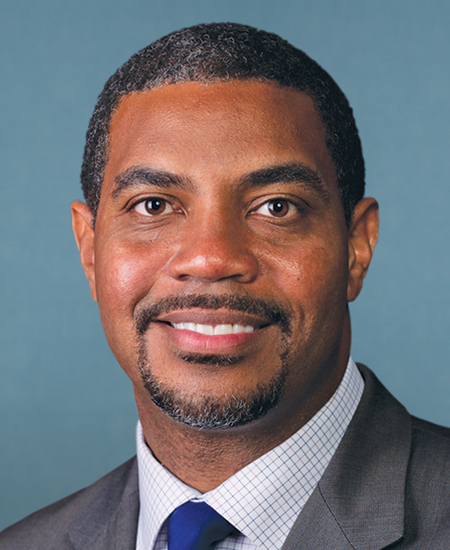
Rep. Steven Horsford
Sponsored bills
Maddy summaryHR 7776, the Help Hoover Dam Act, authorizes the Secretary of the Interior to spend non-reimbursable funds recovered into account XXXR5656P1 on Hoover Dam operations, maintenance, cleanup, and capital improvements. It specifically allows these funds to be used for activities within the Boulder Canyon Project at Hoover Dam or on related land, subject to contractor approval under the 2011 Hoover Power Allocation Act. The bill modifies the existing Boulder Canyon Project Act to clarify spending authority for existing recovered funds, without creating new appropriations or affecting other funding mechanisms. This procedural change directly affects how the Department of the Interior manages and allocates specific recovered funds for Hoover Dam maintenance and operations.
Maddy summaryHR 10307, the TOTAL Care Act, creates a 5-year pilot program to improve access to obstetrical and gynecological (OB/GYN) care for female TRICARE Prime beneficiaries. The bill removes the standard referral requirement for OB/GYN care under TRICARE Prime, allowing beneficiaries to directly access these specialists without a referral. It also permits eligible female beneficiaries to designate an OB/GYN provider as their primary care manager within the TRICARE program. The pilot aims to assess impacts on enrollment, costs, and care access, with a report due to Congress after four years.
Maddy summaryHR 6751 authorizes the U.S. Mint to produce commemorative coins honoring Roberto Clemente, a Hall of Fame baseball player and humanitarian, including 50,000 $5 gold coins, 400,000 $1 silver coins, and 750,000 half-dollar coins. The coins must feature Clemente's image and inscriptions like "Roberto Clemente" and "2027," with all sales including a surcharge ($5-$35 per coin) paid to the Roberto Clemente Foundation. The foundation, which supports youth sports, education, and disaster relief programs, will use these funds for its mission, while the U.S. Treasury must recover all production costs. The coins will be sold exclusively in 2027, with no net cost to the government.
Maddy summaryThis bill establishes a Truth and Healing Commission to investigate the history and impacts of U.S. Indian Boarding School policies on Native American communities, including cultural, emotional, and physical effects on survivors, descendants, and tribal communities. The Commission will document these impacts through research, public meetings, and testimony, working with two advisory committees focused on Native American perspectives and Federal agency coordination. The Commission will operate for six years, with annual reports to Congress and a final report containing recommendations for Federal action. The bill also includes provisions for managing burial sites related to boarding schools and ensures the Native American Graves Protection and Repatriation Act applies to remains found on Federal lands related to these schools.
Maddy summaryThis bill establishes a new interest-bearing fund within the Treasury to manage non-Federal contributions for the Lower Colorado River Multi-Species Conservation Program. It requires the Treasury to deposit existing and future state contributions (from participating states) into this fund, which can then earn interest through U.S. government securities. The fund's principal and interest are available for program expenses as specified in the existing funding agreement, without needing new annual appropriations. This directly affects the participating states (referred to as "State Parties" in the agreement) and the federal Treasury, streamlining how conservation program funds are held and invested.
Maddy summaryHRES 1581 is a symbolic resolution expressing congressional support for designating November 2024 as "Prematurity Awareness Month." It highlights the U.S. maternal and infant health crisis, including higher preterm birth rates and disparities affecting Black and Native American women and their infants. The resolution urges Americans, communities, and organizations to observe the month through events and education focused on preterm birth prevention. It does not create new laws or funding but aims to raise public awareness about this health issue, which contributes to infant mortality and costs an estimated $25.2 billion annually.
Maddy summaryThis bill modifies how disability benefits are treated for homeless disabled veterans seeking housing assistance. It excludes certain disability payments (under Chapter 11 or 15 of Title 38, U.S. Code) from income calculations when determining eligibility for HUD-assisted housing programs, including the supported housing program under Section 8(o)(19) and housing on Department property. Specifically, it ensures these benefits are not counted toward income for housing eligibility, though they still count for "adjusted income" definitions. The bill directly affects disabled veterans applying for HUD housing assistance who receive these specific disability benefits. It makes a concrete change to income calculation rules without altering benefit amounts or creating new funding.
Maddy summaryThe VA Employee Fairness Act of 2024 modifies collective bargaining rules for employees of the Veterans Health Administration (VHA). It removes existing subsections (b), (c), and (d) from the law governing VHA employee bargaining and renumbers the remaining provision. This change streamlines the collective bargaining framework but does not alter the Secretary of Veterans Affairs' existing authorities over incentive pay and expedited hiring. The bill directly affects VHA employees by changing how their collective bargaining rights are structured under federal law. The law remains neutral, focusing solely on procedural adjustments to the existing bargaining framework.
Maddy summaryHRES 1544 designates September 22, 2024, as "National Hispanic Nurses Day" and formally recognizes the National Association of Hispanic Nurses (NAHN) as the leading organization representing Hispanic nurses. The resolution acknowledges Hispanic nurses' contributions to healthcare equity, cultural competence, and reducing disparities in underserved communities. It has no binding policy changes or funding implications - it serves as symbolic recognition to honor their work and NAHN's advocacy role. This is a ceremonial resolution, not a law with enforceable provisions.