

Maddy summaryHR 5385, the Health Providers Training Act, expands eligibility for existing health profession opportunity grants under the Social Security Act. It amends the law to include hospitals (as defined in Section 1861(e)) as eligible recipients alongside community-based organizations. This change allows hospitals to apply for federal grants aimed at training health professionals, directly affecting qualifying hospitals seeking funding for workforce development. The amendment takes effect on October 1, 2025.
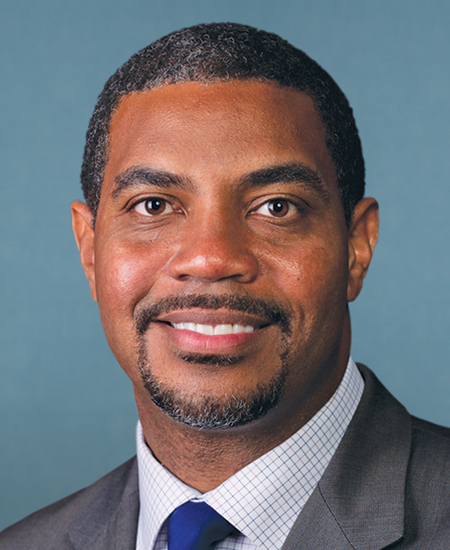
Rep. Steven Horsford
Sponsored bills
Maddy summaryHR 5401, the Pay Our Troops Act of 2026, ensures military personnel, civilian Defense workers, and supporting contractors receive pay during government funding gaps in fiscal year 2026. It appropriates emergency funds for active-duty service members, reserves, and their supporting personnel (including Coast Guard staff under DHS) if regular appropriations aren't enacted by the end of the fiscal year. The bill provides necessary pay and allowances during any period when full-year funding is unavailable, covering both active service and support roles. Funding expires when regular appropriations are passed, a funding resolution is enacted, or January 1, 2027, whichever comes first. This is a procedural measure to prevent pay delays for military and support staff during fiscal year 2026 funding lapses.
Maddy summaryHR 5386, the Technical Assistance for Health Grants Act, requires the federal government to provide tailored technical support to entities receiving health grants under Section 2008 of the Social Security Act. It mandates assistance for grantees at all project stages, with specific provisions for Indian tribes, tribal organizations, territories, and demonstration projects, plus peer conferences to share best practices. The bill allocates $15 million for fiscal year 2026 to fund this technical assistance program and requires annual reports to Congress on the support provided. This direct policy change affects health grant recipients by improving their capacity to apply for and manage federal health funding. The amendments take effect October 1, 2025.
Maddy summaryThe Pathways to Health Careers Act creates federal grants to help low-income individuals (with family income up to 200% of the Federal poverty level) enter health profession careers. It funds training programs that include adult basic education, career coaching, child care, transportation, and legal assistance for people with arrest or conviction records. The bill specifically supports two demonstration projects: one helping individuals with criminal records enter health careers, and another focused on training doulas and midwives for pregnancy, birth, and postpartum care. Programs must provide structured career pathways to recognized health profession credentials and include support services like case management. The bill requires evaluations to assess effectiveness in addressing workforce shortages and improving participant outcomes.
Maddy summaryThe FAMILY Act would establish a national paid family and medical leave insurance program that provides wage replacement benefits for workers needing time off for caregiving or medical reasons. It defines "qualified caregiving" to include caring for a family member with a serious health condition, personal medical needs, or recovery from violence (including domestic violence, sexual assault, or stalking). Benefits would be calculated based on earnings, with a minimum monthly benefit of $580 and maximum of $4,000, administered by a new Office of Paid Family and Medical Leave within the Social Security Administration. Eligible individuals would need to have worked for at least 8 quarters in the previous year and file an application with required documentation, while existing state paid leave programs would continue to operate alongside this federal program.
Maddy summaryHR 1860 establishes Regional Breast Cancer and Gynecologic Cancer Care Coordinators within the VA to improve care coordination for veterans diagnosed with breast or reproductive system cancers (like cervical, ovarian, or uterine cancer) who receive treatment through the Veterans Community Care Program at non-VA facilities. These coordinators, reporting to the VA’s Breast and Gynecologic Oncology System of Excellence, will directly connect veterans with community care providers, monitor treatment outcomes, document care in electronic records, and provide veterans with information on emergency care and mental health resources. The bill requires the VA to create regional care coordination networks, prioritizing rural veterans’ needs, and mandates a 3-year report comparing health outcomes between VA and community care for these veterans. It focuses on streamlining care coordination rather than creating new benefits or funding.
Maddy summaryThe Azerbaijan Sanctions Review Act of 2025 requires the President to review within 180 days whether 53 specific Azerbaijani officials meet criteria for sanctions under the Global Magnitsky Human Rights Accountability Act. These officials include military commanders, security service heads, and judges implicated in human rights violations related to the Nagorno-Karabakh conflict. The review must include a detailed justification and determine if sanctions should be imposed on individuals linked to alleged war crimes, arbitrary detention, and torture of Armenians. The bill mandates this assessment without imposing new sanctions, focusing instead on evaluating existing legal authority for action.
Maddy summaryHRES 701 is a House resolution requesting the President to provide documents about the Department of Government Efficiency's (DOGE) access to Social Security Administration data. It specifically seeks records related to a cloud system hosting the Social Security Numerical Identification System (NUMIDENT), including security plans, the purpose of the cloud copy (e.g., audits, benefits decisions, AI training), and access by named individuals. The resolution requires the President to submit these materials within 14 days of adoption. This is an inquiry, not a policy change, focused solely on transparency about government data access.
Maddy summaryThis bill establishes advance funding for key tribal programs starting in fiscal year 2026. It requires the Department of the Interior and Indian Health Service to include in each year's budget request sufficient funding for the *next* fiscal year's operations, specifically for accounts like "Operation of Indian Programs," "Contract Support Costs," and "Indian Health Services." The bill mandates annual reports by July 31 each year, assessing resource sufficiency and including workload estimates for the following fiscal year. These changes directly affect tribal programs administered by the Bureau of Indian Affairs, Bureau of Indian Education, and Indian Health Service, ensuring funding for future needs is planned and requested in advance.
Maddy summaryHR 5309, the Congressional Tribute to Constance Baker Motley Act of 2025, authorizes a posthumous Congressional gold medal for Constance Baker Motley, a pioneering civil rights attorney and judge. The bill directs the Treasury Secretary to strike the medal with her image and name, to be presented to her son, Joel W. Motley III, and her niece, Constance Royster. It also permits the sale of bronze duplicates at cost to cover expenses, with proceeds going to the U.S. Mint fund. This is a commemorative measure with no substantive policy changes, honoring Motley’s legacy as the first African-American woman appointed to a federal judgeship.