

Maddy summaryThis bill establishes a new workplace violence prevention standard for healthcare and social service workers. It requires employers in covered facilities - including hospitals, nursing homes, mental health clinics, and social service settings - to develop and implement comprehensive prevention plans with specific requirements. These plans must include risk assessments, hazard prevention measures, employee training on violence prevention, and procedures for reporting and investigating violent incidents. The bill also amends Medicare regulations to require compliance with these standards for hospitals and skilled nursing facilities receiving Medicare funds.
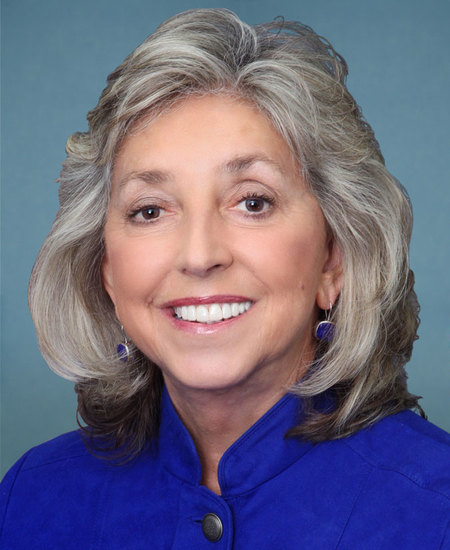
Rep. Dina Titus
Sponsored bills
Maddy summaryThis bill establishes minimum nurse-to-patient ratios for registered nurses in hospital units (such as 1:1 in trauma units, 2:1 in critical care units, and 3:1 in emergency rooms), requiring hospitals to develop and maintain staffing plans that meet these standards. It mandates transparency in documenting staffing levels, ensures hospitals verify nurses' competence for specific units, and enforces compliance through Medicare and Medicaid programs with penalties for violations. The bill protects nurses who refuse unsafe assignments due to staffing concerns and includes initiatives to improve nurse retention and address staffing shortages. It directly affects hospitals, nurses, and patients by aiming to improve patient safety and care quality through standardized staffing requirements. The bill applies to all hospitals, with extended implementation timelines for rural facilities.
Maddy summaryThis bill would require Medicare to cover FDA-approved blood tests that screen for multiple cancers simultaneously (like breast, lung, or colorectal cancer) for beneficiaries. It directly affects Medicare recipients aged 65+ who could access these new screenings once per year, without prior authorization. The key provision adds "multi-cancer early detection screening tests" to Medicare's covered services under Part B, defining them as blood tests analyzing cell-free DNA, while maintaining existing coverage for standard screenings like mammograms. The bill does not change current coverage for individual cancer screenings but ensures Medicare keeps pace with new medical technology.
Maddy summaryThis bill requires Medicare, Medicaid, and CHIP to cover advanced genetic cancer testing (like DNA/RNA sequencing and their interpretation) for patients diagnosed with cancer. It defines covered tests as next-generation sequencing performed by clinical labs and limits coverage to once per diagnosis, recurrence, or treatment monitoring. Medicare will pay 80% of the test cost (or 100% if billed under assignment), while Medicaid and CHIP must include these tests in mandatory coverage starting January 1, 2025. The bill directly affects cancer patients enrolled in these federal health programs by ensuring access to specific genetic testing without excessive out-of-pocket costs.
Maddy summaryThis bill requires private health insurance plans and Medicaid to cover selected insulin products for individuals under 26 years old without deductibles and with cost-sharing capped at $35 per 30-day supply or 25% of the negotiated price (whichever is lower). It defines "selected insulin products" as at least one of each type (e.g., rapid-acting, long-acting) and form (e.g., vial, pump) of insulin that plans select. The cost-sharing for these products counts toward the plan’s annual out-of-pocket maximum, and the requirement applies to all private plans and Medicaid starting January 1, 2024. Plans are not required to cover insulin from out-of-network providers at the same cost-sharing level.
Maddy summaryHR 1610 would modernize Medicare coverage for chiropractic care by removing the current restriction that limited beneficiaries to one chiropractic service per visit. It expands coverage to include all services provided by licensed chiropractors within their state-authorized scope, aligning Medicare with VA, military, and private insurance practices. The bill requires chiropractors to complete a Secretary-approved educational webinar to cover non-spinal services, while still allowing payment for spinal manipulation treatments without this requirement. This directly affects Medicare beneficiaries seeking chiropractic care and chiropractors seeking Medicare reimbursement for their services.
Maddy summaryThe LEAP Act creates a new tax credit for employers with registered apprenticeship programs, offering $1,500 per qualifying apprentice employee above a threshold based on the employer's average apprenticeship hires over the previous three years, limited to two years per employee. It excludes most construction industry employers (NAICS 23) unless they hire pre-apprenticeship graduates and sponsor apprenticeships. The bill also requires federal agencies to develop a plan to reduce printing costs by increasing online document availability and to disclose printing costs for government publications. This applies to apprenticeship programs registered with the Department of Labor.
Maddy summaryThe Affordable Insulin Now Act (HR 1488) requires health insurance plans and issuers to cover specific insulin products with cost-sharing capped at $35 per 30-day supply or 25% of the negotiated price, whichever is lower, starting in 2024. It directly affects people with diabetes who rely on insulin by limiting out-of-pocket costs for covered products. The bill mandates coverage of all insulin types (rapid-acting, long-acting, etc.) and dosage forms (vials, pumps, etc.) as selected by the plan. This applies to both group and individual health insurance plans under the Public Health Service Act, Internal Revenue Code, and ERISA, with cost-sharing counting toward annual deductibles.
Maddy summaryHR 1401, the END FENTANYL Act, requires U.S. Customs and Border Protection (CBP) to review and update its field inspection manuals at least every three years. This ensures CBP's border inspection practices consistently address new smuggling methods used to hide drugs like fentanyl and human trafficking. The bill mandates that CBP submit reports to specific congressional committees after each update, detailing the changes made to inspection policies. This directly affects CBP officers and border security operations by standardizing how they detect and respond to evolving smuggling tactics.
Maddy summaryHR 1368, the "Deter PRC Support to the Russian War Effort Act," would impose U.S. sanctions on Chinese individuals and companies that provide material support to Russia's military operations in Ukraine. The bill targets entities that export defense-related items, financial resources, or technologies that help Russia conduct military actions or evade existing U.S. sanctions. Sanctions could include blocking U.S. property, denying visas, restricting financial transactions, and prohibiting U.S. government procurement from targeted entities. The bill specifically applies to Chinese persons (including state-owned enterprises) who assist Russia's military efforts, with sanctions set to expire after two years or when the Ukraine conflict ends.