

Providing Real-world Education and Clinical Experience by Precepting Tomorrow's Nurses Act or the PRECEPT Nurses Act This bill establishes a new, nonrefundable tax credit for eligible nurse preceptors, subject to limitations. The bill also requires the Internal Revenue Service (IRS) to report to Congress certain information about the tax credit for nurse preceptors. Under the bill, a nonrefundable tax credit of $2,000 is allowed for an eligible nurse preceptor through 2032. An eligible nurse preceptor is defined as an individual who provides at least 200 certified hours of supervision and personalized experiential learning, training, instruction, and mentoring in the clinical practice of nursing to a nursing student, advanced practice registered nursing student, or newly hired licensed nurse in a community designated as a health professional shortage area. The bill also requires the IRS to report to Congress the number of taxpayers that claim the tax credit for nurse preceptors each year and the geographic distribution of such taxpayers, aggregated and averaged data on the preceptorships served by taxpayers as an eligible nurse preceptor, and the effectiveness of the tax credit in increasing the number of nurse preceptors in the United States.
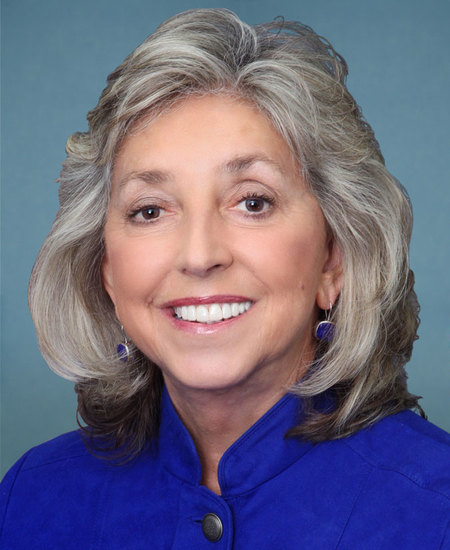
Rep. Dina Titus
Sponsored bills
Maddy summaryThis resolution expresses the House's support for Korean American Day, commemorating January 13, 1903 - the arrival of the first large wave of Korean immigrants to the U.S. It urges all Americans to observe the day to recognize Korean Americans' contributions to U.S. society, including their economic, cultural, and military service. The resolution honors the 122nd anniversary of this historical arrival, acknowledging the resilience of early Korean immigrants and their descendants. As a symbolic gesture, it does not create new laws or affect any specific group directly.
Maddy summaryHR 332, the Travel Trailer and Camper Tax Parity Act, would amend the tax code to allow business owners to claim a tax deduction for financing travel trailers and campers used for recreation. Specifically, it adds these vehicles to the definition of "floor plan financing" by clarifying that trailers/campers designed for temporary living (recreational, camping, or seasonal use) qualify, if towed or attached to a motor vehicle. This change directly affects small businesses and owners who finance such vehicles for commercial use, aligning their tax treatment with other similar vehicles. The provision would take effect for tax years beginning after December 31, 2024.
Maddy summaryThe Train EATS Act requires Amtrak to provide two food service options on overnight routes: traditional dining (including healthy meals meeting USDA guidelines and dietary accommodations upon pre-order) and more affordable alternatives for all passengers. Unused first-class dining capacity must be offered to coach passengers on a first-come, first-serve basis. The bill applies to all Amtrak routes operating across different departure and arrival dates. It mandates specific nutritional standards and accessibility while focusing on passenger choice and affordability.
Maddy summaryThis bill requires Amtrak to establish an advisory committee within one year to oversee improvements to onboard dining services. The committee, including Amtrak staff, food service unions, passenger groups, and states funding routes, will review Amtrak’s progress on implementing food service recommendations. Amtrak must then submit annual reports to Congress detailing which recommendations are completed, which are deemed impractical (with cost estimates if funding is insufficient), and changes to dining services. A separate Government Accountability Office report will also assess Amtrak’s progress after two years. The bill directly affects Amtrak’s food service operations and involves multiple stakeholders in the oversight process.
Maddy summaryThe Proxy Voting for New Parents Resolution (HRES 23) would allow U.S. House Members who have given birth or whose spouse has given birth to appoint another Member as a proxy to cast their vote or record their presence in the House and committees for up to 12 weeks after childbirth. To use this, the new parent must submit a signed letter to the Clerk detailing the birth or medical condition and naming the proxy; the proxy must vote exactly as instructed and announce the vote as "by proxy." The proxy vote does not count toward quorum, and the new parent can revoke the proxy at any time by submitting a new letter or casting their own vote. This resolution applies to all House Members, including Delegates and the Resident Commissioner, though they cannot cast votes for the House itself.
This resolution honors the life, achievements, legacy, and distinguished public service of former President Jimmy Carter. The resolution also (1) acknowledges President Carter's contributions to the state of Georgia, the United States, and the world; and (2) establishes his legacy as one of the great leaders and statesmen of the United States.
Maddy summaryHR 298 removes legal restrictions on U.S. defense exports and security assistance to the Republic of Cyprus. The bill amends two key laws: it eliminates provisions in the 2020 National Defense Authorization Act that previously prohibited certain defense articles for Cyprus, and it deletes requirements in the Foreign Assistance Act regarding security assistance and sales to Cyprus. These changes directly affect U.S. defense contractors and security agencies by removing barriers to selling defense equipment and providing security aid to Cyprus. The bill does not create new programs but modifies existing legal frameworks to allow greater flexibility in U.S. defense and security engagement with Cyprus.
Maddy summaryThis bill designates a specific peak in Frenchman Mountain, Nevada (at coordinates 36°10′45″ N, 114°59′52″ W), as "Maude Frazier Mountain" for all federal references. It requires all U.S. laws, maps, regulations, and official documents to use the new name instead of the previous designation. The bill affects federal agencies and documents that reference this geographic location.
Maddy summaryThis bill increases healthcare affordability for low- and middle-income people by expanding eligibility for premium tax credits under the Affordable Care Act. It removes the previous 400% of poverty level cap for subsidy eligibility and replaces it with a new sliding scale based on income tiers, ranging from 0% to 8.5% of household income for coverage costs. The scale adjusts linearly across income levels, with households earning 300-400% of poverty paying 6.0%-8.5% of income (up from the prior fixed 400% cap), while lower-income households pay progressively less. These changes apply to tax years beginning after December 31, 2025, directly affecting individuals purchasing health insurance through marketplace plans.