

Maddy summaryThe Heating and Cooling Relief Act (HR 2486) expands the Low-Income Home Energy Assistance Program (LIHEAP) to help low-income households struggling with energy costs. It increases funding to cover all eligible households (those with incomes up to 250% of poverty level or 80% of State median income), sets a goal that no household should spend more than 3% of income on energy, and requires states to operate assistance programs year-round. The bill includes new protections against utility shutoffs for 2 years after assistance is received, prohibits late fees during the 6 months following assistance, and mandates weatherization and energy efficiency improvements in low-income housing. It also requires states to develop extreme heat response plans and addresses the $21 billion in residential utility arrears as of September 2024.
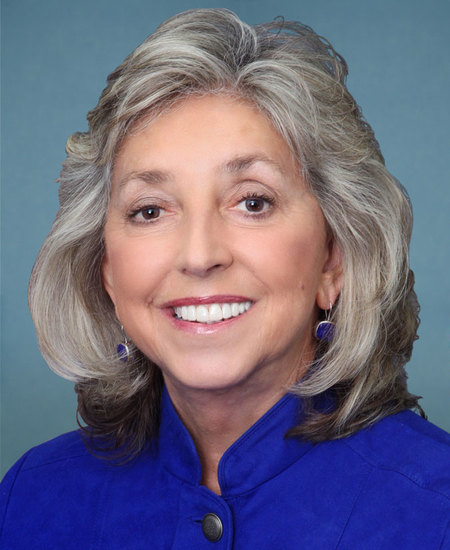
Rep. Dina Titus
Sponsored bills
Maddy summaryHR 2514, the Trucker Bathroom Access Act, requires businesses like warehouses, distribution centers, and shipping facilities (but not small restaurants under 800 sq ft) to allow commercial truck drivers access to their restrooms when delivering goods or waiting to load cargo. It also mandates that port terminals provide sufficient restrooms for drayage truck operators (drivers of large trucks moving cargo at ports) in safe, accessible areas, including parking spots for vehicle access. The bill does not require businesses to make physical restroom changes and exempts locations where access would create health, safety, or security risks. It defines "covered drivers" as those operating commercial vehicles regulated by the Department of Transportation and "covered restrooms" as those safely accessible to drivers. This law directly affects truck drivers and the businesses they interact with during deliveries or port operations.
Maddy summaryHR 2485, the Arts Education for All Act, requires states and school districts to integrate arts education into K-12 curricula and report on its availability. It mandates states to describe how they will support arts courses, increase certified arts educators (especially in high-need schools), and use arts to enhance teaching in core subjects like math and science (Section 202). Schools must track and report on arts course offerings, teacher qualifications, and student access - including disaggregated data by school poverty levels (Section 203). The bill also expands arts access in juvenile justice programs (Section 301) and funds research on effective arts education methods (Section 401). It directly affects public schools, arts educators, and youth in after-school and correctional settings.
Maddy summaryThis bill directs the U.S. Department of Health and Human Services to launch a national public education campaign about abortion access. The campaign must provide medically accurate information on where to obtain abortion services (including medication abortion), legal rights for out-of-state care, identifying misleading anti-abortion centers, spotting disinformation, and protecting personal health data. It specifically targets underserved communities like people of color, immigrants, LGBTQ+ individuals, rural residents, and those with low incomes, while prohibiting the promotion of misinformation or abstinence-only programs.
Maddy summaryThis bill establishes a federal grant program to fund mental health crisis response training for law enforcement and corrections officers. It provides up to $10 million annually for state, local, and tribal agencies to cover training costs, including travel and lodging, for officers responding to mental health crises. The training must be evidence-based, developed with healthcare professionals and people with lived mental health experience, and cover de-escalation, empathy, community resources, and safety protocols. Agencies applying must demonstrate current training gaps, officer safety records, and how the training will reduce injuries to officers and the public during mental health emergencies. The grants are supplemental to existing funding and require annual reporting on training participation and outcomes.
Save America's Forgotten Equines Act of 2025 or the SAFE Act of 2025 This bill permanently prohibits the slaughter of equines (e.g., horses and mules) for human consumption. (Current law prohibits the slaughter of dogs and cats for human consumption. This bill extends the prohibition to equines.) Specifically, this bill prohibits a person from knowingly (1) slaughtering an equine for human consumption; or (2) shipping, transporting, possessing, purchasing, selling, or donating an equine to be slaughtered for human consumption or equine parts for human consumption. The bill subjects a violator to a fine. The bill applies to conduct in or affecting interstate or foreign commerce or within the special maritime and territorial jurisdiction of the United States. However, it does not apply to an activity carried out by an Indian for a religious ceremony. As background, in recent years, the appropriations acts have prohibited the Department of Agriculture (USDA) from using federal funds to inspect horses before they are slaughtered for human consumption. Therefore, there are currently no USDA-inspected horse slaughter facilities in the United States.
Maddy summaryHouse Resolution HRES 267 formally recognizes the 10th anniversary of Educators Rising (rebranded in 2015) and its work preparing high school students for teaching careers. The resolution commends the program for addressing teacher shortages through local "Grow Your Own" initiatives that connect students to teaching pathways. It highlights Educators Rising’s national reach (1,400+ chapters) and role in fostering educator diversity, but contains no new policies, funding, or direct impacts on individuals or schools. As a symbolic resolution, it does not create legal obligations or alter existing programs.
Maddy summaryHR 2439 authorizes $50 million for fiscal year 2026 and $55 million for 2027 to fund the United Nations Population Fund (UNFPA), directly supporting its global programs. The bill specifies that these funds will help end preventable maternal deaths, address unmet contraceptive needs, combat gender-based violence, and end harmful practices like child marriage and female genital mutilation. UNFPA operates in over 150 countries, primarily aiding women and girls in developing nations and crisis zones, including those affected by conflict or natural disasters. The bill emphasizes UNFPA’s compliance with U.S. restrictions (not funding abortion) and its role in advancing U.S. strategic interests through voluntary family planning and reproductive health services.
Maddy summaryThe COST of Relocations Act (HR 2470) requires federal agencies to conduct a detailed benefit-cost analysis before relocating more than 5% or 100 employees (whichever is smaller) outside their current commuting area. Agencies must submit an unredacted report to their Inspector General, covering expected outcomes, stakeholder impacts, risk assessments, and how the move affects the agency's mission. The Inspector General then reviews the report and submits findings to Congress within 90 days, including an assessment of whether the relocation complies with existing OMB guidance. This law applies specifically to significant relocations of federal operations, ensuring transparency without overriding other legal requirements for such moves.
Reclaim Trade Powers Act This bill repeals the statute that directs the President to take certain actions, such as imposing a tariff of up to 15% for up to 150 days on articles imported into the United States, when necessary to address large and serious U.S. balance-of-payments deficits or certain other situations that present fundamental international payments problems.