

Maddy summaryHR 5452, the Safe Streets for All Reauthorization and Improvement Act, modifies the existing Safe Streets and Roads for All program under the Infrastructure Investment and Jobs Act. It requires at least 20% of annual program funds starting in fiscal year 2024 to support projects focused on pedestrian and cyclist safety, and extends funding authorization with $5 billion allocated for fiscal years 2027 through 2031. The bill directly affects local governments and communities applying for grants to improve street safety infrastructure. Key changes include mandating specific funding allocations for walkable/bikeable projects and securing long-term financial commitments for the program. This is a procedural funding amendment, not a new policy initiative.
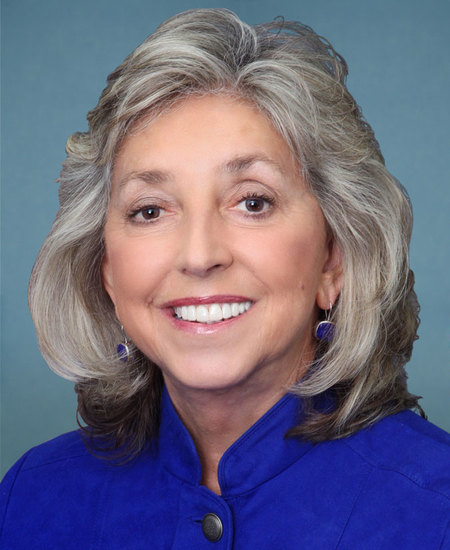
Rep. Dina Titus
Sponsored bills
Maddy summaryHRES 746 is a non-binding resolution passed by the U.S. House of Representatives condemning all political violence - including attacks on elected officials, candidates, and public figures - and rejecting rhetoric that dehumanizes opponents. It specifically urges law enforcement to investigate and prosecute such violence, calls on public officials and media to avoid inflammatory language, and references recent incidents like the 2025 assassination of activist Charlie Kirk and targeted shootings of Minnesota legislators. The resolution does not create new laws but formally expresses the House’s commitment to protecting public servants and promoting peaceful political discourse. It directly affects the House’s public stance and serves as a call to action for officials, media, and communities to foster civil engagement.
Maddy summaryHR 5476, the PARA Educators Act, provides federal grants to states to help recruit and retain school support staff (paraprofessionals) in public elementary, secondary, and preschool programs. It allocates funds based on previous Title I education funding, requiring states to prioritize schools serving high numbers of low-income students or those meeting specific poverty criteria. States can use the funds for proven programs like mentoring for paraprofessionals, professional development, helping staff earn credentials (e.g., special education or English learner certificates), and increasing wages or offering retention bonuses. The law mandates annual reporting on wage baselines, paraprofessional employment, and program outcomes. This bill directly affects paraprofessionals and the schools they support, particularly in high-poverty communities.
Maddy summaryHR 5456, the NWR Modernization Act of 2025, modernizes the NOAA Weather Radio system to improve nationwide access to weather and hazard alerts. It requires expanding coverage to rural communities, national parks, tribal lands, and areas with poor cellular service while upgrading to internet-based broadcasts and developing backup systems. The bill mandates a 12-month assessment to evaluate access needs, compatibility with third-party apps, and reliability during outages. This directly affects all U.S. residents, particularly those in underserved areas currently lacking reliable access. Key provisions include transitioning to modern infrastructure, enhancing alert systems, and ensuring continuous real-time broadcasts.
Maddy summaryThe RRLEF Act of 2025 requires applicants for Edward Byrne Memorial Justice Assistance Grant Program funds to certify they do not purchase firearms from "covered licensed dealers." A "covered dealer" is defined as one traced with 25+ firearms used in crimes within two of the last three years. The bill mandates the ATF publicly publish an annual list of these dealers and notify law enforcement if their transferred firearms are used in crimes. This directly affects state/local law enforcement agencies seeking federal grant funding by restricting their firearm purchasing options.
Maddy summaryHJRES 122 proposes a constitutional amendment that would grant Congress and states explicit authority to regulate campaign contributions and spending intended to influence elections. It would allow for reasonable, viewpoint-neutral limits on how much money candidates and others can raise or spend, as well as enable public financing systems to reduce private wealth's influence in campaigns. The amendment would permit distinguishing between individuals and corporations in campaign finance rules, potentially banning corporate spending to influence elections. It explicitly states this amendment would not affect the freedom of the press.
Maddy summaryHR 5428 creates a federal grant program to support medical education for students planning to work in underserved areas. It provides $75 million annually (2026-2028) to accredited public medical schools in states with severe primary care physician shortages, prioritizing schools in states with multiple Indian Tribes and partnerships with tribal organizations or health centers. Grantees must use funds for community-based training, developing primary care programs emphasizing Tribal/rural underserved communities, faculty development, scholarships, and tracking graduates' practice locations. The bill directly affects medical schools and future physicians committed to serving Tribal, rural, or medically underserved communities after residency.
Maddy summaryThe DAMS Act amends the National Dam Safety Program to improve how high-risk dams are identified and managed. It requires states to adopt a risk-based priority system for assessing dams that pose significant threats to public safety, ensuring resources focus on the most critical infrastructure. The bill also extends federal funding authorization for dam safety programs through 2031, instead of ending in 2026. These changes directly affect state dam safety agencies and federal programs responsible for overseeing dam rehabilitation efforts.
Maddy summaryThe PIPES Act of 2025 authorizes significant funding for pipeline safety programs and updates regulatory requirements for pipeline operators and the Pipeline and Hazardous Materials Safety Administration. It establishes a voluntary information-sharing system for pipeline safety data, requires new reporting on pipeline inspections, and includes specific provisions for carbon dioxide pipeline safety. The bill mandates several studies on emerging pipeline safety issues, including composite materials for pipelines and hydrogen-blended natural gas transportation. Additionally, it includes provisions for workforce development at the safety administration and updates definitions to include carbon dioxide pipelines.
Maddy summaryHR 5401, the Pay Our Troops Act of 2026, ensures military personnel, civilian Defense workers, and supporting contractors receive pay during government funding gaps in fiscal year 2026. It appropriates emergency funds for active-duty service members, reserves, and their supporting personnel (including Coast Guard staff under DHS) if regular appropriations aren't enacted by the end of the fiscal year. The bill provides necessary pay and allowances during any period when full-year funding is unavailable, covering both active service and support roles. Funding expires when regular appropriations are passed, a funding resolution is enacted, or January 1, 2027, whichever comes first. This is a procedural measure to prevent pay delays for military and support staff during fiscal year 2026 funding lapses.