

Maddy summaryThis concurrent resolution (HCONRES 65) is a symbolic congressional commendment of state and local governments that have affirmed reproductive rights as human rights. It recognizes efforts by jurisdictions like Carrboro, North Carolina; Austin, Texas; and Fulton County, Georgia, which passed resolutions or proclamations declaring abortion access a human right and condemning criminalization of pregnancy outcomes. The resolution urges states to repeal restrictive abortion laws and protect access to reproductive care, but it does not create new legal requirements or fund programs. As a procedural resolution, it has no binding effect on federal or state law.
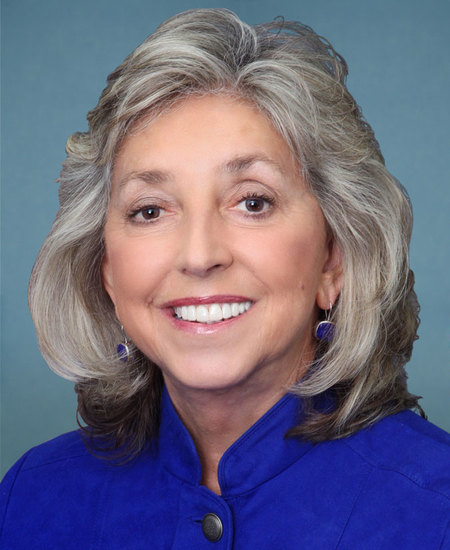
Rep. Dina Titus
Sponsored bills
Maddy summaryThis bill increases federal student loan limits for graduate and professional students. Starting July 1, 2026, it sets a $50,000 annual limit and a $200,000 total aggregate limit (beyond undergraduate borrowing) for unsubsidized Federal Direct Stafford loans. These changes directly affect graduate and professional students pursuing advanced degrees who rely on federal loans for education costs. The provisions aim to provide higher borrowing capacity for these students' educational expenses under the Higher Education Act.
Maddy summaryThis bill authorizes $250 million over five years to fund grants for states, school districts, and eligible Tribal schools to expand computer science education. It requires grantees to provide computer science courses for all high school students within five years, create early access from pre-K through middle school, and implement plans to close equity gaps for underrepresented groups (including minority students, girls, and low-income youth). Grant funds must cover teacher training, high-quality learning materials, and targeted support for underrepresented students, with strict limits on equipment spending (max 15%). Grantees must report annually on student participation data disaggregated by race, gender, and socioeconomic status.
Maddy summaryHR 6597, the LET’S Protect Workers Act, increases civil penalties for employers violating key labor laws to strengthen worker protections. It raises fines for child labor violations to up to $700,000 per incident causing death or serious injury, and doubles penalties for repeated wage/hour violations (up to $50,000 per violation). The bill also significantly boosts OSHA penalties (e.g., up to $800,000 for serious violations), adds new retaliation penalties for mine safety violations (up to $200,000 for repeat offenses), and clarifies that recordkeeping violations continue until corrected. These changes apply to employers across sectors, including manufacturing, agriculture, and mining, under the Fair Labor Standards Act, Occupational Safety and Health Act, and Mine Safety Act.
Maddy summaryThis bill authorizes the placement of a memorial honoring women who supported the U.S. war effort during World War II (including those working as pilots, engineers, and in factories) on federal land in Washington, D.C. It specifies two locations: Area I on the National Mall map or the National Mall Reserve, as defined in existing law. The memorial was previously authorized by Section 702 of the 2023 Consolidated Appropriations Act (Public Law 117-328), and this bill clarifies its permitted locations.
Maddy summaryThe Military in Law Enforcement Accountability Act requires the President to submit detailed justification to Congress before the military provides support to civilian law enforcement, including specific budget, timeline, and funding details, with a 30-day limit on such support unless Congress approves a longer period through a specific joint resolution process. It prohibits Department of Defense personnel (including military members) from holding civilian law enforcement positions concurrently, with limited exceptions for reserve members who must recuse during active duty. The bill also removes the military's authorization to deploy for "civil disturbances" without the new approval process and establishes a private right for individuals or governments to sue the federal government for violations. This directly affects the Department of Defense, military support to local police agencies, and DoD personnel's dual employment policies.
Maddy summaryThis bill provides a one-time $200 monthly payment to eligible Social Security, SSI, railroad retirement, and veterans disability/pension beneficiaries during January-June 2026. It directly affects individuals receiving these specific benefits who reside in U.S. states, territories, or the District of Columbia, with payments delivered through existing benefit channels. Key provisions include treating these payments as non-income for tax and program eligibility purposes, prohibiting double payments for multiple benefits, and ensuring payments cannot be offset or assigned. The payments expire by July 2026, and the bill includes specific administrative funding for implementation.
Maddy summaryHRES 926, the RESPECT Resolution, is a non-binding House resolution urging states to adopt equity-focused cannabis policies. It recommends specific actions to address racial disparities, including eliminating criminal penalties for cannabis possession, creating fairer business licensing (prioritizing communities harmed by past enforcement), automatically expunging cannabis convictions, and reinvesting tax revenue in affected communities. The resolution also calls for the U.S. to advocate at the United Nations for cannabis descheduling from international drug treaties. It directly affects states, localities, and communities disproportionately impacted by cannabis prohibition, particularly communities of color.
Maddy summaryHRES 930 is a symbolic resolution designating December 8, 2025, as "Jimmy Lai Day" to honor Jimmy Lai's advocacy for free press, religious freedom, and democracy in Hong Kong. It calls on the People's Republic of China and Hong Kong authorities to release Jimmy Lai and other Hong Kong prodemocracy advocates detained under Hong Kong's National Security Law. The resolution does not create new laws or policies but expresses congressional support for Lai's work and condemns the imprisonment of those advocating for Hong Kong's freedoms. It directly affects U.S. diplomatic messaging toward China, not Hong Kong's legal system or residents.
Maddy summaryHRES 929 is a House resolution condemning the U.S. President's pardon of former Honduran President Juan Orlando Hernández, who was convicted in a U.S. court for leading a decades-long drug trafficking conspiracy. The resolution reaffirms U.S. commitment to partner with Honduras on counter-narcotics efforts and democratic cooperation, regardless of the outcome of Honduras' November 30, 2025, election. It states the pardon undermines U.S. credibility in anti-corruption and counter-narcotics work, emboldens criminal networks, and signals that political influence can override the rule of law. The resolution urges continued U.S. support for security, economic development, and anti-corruption measures in Honduras.