

Expediting Assistance to Renters and Landlords Act of 2021 This bill modifies the Department of the Treasury's Emergency Rental Assistance program by extending time limits on payments, allowing landlords to seek rents and arrears from the program without renter consent, and allowing renters to prove eligibility through attestation. The program provides grants to state and local governments to assist eligible households in paying rent and utility costs and other expenses related to housing incurred due to the COVID-19 pandemic. The bill extends the availability of program assistance from 18 to 24 months for eligible households. The bill also relaxes requirements for proof of eligibility by requiring only that households attest that they meet eligibility requirements instead of requiring proof of eligibility. It also allows for direct payment of funds to eligible households where the landlord refuses direct payment. Additionally, the bill allows a landlord to apply for program funds without the consent of a renter if the landlord agrees to certain terms, including a 120-day bar on evicting the renter for nonpayment. This bill also expands the stable housing services available under the program to additional low-income households. Further, the bill requires Treasury and state and local governments to increase outreach to renters and landlords and allows for coordination with public entities to provide application assistance services.
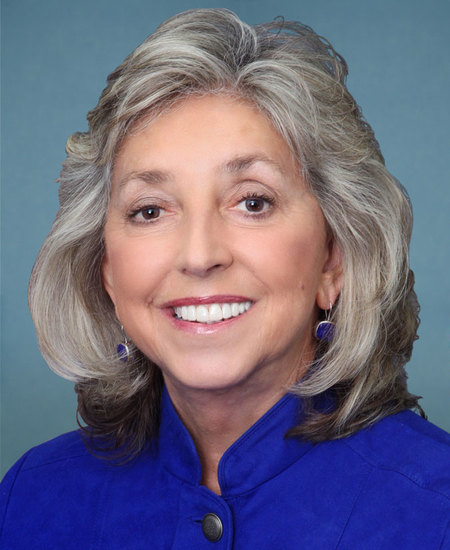
Rep. Dina Titus
Sponsored bills
This bill reauthorizes through FY2026 certain activities under the Impact Aid Program. The program provides funding to local educational agencies that have lost property tax revenue due to the presence of tax-exempt federal property or to those that have experienced increased expenditures due to enrollment of federally connected children (e.g., children living on Indian lands or military bases).
Supporting Early-childhood Educators' Deductions Act or the SEED Act This bill expands the tax deduction for the expenses of elementary and secondary school teachers to include early childhood educators.
John R. Lewis Voting Rights Advancement Act of 2021 This bill establishes new criteria for determining which states and political subdivisions must obtain preclearance before changes to voting practices may take effect. Preclearance is the process of receiving preapproval from the Department of Justice (DOJ) or the U.S. District Court for the District of Columbia before making legal changes that would affect voting rights. A state and all of its political subdivisions shall be subject to preclearance of voting practice changes for a 10-year period if 15 or more voting rights violations occurred in the state during the previous 25 years; 10 or more violations occurred during the previous 25 years, at least 1 of which was committed by the state itself; or 3 or more violations occurred during the previous 25 years and the state administers the elections. A political subdivision as a separate unit shall also be subject to preclearance for a 10-year period if three or more voting rights violations occurred there during the previous 25 years. States and political subdivisions that meet certain thresholds regarding minority groups must preclear covered practices before implementation, such as changes to methods of election and redistricting. Further, states and political subdivisions must notify the public of changes to voting practices. Next, the bill authorizes DOJ to require states or political subdivisions to provide certain documents or answers to questions for enforcing voting rights. The bill also outlines factors courts must consider when hearing challenges to voting practices, such as the extent of any history of official voting discrimination in the state or political subdivision.
Ejiao Act This bill prohibits the knowing sale or transport of ejiao (or products containing ejiao) in interstate or foreign commerce. (Ejiao is a gelatin made with donkey skin and used in traditional Chinese medicine and beauty products.)
This resolution expresses the sense of the House of Representatives that the United States shall recognize kind actions in our country, encourage kindness, spread love, and foster a culture of being kind to one another.
Working Dog Commemorative Coin Act This bill directs the Department of the Treasury to mint and issue 50,000 $5 gold coins, 500,000 $1 silver coins, and 750,000 half-dollar clad coins in commemoration of the service that working dogs provide to society. The designs of the coins minted under this bill shall be emblematic of the contributions of working dogs to society, including in detection, military service, therapy and assistance. Treasury may issue coins only during the one-year period beginning on January 1, 2023. All sales of coins shall include a surcharge, which shall be paid to America's VetDogs for general expenses associated with the fulfillment of its mission.
Panama Canal Zone Veterans Act of 2021 This bill establishes a presumption of service-connection for specified conditions associated with active duty service in or near the Panama Canal Zone (zone) from January 1, 1958, through the latter of December 31, 1999, or the date on which the last service member departed from duty in the zone. Under a presumption of service-connection, specific conditions diagnosed in certain veterans are presumed to have been caused by the circumstances of their military service. Health care benefits and disability compensation may then be awarded. The presumption of service-connection applies to illnesses listed in the bill (e.g., Hodgkin's disease) or those that (1) have a positive association with exposure to an herbicide agent that is known or presumed to be associated with service in the zone during the specified time period, and (2) become manifest in a veteran who served in the zone during the specified time period and was exposed to an herbicide agent during such service. The Department of Veterans Affairs must prescribe regulations providing for a presumption of service-connection whenever there is a determination that a positive association exists between the exposure to an herbicide agent known or presumed to be associated with service in or near the zone and the occurrence of an illness in humans.
Medicare Negotiation and Competitive Licensing Act of 2021 This bill establishes several requirements relating to the prices of prescription drugs. Specifically, the bill requires the Centers for Medicare & Medicaid Services (CMS) to negotiate with pharmaceutical companies regarding prices for drugs covered under Medicare. (Current law prohibits the CMS from doing so.) If the CMS is unable to negotiate the price of a drug, such drug is subject to competitive licensing in order to further its sale under health insurance programs, notwithstanding existing government-granted exclusivities. The negotiated prices also apply to other federal health care programs, private health insurance, and the uninsured; pharmacies that charge more than the negotiated price for uninsured individuals are subject to civil penalties. Manufacturers must also comply with specified reporting requirements relating to prices and licensing, subject to civil penalties. The bill also institutes an excise tax on drugs for which the price spikes beyond a certain limit, subject to specified exemptions, as well as on drugs for which the price exceeds the negotiated price.
Fair COLA for Seniors Act This bill bases cost-of-living adjustments for certain benefits available through federal and military retirement programs, Social Security, and specified programs for veterans on a price index that tracks the spending patterns of older consumers. The Bureau of Labor Statistics of the Department of Labor must publish that price index on a monthly basis.