

Vietnam Human Rights Act This bill requires actions related to human rights in Vietnam and addresses related issues. The Department of State must assist eligible individuals and entities working to secure the release of political and religious prisoners in Vietnam. The Office of Internet Freedom within the U.S. Agency for Global Media and the Bureau of Democracy, Human Rights, and Labor within the State Department shall prioritize (1) the immediate distribution of censorship circumvention tools for computers and smartphones in Vietnam; and (2) projects to ensure the safety and privacy of bloggers, journalists, and human rights defenders in Vietnam. Foreign assistance may not be used to assist any unit of the Vietnamese government engaged in cyberespionage activities. The State Department may establish programs to (1) monitor and halt sex trafficking of women from Vietnam and other Asian countries, and (2) address Vietnam's growing sex-ratio disparity. The bill also requires various reports to Congress, including reports on (1) persons subject to U.S. sanctions for human rights violations in Vietnam, (2) a strategy to promote internet freedom in Vietnam, and (3) cyberespionage activities sanctioned by the Vietnamese government targeting Vietnamese dissidents and human rights advocates living outside of Vietnam.
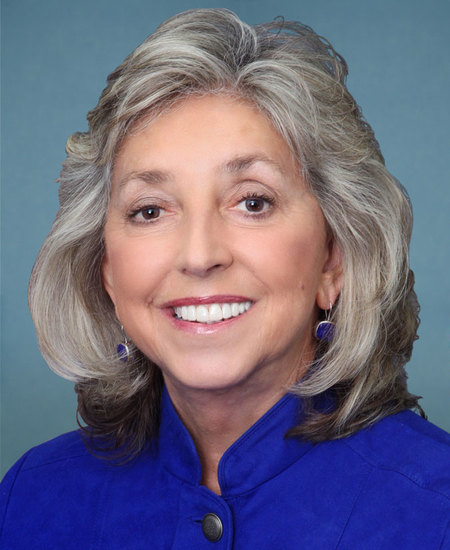
Rep. Dina Titus
Sponsored bills
This resolution expresses the House of Representatives' support for the goals and ideals of National Veterans Small Business Week, celebrates the millions of people in the United States—especially veterans and their spouses—who benefit from Small Business Administration programs, and expresses appreciation for the continued service to the United States by the nation's veterans through small business ownership and entrepreneurship.
Sgt. Isaac Woodard, Jr. and Sgt. Joseph H. Maddox GI Bill Restoration Act of 2021 This bill expands eligibility for Post-9/11 GI bill educational assistance benefits and the Department of Veterans Affairs (VA) home loan program. Specifically, the bill explicitly includes the following persons as eligible veterans: Black veterans who served on active duty during World War II who can certify they were denied a specific benefit on the basis of race; and the living surviving spouses, children, grandchildren, or other direct descendants of such veterans described above who can certify the veteran was denied a specific benefit on the basis of race. Such veterans described above must apply for educational or home loan benefits within the five-year period after the passage of this bill to be eligible for benefits. The Government Accountability Office must report on the number of individuals who received educational or housing loan benefits and the total value of such benefits administered by the VA due to the amendments made by the bill. Finally, the VA must appoint a panel of independent experts to develop recommendations regarding additional benefits and assistance for female and minority members of the Armed Forces.
This bill establishes the Advisory Committee on Lesbian, Gay, Bisexual, Transgender, and Queer Veterans to consult with the Department of Veterans Affairs regarding the administration of benefits for lesbian, gay, bisexual, transgender, and queer (LGBTQ) veterans, reports and studies pertaining to LGBTQ veterans, and the needs of such veterans with respect to compensation, health care, rehabilitation, outreach, and other benefits and programs.
Burial Equity for Guards and Reserves Act of 2021 This bill prohibits the Department of Veterans Affairs (VA) from establishing a condition for a cemetery grant that restricts the ability of a state to inter certain reservists (or their spouses and children) at a state-owned veterans' cemetery solely because such individuals are ineligible for burial in an open national cemetery. Specifically, as a condition for grants, the VA cannot restrict the ability of a state to inter a member of a reserve component whose service was terminated under honorable conditions; member of the Army National Guard or Air National Guard whose service was terminated under honorable conditions; member of the Reserve Officers' Training Corps of the Army, Navy, or Air Force who died under honorable conditions while a member; and spouse, minor child, or unmarried adult child of any member described above. The VA is prohibited from (1) denying an application for a grant solely on the basis that the recipient state may use funds to expand, improve, operate, or maintain a veterans' cemetery to allow for the internment of the specified individuals; and (2) enforcing certain conditions on grants for state veterans' cemeteries that were established before the date of enactment of this bill. The bill also provides for plot allowances for the individuals listed in the bill.
Public Health Workforce Loan Repayment Act of 2021 This bill establishes a student loan repayment program for public health professionals. As a condition of participation, recipients must agree to complete a period of full-time employment with a state, tribal, or local public health agency. Individuals eligible for this program include those with public health or health professions degrees, as well as those with degrees in statistics, computer science, or related information technology fields.
Justice for Women Veterans Act This bill requires the Government Accountability Office to conduct a study regarding women involuntarily separated or discharged from the Armed Forces due to pregnancy or parenthood during the period of 1951-1976.
Commission to Study the Stigmatization, Criminalization, and Ongoing Exclusion and Inequity for LGBTQ Servicemembers and Veterans Act This bill establishes the Commission to Study the Stigmatization, Criminalization, and Ongoing Exclusion and Inequity for LGBTQ Servicemembers and Veterans. The Commission must identify and compile information about the history of military policy regarding homosexuality from 1778 onward, including regarding lesbian, gay, bisexual, transgender, and queer (LGBTQ) sexual orientation and gender identity. The Commission must hold public hearings, gather public testimony, examine lasting and disparate impacts of the discriminatory policies on the physical and mental well-being of members of the Armed Forces, and make recommendations on appropriate remedies.
Ending the Monopoly of Power Over Workplace Harassment through Education and Reporting Act or the EMPOWER Act This bill makes it an unlawful labor practice for an employer to enter into, or attempt to enforce, a contract with an employee or job applicant that contains a nondisparagement or nondisclosure clause that covers workplace or sexual harassment, including retaliation for participating in a workplace harassment proceeding. The bill exempts certain settlement or separation agreements from such prohibition. The bill also requires the Securities and Exchange Commission to promulgate a regulation that requires any issuer of securities to submit a report for the most recent five-year period with respect to workplace and sexual harassment. The commission must provide for the development and dissemination of training programs and information regarding workplace and sexual harassment. The bill denies a tax deduction for amounts related to judgments and expenses in connection with litigation related to workplace or sexual harassment. It also excludes from gross income, for income tax purposes, any amount received in connection with a claim or settlement related to workplace or sexual harassment, or other unlawful discrimination.
Pandemic Risk Insurance Act of 2021 This bill establishes the Pandemic Risk Reinsurance Program within the Department of the Treasury. The program generally provides compensation to property and casualty insurers if they incur losses as a result of coverage related to pandemics and outbreaks of disease. All insurers as specified in the bill must participate in the program. These insurers must offer, in all property and casualty insurance policies, coverage of losses related to an outbreak of infectious disease or a pandemic for which a covered public health emergency is certified by the Department of Health and Human Services. Additionally, these insurers must offer, in all its commercial property insurance policies, coverage to compensate the insured for a portion of 180 days' fixed costs and payroll triggered upon the certification of a public health emergency and state or local government closure orders without requiring specific proof of losses. The bill establishes the share of insured losses covered by the program and conditions for payment to insurers. The bill also provides for the treatment of reinsurance, captive insurers, other self-insurance arrangements, and state residual market insurance entities. The Government Accountability Office must report on the availability and affordability of property and casualty insurance.