This resolution condemns Turkey's continued occupation of Cyprus and calls on Turkey to withdraw all of its troops from the island. It also calls on Turkey to adhere to NATO's democratic principles and mission.
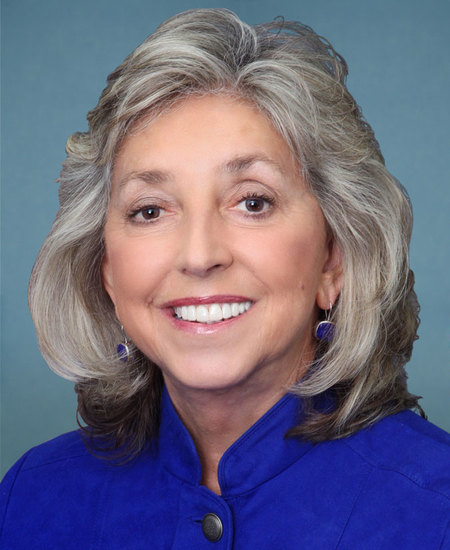
Rep. Dina Titus
Sponsored bills
Humane Cosmetics Act of 2021 This bill generally prohibits animal testing in the evaluation of cosmetic products, and it prohibits the sale or transport of cosmetics developed using animal testing, subject to civil penalties. These prohibitions begin one year after enactment. The bill specifies exceptions to these prohibitions, including if such animal testing (1) is conducted outside the United States to comply with a foreign regulatory authority; (2) is pursuant to a specified finding that there are no nonanimal alternatives to test the safety of a potentially dangerous cosmetic product or ingredient; (3) is of a product or ingredient for a drug or device subject to regulation by the Food and Drug Administration (FDA); or (4) is required for a noncosmetic purpose pursuant to a state, federal, or foreign regulatory authority. Further, no animal-testing evidence may be used to establish the safety of a cosmetic product or ingredient that is regulated by the FDA after the effective date of this bill, subject to limited exceptions.
Mental Health in International Development and Humanitarian Settings Act or the MINDS Act This bill directs the U.S. Agency for International Development (USAID) and the Department of State to integrate mental health and psychosocial support activities across all U.S. foreign assistance programs, with a particular focus on children and other vulnerable populations. To facilitate this integration, the bill makes organizational changes at the USAID. It authorizes the USAID to appoint a coordinator to oversee and direct mental health and psychosocial support activities. The coordinator must ensure that these activities focus on children, adult caretakers and families, displaced populations, and other vulnerable groups. In addition, the bill establishes a working group comprised of representatives from every USAID bureau and the Department of State to coordinate interagency efforts related to, promote best practices for, and ensure sustainability and continuity of mental health and psychosocial support activities. The USAID and the State Department must brief Congress about the amount of foreign assistance spending on mental health and psychosocial support activities and related matters.

Preventing Animal Abuse and Waste Act of 2021 or the PAAW Act of 2021 This bill prohibits the National Institute of Allergy and Infectious Diseases (NIAID) from conducting or supporting research that causes significant pain or distress to a dog. The bill also requires reporting about the use of dogs in research studies. First, the National Institutes of Health must report on ongoing or prospective research conducted or supported by NIAID that causes significant pain or distress to a dog and the amount of funds obligated for such research. Second, NIAID must report on efforts to phase out the use of dogs in the research it conducts or supports.
This resolution states that the Chinese government is responsible for ongoing abuses against the Uyghurs and other ethnic and religious minority groups and that these abuses constitute genocide and crimes against humanity. The resolution also condemns such genocide and crimes against humanity and calls on the President to take certain actions to put an end to these atrocities.
Radiation Exposure Compensation Act Amendments of 2021 This bill expands two programs that compensate individuals who were exposed to radiation during certain nuclear testing or uranium mining and subsequently developed medical conditions, including cancers. First, the bill expands and extends a program that compensates individuals who were exposed to radiation from atmospheric nuclear testing or other sources and subsequently developed specified cancers. Under current law, this program compensates individuals who were present in a designated geographic area during a period of nuclear testing and certain individuals employed in uranium mining. The bill expands the designated areas to include Colorado, Idaho, Montana, New Mexico, and Guam and additional areas in Arizona, Nevada, and Utah; makes more individuals who worked in uranium mining eligible for the program; increases the amount of compensation awarded to and provides medical benefits for eligible claimants; and extends for 19 years following the bill's enactment the fund that supports this program and the statute of limitations for filing claims (currently, the program terminates on July 10, 2022). Second, the bill makes certain individuals employed in uranium mines or mills eligible for a program that compensates workers, including Department of Energy employees and contractors, for illnesses caused by occupational exposure to radiation and hazardous substances during development and testing of the nation's nuclear weapons stockpile. The bill also establishes a grant program in the National Institute of Environmental Health Sciences for institutions of higher education to study the epidemiological impacts of uranium mining and milling among individuals without occupational exposure.
Employee Retention Tax Credit Reinstatement Act This bill provides for a reinstatement of the employee retention tax credit through 2021. The credit was established to compensate employers whose businesses were negatively impacted by the COVID-19 pandemic for wages paid to their employees.
9/11 Memorial and Museum Act This bill directs the Department of Homeland Security (DHS) to award to the official organization that operates the National September 11 Memorial & Museum a one-time grant to be used solely for the purposes of the operation, security, and maintenance of the memorial and museum. As a condition on receipt of the grant, the organization must provide for free admission to all facilities and museums associated with the memorial and museum for active and retired members of the Armed Forces, individuals who were registered first responders to the terrorist attacks of September 11, 2001, and family members of victims of such attacks; provide for dedicated free admission hours for the general public at least once a week; and allow for annual federal audits of its financial statements.
CBD Product Safety and Standardization Act of 2021 This bill requires the Food and Drug Administration (FDA) to regulate food containing cannabidiol (CBD) derived from hemp as a food additive. (The FDA has determined that food containing added CBD cannot be sold in interstate commerce.) Under this bill, in order to be sold, a food containing CBD derived from hemp must conform with current FDA requirements pertaining to food additives or be generally recognized as safe (GRAS). (Under current law, a food additive with the GRAS designation is not subject to FDA premarket review and approval requirements.) In addition, such a food must comply with all other relevant FDA and labeling requirements. Such a food shall be exempt from an existing provision that prohibits the sale of a food containing an additive that is (1) an FDA-approved drug or biological product, or (2) subject to certain clinical investigations. The FDA must issue regulations pertaining to such foods that specify (1) the maximum amount of CBD derived from hemp per serving, (2) labeling and packaging requirements, and (3) any conditions for intended use.
This resolution expresses that the International Atomic Energy Agency (IAEA) plays an indispensable role in strengthening nuclear security and safety around the globe. The resolution also reaffirms that the United States has a vital interest in preventing the spread of nuclear weapons and securing nuclear materials.