This resolution expresses support for the goals and ideals of PCOS Awareness Month. Polycystic ovary syndrome (PCOS) is caused by a hormone imbalance. Symptoms can include infertility, weight gain, excess hair growth, and acne.
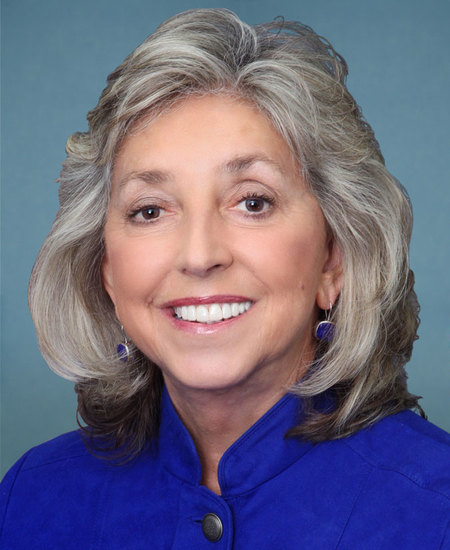
Rep. Dina Titus
Sponsored bills
Student Loan Rehabilitation and Credit Score Improvement Act of 2022 This bill provides for the removal of any adverse credit history related to a federal student loan from a borrower's credit history once the borrower has completed loan rehabilitation.
Medical Student Education Authorization Act of 2022 This bill establishes matching grants awarded by the Health Resources and Services Administration (HRSA) to expand and support medical education with a particular focus on training students to serve as primary care physicians in tribal, rural, or medically underserved communities. HRSA must award the grants to public institutions of higher education located in states that rank in the top quartile of states based on projected unmet demand for primary care providers. In awarding the grants, HRSA must give priority to recipients that (1) are located in states with two or more federally recognized Indian tribes, and (2) demonstrate a public-private partnership. Recipients must use grant funds for specified activities that include developing curricula, expanding partnerships with health care providers and community-based organizations, and providing scholarships.
Climate Risk and Emergency Support In Livable Inclusive and Equitable Neighborhoods and Communities Everywhere Act or the Climate RESILIENCE Act This bill makes changes to the Robert T. Stafford Disaster Relief and Emergency Assistance Act to take into account climate change. The bill includes extreme temperature events, such as heat waves or freezes, within the scope of the act and defines resilience for purposes of disaster assistance and mitigation efforts. Federal and state preparedness and mitigation assistance may be used for reducing the impacts of extreme temperatures and improving air quality and mitigating against wildfire smoke.. The bill authorizes implementing predisaster hazard mitigation measures that will be cost-effective and equitable long-term and provide enhanced protection to the community. The Federal Emergency Management Agency (FEMA) must (1) provide technical assistance to underserved and disadvantaged communities for such measures; and (2) provide guidance to implement the latest published editions of relevant consensus-based codes, specifications, and standards that incorporate the latest hazard-resistant designs. The bill includes within the hazard mitigation program requirements the abatement of lead, mold, mildew, radon, asthma, and allergen triggers, or other pollutants and hazardous materials directly caused by a major disaster or emergency. FEMA must report to Congress regarding challenges posed by FEMA requirements for determining the cost-effectiveness of mitigation activities and how such requirements may disproportionately burden underserved or disadvantaged communities.
Federal Adjustment of Income Rates Act or the FAIR Act This bill modifies pay rates for federal employees in 2023. Specifically, the bill increases rates under the statutory pay systems and for prevailing rate employees by 4.1% and increases locality pay by 1%.
This bill establishes the Digital Literacy and Equity Commission to conduct a study on digital literacy and equity, including the state of digital literacy and information literacy in the United States.
Free At-Home Tests for All Act This bill requires the Department of Health and Human Services (HHS) to provide free antigen diagnostic tests for COVID-19 (i.e., rapid tests) to U.S. residents. The bill also automatically grants emergency use authorization for rapid tests approved by certain foreign regulators. Specifically, HHS must purchase a sufficient quantity of rapid tests to provide two tests per week at no cost to each resident for the 12 months following the bill's enactment. The President may use authorities available under the Defense Production Act of 1950 to obtain the tests. That act confers upon the President a broad set of authorities to influence domestic industry in order to provide essential materials and goods needed for the national defense. In addition, HHS must conduct outreach about the availability of free rapid tests to Medicare and Medicaid participants and make the tests available through those programs. The bill also automatically grants emergency use authorization during the public health emergency for rapid tests that are listed for emergency use by (1) the World Health Organization (WHO), or (2) a foreign regulator that is a stringent regulatory authority as defined by the WHO for purposes of medicine procurement. The Food and Drug Administration (FDA) may rescind authority for, or otherwise regulate, a rapid test that was automatically authorized. Additionally, the FDA must establish a permanent advisory committee focused on diagnostic and serological testing for public health needs.
Maddy summaryThis bill (H.J.Res. 68) is a symbolic, procedural measure that would require the President to issue an annual proclamation designating a day as "Democracy Day." It directs the President to call on state/local governments and citizens to observe the day through programs and activities, with January 6 referenced as a potential date. The bill does not create new government programs or change existing laws - it only establishes a recurring presidential proclamation. It directly affects federal, state, and local governments by encouraging them to participate in annual observances. The bill has no budgetary impact and remains focused on promoting civic engagement through a designated day.
Tiny Homes for Homeless Veterans Act This bill requires the Department of Veterans Affairs to implement a six-year pilot program to provide grants for the creation of five villages of tiny homes for homeless veterans. Under the bill, the villages must have associated supportive services to allow veterans to build and live in energy efficient homes, maintain social connections with each other, learn skills, and receive critical counseling. Under the bill, a tiny home is an individual housing unit that is approximately 240 square feet for one person or approximately 340 square feet if the home is for a family.
PrEP Access and Coverage Act This bill requires private health insurance plans to cover prescription drugs that prevent HIV, including related screenings, diagnostic procedures, administrative fees, and clinical follow-ups, without any cost-sharing obligation for the plan holder. Further, insurance plans must not impose any preauthorization requirement for this coverage. These coverage requirements also apply to public health insurance programs, including Medicare, Medicaid, and the Children's Health Insurance Program. Additionally, the bill prohibits denying, limiting, or qualifying coverage or increasing premiums for disability insurance, long-term care insurance, or life insurance policies based on an individual taking medication for HIV prevention. The bill further requires the Department of Health and Human Services to award grants to states, or directly to eligible local organizations, to provide uninsured individuals and underinsured individuals access to prescription drugs and related services that prevent HIV. The Centers for Disease Control and Prevention also must develop a public awareness campaign that focuses efforts in communities with a high need for HIV prevention treatment.