

This resolution expresses the sense of the House of Representatives that the United States should urge Russia, Ukraine, and other groups involved in the war in Ukraine to implement an immediate cease-fire and engage in negotiations to end the bloodshed, while demanding that Russia withdraw its forces from Ukraine, the Ukrainian oblasts of Donetsk and Luhansk, and the Ukrainian Autonomous Republic of Crimea; the President should direct the U.S. representative to the United Nations to use the voice, vote, and influence of the United States to immediately promote the establishment of an international justice mechanism for Russian war crimes and other crimes against Ukraine, and to prosecute the perpetrators of such serious crimes committed during the period of conflict in Ukraine; and the United States should urge all other interested states to apprehend persons indicted for international crimes, deliver them into the custody of an appropriate justice mechanism for Russian war crimes and other crimes against Ukraine, and provide any and all data and information pertaining to such crimes to that justice mechanism.
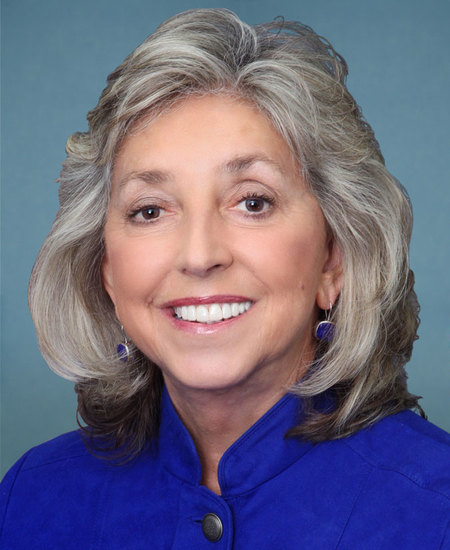
Rep. Dina Titus
Sponsored bills
Food for Thought Act of 2022 This bill allows the Department of Education to award grants for eligible institutions of higher education to provide free meals to low-income students through on-campus meal programs.
This bill provides that no tax information return for winnings from one slot machine play shall be required unless the winnings are at least $5,000 (without reduction for the amount wagered). This threshold amount is adjusted for inflation for calendar years beginning after 2023.
Job Protection Act This bill reduces from 12 months to 90 days the employment period required for employees (including federal employees) to become eligible for family and medical leave. Additionally, the bill makes the family and medical leave requirements applicable to all employers (currently, the requirements apply to employers with 50 or more employees).
This joint resolution expresses that Congress recognizes that the United States' nuclear testing program and radioactive waste disposal in the Marshall Islands caused irreparable material and intangible harm to the people of those islands, apologizes on behalf of the United States to the individuals and families of the Marshall Islands for the hardships they have endured as a result of the U.S. nuclear testing program and radioactive waste disposal, and recognizes that it is incumbent on the United States to open dialogue regarding the nuclear legacy of the United States in the Marshall Islands during any negotiation of the Compact of Free Association or its subsidiary agreements.
Safer Seas Act This bill addresses sexual assault and sexual harassment in the U.S. maritime industry. Among other provisions, the bill requires the U.S. Coast Guard to revoke or suspend a license, certificate of registry, or merchant mariner's document to an individual who has been convicted of sexual assault within the previous 10 years and to revoke or suspend such credentials to an individual who has been convicted of sexual harassment within the previous 5 years; provides protection of seaman against discrimination for those who report or intend to report sexual assault or sexual harassment incidents; directs the Coast Guard to promulgate regulations related to possession and consumption of alcohol by crewmembers aboard documented vessels; requires non-passenger carrying, ocean-going, commercial vessels to install and maintain a video surveillance system with audio capability in areas adjacent to bedrooms and limit access to the surveillance to law enforcement officials and victims of sexual assault or sexual harassment; and creates new reporting mandates and procedures for crew and vessel owners to report sexual assault or sexual harassment.
Minorities in Aviation Education Act of 2022 This bill establishes grants for increasing the exposure of students who are underrepresented in aviation to that industry. The Department of Transportation must award the grants to state and local governments or educational agencies.
Women's Health Protection Act of 2021 This bill prohibits governmental restrictions on the provision of, and access to, abortion services. Specifically, governments may not limit a provider's ability to prescribe certain drugs, offer abortion services via telemedicine, or immediately provide abortion services when the provider determines a delay risks the patient's health. Furthermore, governments may not require a provider to perform unnecessary medical procedures, provide medically inaccurate information, comply with credentialing or other conditions that do not apply to providers whose services are medically comparable to abortions, or carry out all services connected to an abortion. In addition, governments may not (1) require patients to make medically unnecessary in-person visits before receiving abortion services or disclose their reasons for obtaining such services, or (2) prohibit abortion services before fetal viability or after fetal viability when a provider determines the pregnancy risks the patient's life or health. The bill also prohibits other governmental measures that are similar to the bill's specified restrictions or that otherwise single out and impede access to abortion services, unless a government demonstrates that the measure significantly advances the safety of abortion services or health of patients and cannot be achieved through less restrictive means. The Department of Justice, individuals, or providers may bring a lawsuit to enforce this bill, and states are not immune from suits for violations. The bill applies to restrictions imposed both prior and subsequent to the bill's enactment.
Original Black History Month Resolution of 2022 This resolution recognizes the importance of commemorating Black History Month to acknowledge the achievements of Black Americans throughout history.
Avi Kwa Ame National Monument Establishment Act of 2022 This bill establishes the Avi Kwa Ame National Monument in Nevada, consisting of approximately 445,000 acres of federal land administered by the Bureau of Land Management (BLM). It is the purpose of the monument to conserve, protect, and enhance for the benefit and enjoyment of present and future generations the cultural, ecological, scenic, wildlife, recreational, dark sky, historical, natural, educational, and scientific resources of the monument. The Department of the Interior shall manage the monument as a component of the National Landscape Conservation System. Interior shall ensure access to the monument by members of Indian tribes for traditional cultural purposes. Interior shall develop a comprehensive plan for the long-term management of the monument. The bill withdraws federal land located in the monument from entry, appropriation, and disposal under the public land laws; location, entry, and patenting under the mining laws; and operation of the mineral leasing, mineral materials, and geothermal leasing laws. Any land or interest in land within the boundary of the monument that is acquired by the United States shall become part of the monument and be withdrawn as specified above. Interior shall establish the Avi Kwa Ame National Monument Advisory Council to advise Interior on the preparation and implementation of the management plan, including budgetary matters related to the monument. Interior shall transfer administrative jurisdiction of any Bureau of Reclamation land within the monument to the BLM.