

Federal Extreme Risk Protection Order Act of 2022 This bill authorizes and establishes procedures for federal courts to issue federal extreme risk protection orders. Additionally, the bill establishes grants to support the implementation of extreme risk protection order laws at the state and local levels, extends federal firearms restrictions to individuals who are subject to extreme risk protection orders, and expands related data collection. Extreme risk protection order laws, or red flag laws, generally allow certain individuals (e.g., law enforcement officers or family members) to petition a court for a temporary order that prohibits an at-risk individual from purchasing and possessing firearms. Among its provisions, the bill authorizes a family or household member, or a law enforcement officer, to petition for a federal extreme risk protection order with respect to an individual who poses a risk to themselves or others; directs the Department of Justice to establish a grant program to help states, local governments, Indian tribes, and other entities implement extreme risk protection order laws; extends federal restrictions on the receipt, possession, shipment, and transportation of firearms and ammunition to individuals who are subject to extreme risk protection orders; and requires the Federal Bureau of Investigation to compile records from federal, tribal, and state courts and other agencies that identify individuals who are subject to extreme risk protection orders.
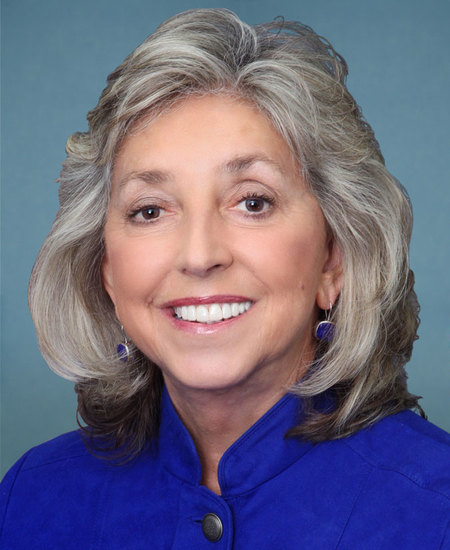
Rep. Dina Titus
Sponsored bills
This resolution condemns in the strongest terms the great replacement theory, which it describes as a white supremacist conspiracy theory that has been used to falsely justify racially motivated, violent acts of terrorism domestically and internationally.
Sustaining Our Democracy Act This bill establishes and provides funds through FY2032 for the State Election Assistance and Innovation Trust Fund for purposes of promoting election activities. Specifically, the bill establishes the Democracy Advancement and Innovation Program, through which the Office of Democracy Advancement and Innovation (also established by this bill) shall make allocations to states for carrying out democracy promotion activities. These activities include improving the administration of federal elections, recruiting and training nonpartisan election officials and poll workers, and increasing voting access. The bill requires each state, in order to receive allocated funds, to (1) submit a plan for approval that describes how the state will distribute resources and carry out democracy promotion activities, and (2) establish uniform and nondiscriminatory state-based administrative complaint procedures. The bill prohibits states from using funds for certain activities, including any activity that diminishes the ability of any eligible voter to participate in the electoral process.
Supporting Entrepreneurs and Economic Development Act or the SEED Act This bill requires lenders to refer applicants for certain small business loans to a resource partner if the applicant is determined ineligible for a loan under the program. Resource partners, such as small business development centers, provide informational tools and training to support business start-ups and existing business expansion. Lenders and the Small Business Administration must report on the number of resource partner referrals and the Government Accountability Office must periodically report on the rate of such referrals.
This bill extends authorization through FY2027 and expands veteran eligibility for certain Department of Veterans Affairs programs for homeless or seriously mentally ill veterans, including (1) outreach services; (2) care, treatment, and rehabilitative services; and (3) therapeutic transitional housing assistance. The bill also extends through FY2027 a program to provide additional services for homeless veterans at certain centers.
Stay Cool Act This bill addresses risks associated with extreme heat, including through grants and activities that support (1) public preparedness and response to heat emergencies, (2) community-based interventions (e.g., cooling centers), (3) air conditioning and other cooling mechanisms in federally assisted housing, and (4) urban green spaces and vegetation.
Opportunities in the Americas Act This bill provides assistance to eligible companies relocating manufacturing from China to a qualifying Latin American or Caribbean country, generally a country in the region that has a free trade agreement with the United States and is not a foreign adversary. For example, the U.S. International Development Finance Corporation must use at least 10 percent of its funding for each fiscal year to provide assistance, such as financing eligible costs for moving and workforce development, to businesses relocating manufacturing from China to a qualifying Latin American or Caribbean country, subject to various conditions and requirements. The bill also provides tax benefits related to certain property acquired and placed in service in connection with such a relocation of manufacturing.
Military Spouse Entrepreneur Reimbursement Act This bill authorizes the military department concerned to reimburse certain business costs (e.g., equipment removal or relocation) incurred by the spouse of a member of the Armed Forces when the member is reassigned or moved to a new duty station.
Keep Infant Formula Safe and On the Shelves Act of 2022 This bill requires the Food and Drug Administration (FDA) to periodically inspect infant formula manufacturing facilities and addresses related issues. The FDA must periodically conduct inspections, including unannounced inspections, of infant formula manufacturer facilities. If the FDA makes a notable regulatory finding at such a facility, the manufacturer must undergo a comprehensive food safety audit that includes a root cause analysis, enhanced testing, and comprehensive environmental samples. A manufacturer of infant formula or essential medical food must notify the FDA no later than five business days after becoming aware of circumstances that could lead to a shortage of the relevant product in the United States. Further, the FDA must create and annually update a list of U.S. manufacturing facilities that could be converted to manufacture infant formula during a shortage. In the event of a shortage, the FDA may require infant formula manufacturers to provide certain information, such as the quantity of formula in a manufacturer's inventory. The bill also establishes under statute that food, including infant formula, is a critical material essential to the national defense and therefore subject to authorities under the Defense Production Act of 1950. (Such authorities authorize the President to take various actions, such as requiring businesses to prioritize certain government contracts and incentivizing the domestic industrial base to expand the production of critical materials.) The Occupational Safety and Health Administration must issue a fact sheet and provide technical assistance to infant formula manufacturers to promote compliance with occupational health and safety standards.
Military Access to Reproductive Care and Health for Military Servicemembers Act or the MARCH for Military Servicemembers Act This bill repeals the restriction on utilizing Department of Defense funds and facilities for performing abortions. The restriction only allows such funds and facilities to be used for abortions in cases of rape, incest, or where the mother's life is endangered.