Downpayment Toward Equity Act of 2021 This bill establishes a grant program through the Department of Housing and Urban Development for states and other entities to provide qualifying assistance to certain first-time, first-generation home buyers in purchasing their first homes. Qualifying assistance includes assistance for mortgage down payments, mortgage closing costs, reduction of mortgage interest rates, subsidies for shared equity homes, or for certain preoccupancy modifications to a home to accommodate persons with disabilities. The bill also establishes grant requirements regarding home buyer income, types of housing, homeowner occupancy, types of mortgages, and home buyer counseling.
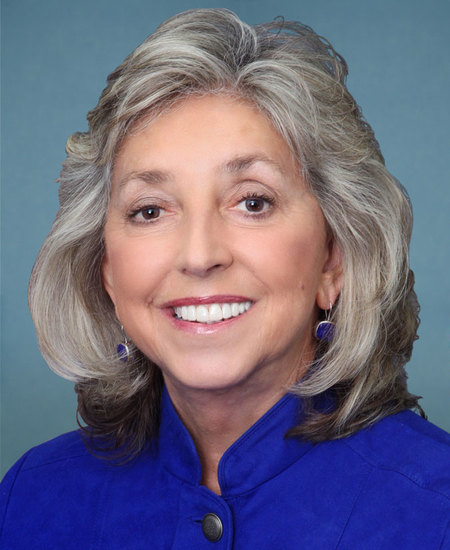
Rep. Dina Titus
Sponsored bills
This resolution celebrates the 50th anniversary of the Federal Pell Grant program and expresses support for the designation of National Federal Pell Grant Day.
This resolution expresses support for the goals and ideals of Caribbean American Heritage Month. The resolution also affirms that (1) the contributions of Caribbean Americans are a significant part of the history, progress, and heritage of the United States; and (2) the ethnic and racial diversity of the United States enriches and strengthens the nation.
Good Jobs for Good Airports Act This bill addresses pay, benefits, and labor standards for certain airport service workers. Airport service workers include security officers, food service workers, cleaning staff, ticketing agents, and retail service workers. Specifically, the bill establishes a minimum wage and benefit standard for such airport service workers at large, medium, and small hub airports. It also prohibits small, medium, and large hub airports from accessing federal funds for airport development projects unless the airports certify that such airport service workers are paid no less than the higher of $15 per hour, the applicable state or local minimum wage and fringe benefits, or the prevailing wage and fringe benefits required under the Service Contract Act as established by the Department of Labor.
Water Data Act This bill requires federal departments and agencies involved in water resources management to jointly develop and implement a National Water Data Framework and establish an interagency council, advisory committee, and grant program. Specifically, the bill requires the departments to jointly develop and implement a National Water Data Framework for integrating, sharing, and using water data to support water resources management and access. The departments must (1) develop and adopt common national standards for water data, (2) integrate water data and tools through common approaches to data infrastructure and platforms, and (3) harmonize and align water data policies and programs. The bill further requires these departments to establish an interagency Water Data Council to support the development and implementation of the framework. The bill also requires the Department of the Interior to establish an Advisory Committee on Water Information to advise Interior, the departments, and the council on the framework. The advisory committee members must include those involved in water-related activities across different sectors (e.g., state and local governments, Indian Tribes, water agencies, private sector entities, and nonprofit organizations). Finally, the bill requires Interior to establish a Water Data Grant Program in coordination with the council for nonfederal entities to carry out the purposes of this bill.
Prohibit Wildlife Killing Contests Act of 2022 This bill makes it unlawful for any persons, except as provided below, to organize, sponsor, conduct, or participate in wildlife killing contests on public lands. This bill shall not apply to field trials, wildlife killing contests that exclusively target ungulates (e.g., deer) or birds of the orders Galliformes (e.g., turkeys) or Anatidae (e.g., ducks), or lethal control actions by state or federal agencies that target wildlife classified as invasive by the National Invasive Species Information Center.
Lavender Offense Victim Exoneration Act of 2022 or the LOVE Act of 2022 This bill offers a formal apology from Congress for encouraging policies at the Department of State, such as the Lavender Scare, which resulted in the wrongful termination of at least 1,000 people for alleged homosexuality, and addresses related issues. The State Department must (1) review all employee terminations that occurred as a consequence of the Lavender Scare to identify those who were wrongfully terminated, and (2) issue a public report on the findings. The State Department must establish an independent Reconciliation Board to contact any employee (or a family member of a deceased employee) wrongfully terminated during the Lavender Scare and offer to change the employee's record to reflect this finding. The board must accept and review petitions from former employees who believe they were terminated due to sexual orientation. The State Department must establish a board of senior-level officials to address issues that lesbian, gay, bisexual, transgender, queer, and intersex (LGBTQI) Foreign Service employees and their families face. The board must report on improving State Department policies to prevent discrimination based on sexual orientation, gender identity, or sex characteristics. The State Department must report on (1) countries that do not issue spousal visas for Foreign Service employee spouses due to sexual orientation, gender identity, or sex characteristics; and (2) recommendations for State Department responses, such as eliminating visa reciprocity for such countries.
Providing for Unhoused People with Pets Act of 2022 or the PUPP Act of 2022 This bill permits the Department of Housing and Urban Development to award grants for interim and permanent housing that accommodates individuals (or families) who are homeless and have pets. Entities eligible for the grant include local governments, nonprofits, and entities that house or shelter homeless individuals.
Recovering America’s Wildlife Act of 2022 This bill provides funding for the conservation or restoration of wildlife and plant species of greatest conservation need, including endangered or threatened species, and establishes related requirements. TITLE I--WILDLIFE CONSERVATION AND RESTORATION (Sec. 101) This title establishes and funds a subaccount of the Wildlife Conservation and Restoration Account, which was established under the Pittman-Robertson Wildlife Restoration Act. The subaccount must be used to support efforts of states, territories, or the District of Columbia to recover and manage wildlife and plant species of greatest conservation need. The Department of the Interior must use a portion of the funding from the subaccount for grants to state fish and wildlife departments, the District of Columbia fish and wildlife department, fish and wildlife departments of territories, nonprofit organizations, or regional associations of fish and wildlife departments. The grants must be used for innovative recovery efforts for species of greatest conservation need, species listed as endangered or threatened species, or the habitats of such species. Funding for the subaccount must supplement existing funds available to the states from funds distributed under the Dingell-Johnson Sport Fish Restoration Act and the Wildlife Conservation and Restoration Account. Recipients of the funding from the subaccount must match federal funds as specified by the title. The Government Accountability Office must study and report on the progress of states, territories, the District of Columbia, and Indian tribes in protecting species of greatest conservation need, endangered species, and threatened species. TITLE II--TRIBAL WILDLIFE CONSERVATION AND RESTORATION (Sec. 201) This title establishes and funds a Tribal Wildlife Conservation and Restoration Account to support Indian tribes' efforts to recover and manage wildlife and plant species of greatest conservation need. Indian tribes are not required to provide matching funds. TITLE III--ENDANGERED SPECIES RECOVERY AND HABITAT CONSERVATION LEGACY FUND (Sec. 301) This title establishes and funds through FY2026 the Endangered Species Recovery and Habitat Conservation Legacy Fund. The U.S. Fish and Wildlife Service must use the fund to (1) implement an Endangered Species Recovery Grant Program; (2) address its interagency consultation responsibilities under the Endangered Species Act of 1973; (3) work with nonfederal entities to conserve wildlife habitat and at-risk species, threatened or endangered species, or species proposed to be listed as threatened or endangered species; or (4) address the development and permitting of voluntary conservation agreements under such act. Amounts made available under the fund must supplement other federal amounts made available to carry out such activities. The President must annually submit to Congress, together with the annual budget of the United States, a list of threatened species and endangered species for which recovery plans will be developed or implemented with amounts from the Endangered Species Recovery and Habitat Conservation Legacy Fund. TITLE IV--REPORT (Sec. 401) Interior must also report on information concerning the amount of grants and contracts that were awarded or are allocated under this bill to Historically Black Colleges and Universities, Hispanic-serving educational institutions, tribally controlled colleges and universities, minority-serving educational institutions, minority-owned business enterprises, women-owned business enterprises, and community-based organizations that are principally administered by, operated by, or serving minority communities.

Assault Weapons Excise Act This bill imposes an additional 1000% excise tax on large capacity ammunition feeding devices and semiautomatic assault weapons. It exempts from such additional tax devices and weapons acquired by the United States or by a state or local government.