

Original Slavery Remembrance Day Resolution of 2021 This resolution supports the designation of a Slavery Remembrance Day and condemns slavery and its progenies.
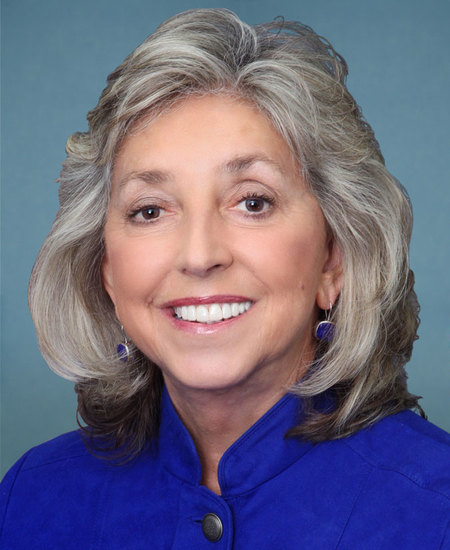
Rep. Dina Titus
Sponsored bills
Atrocity Crimes, Relief and Accountability Act or the ACRA Act The bill requires the State Department and the U.S. Agency for International Development to provide assistance to suspected victims, survivors, and witnesses of war crimes; establishes a Ukraine victims trust fund; and establishes a Ukraine atrocity crimes rewards fund. The bill also allows the International Criminal Court to conduct limited activities in the United States relating solely to foreign nationals suspected of committing war crimes in Ukraine.
Shirley Chisholm Congressional Gold Medal Act This bill provides for the posthumous presentation of a Congressional Gold Medal in commemoration of Shirley Chisholm, in recognition of her activism, independence, and groundbreaking achievements in politics, election as the first African American woman in Congress, and campaign to be the first African American to gain the nomination of a major political party for President of the United States. Following its award, the gold medal shall be given to the Smithsonian Institution where it shall be available for display and research.
Naomi Schwartz Safe Parking Program Act of 2021 This bill directs the Department of Housing and Urban Development to establish a grant program for safe parking programs operated by local governments, tribes, nonprofit organizations, and certain organizations that assist the homeless. Safe parking programs provide homeless individuals living in vehicles with (1) a safe place to park overnight to facilitate a transition to stable housing, and (2) services including rehousing assistance and case management.
American Families United Act This bill authorizes the Department of Homeland Security (DHS) or the Department of Justice (DOJ) to exercise discretion in certain immigration cases. The bill also removes certain requirements related to birthright citizenship. Under this bill, DOJ or DHS may, on a case-by-case basis, exercise discretion by declining to remove an alien or bar an alien from entering the United States to prevent hardship for the alien's U.S. citizen spouse, parent, or child. However, DOJ or DHS may not exercise this discretion if the alien is removable or inadmissible due to certain grounds, including specified crime- and security-related grounds. The bill also removes certain requirements related to birthright citizenship for a child born outside of the United States to one U.S. citizen parent and one alien parent. Specifically, the bill removes a provision that requires the U.S. citizen parent to be physically present in the United States for at least five years before the child's birth in order for the child to acquire U.S. citizenship at birth.
Equal Access to Justice for Victims of Gun Violence Act of 2022 This bill removes limitations on the civil liability of gun manufacturers and the disclosure of gun trace data in civil actions. Specifically, the bill repeals the Protection of Lawful Commerce in Arms Act, which prohibits civil actions against a firearm or ammunition manufacturer, seller, importer, dealer, or trade association for damages resulting from the criminal or unlawful misuse of a firearm. Additionally, the bill states that firearms trace data maintained by the Bureau of Alcohol, Tobacco, Firearms and Explosives is not immune from legal process. Such data is subject to discovery; is admissible as evidence; and may be used, relied on, or disclosed in a civil action or administrative proceeding.
Right to Contraception Act This bill sets out statutory protections for an individual's right to access and a health care provider's right to provide contraception and related information. Contraception refers to an action taken to prevent pregnancy, including the use of contraceptives (i.e., a device or medication used to prevent pregnancy), fertility-awareness based methods, and sterilization procedures. Generally, the bill prohibits measures that single out and impede access to contraception and related information. However, a party may defend against a claim that a measure violates the bill's prohibitions by demonstrating, through clear and convincing evidence, that the measure significantly advances access to contraception and cannot be achieved through less restrictive means. The Department of Justice, individuals, or health care providers may bring a lawsuit to enforce this bill, and states are not immune from suits for violations.
Canyon's Law This bill prohibits the preparing, placing, installing, setting, deploying, or otherwise using an M-44 device on public land. An M-44 device is defined as a device designed to propel sodium cyanide when triggered by an animal, including any device that may be commonly known as an M-44 ejector device or an M-44 predator control device. No later than 30 days after the enactment of this bill, any federal, state, or county agency that has prepared, placed, installed, set, or deployed an M-44 device on public land shall remove each such device from such land.
Colorado River Drought Response Act This bill authorizes appropriations for the Department of the Interior to reduce the near-term likelihood of Lake Mead (in Arizona and Nevada) and Lake Powell (in Arizona and Utah) declining to critically low water elevations. These reservoirs are part of the Colorado River Basin. The bill also decreases the amount of time Interior has to act on existing requirements to establish grant programs for watershed habitat restoration and large-scale water recycling and reuse in certain western states.
LGBTQI+ and Women's History Education Act of 2022 This bill directs the National Museum of American History of the Smithsonian Institution to carry out, among other things (1) the development and national dissemination of accurate, relevant, and accessible national resources for classrooms to administer LGBTQI+ and women's history education in an inclusive and intersectional approach; (2) the development, national dissemination, and implementation of principles of sound pedagogy for administering LGBTQI+ and women's history education; and (3) the development, operation, and expansion of a teacher fellowship program to cultivate and support leaders in LGBTQI+ and women's history education. In addition to the activities described in this bill, the museum shall develop and maintain on its website content designated for educators, students, and families to improve their awareness and understanding of LGBTQI+ and women's history education.