

Stop Nurse Shortages Act This bill includes the development of accelerated nursing programs to increase the number of graduating nurses (including graduates who are from disadvantaged backgrounds) as a priority area for certain grants made to institutions of higher education or other eligible entities for nurse education, practice, quality, and retention.
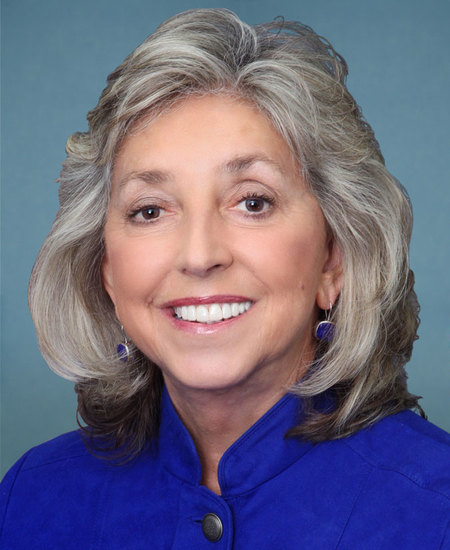
Rep. Dina Titus
Sponsored bills
Global Malnutrition Prevention and Treatment Act of 2021 This act sets out programs and otherwise directs the U.S. Agency for International Development (USAID) to carry out activities to prevent and treat malnutrition globally. Specifically, USAID may leverage resources to address malnutrition through the Global Nutrition Coordination Plan (an interagency effort to strengthen the impact of U.S. investments in nutrition) and its role on the board of directors of the U.S. International Development Finance Corporation. USAID must also select countries based on specified malnutrition-related indicators for purposes of targeting malnutrition prevention and treatment programs and update the selection within five years. Additionally, USAID may establish the Nutrition Leadership Council to coordinate federal government activities to prevent and treat malnutrition; and target resources and nutrition interventions to the populations most susceptible to severe malnutrition and otherwise support efforts to prevent and treat malnutrition globally. The act also requires USAID to provide to Congress an implementation plan and annual reports concerning its programs for treating and preventing malnutrition. The act's provisions terminate seven years after its enactment.
This concurrent resolution commemorates the 50th anniversary of the enactment of the Federal Water Pollution Control Act Amendments of 1972, commonly known as the Clean Water Act.
This resolution condemns Russia's invasion of Ukraine, supports the people of Ukraine in their fight for freedom, and urges the President to support the creation of a Special Tribunal for the Crime of Aggression against Ukraine.
Combating Organized Retail Crime Act of 2022 This bill expands federal enforcement of criminal offenses related to organized retail crime. Organized retail crime typically refers to large-scale retail theft and fraud by organized groups of professional shoplifters, or boosters, who make money by stealing merchandise and reselling it for a fraction of the retail cost. First, with respect to criminal offenses involving the transportation of stolen property across state lines and the sale or receipt of stolen goods, the bill broadens the scope of conduct that qualifies as offenses. Additionally, the bill makes the offenses predicate offenses (i.e., underlying offenses) for prosecutions under the federal money laundering statute and authorizes the criminal forfeiture of any property representing or traceable to the gross proceeds obtained as a result of an offense or a conspiracy to commit an offense. Second, with respect to criminal offenses involving theft from an interstate or foreign shipment, the bill makes an offense an underlying offense for prosecution under the federal money laundering statute and authorizes the criminal forfeiture of any property representing or traceable to the gross proceeds obtained as a result of an offense or a conspiracy to commit an offense. Finally, the bill establishes a center—the Organized Retail Crime Coordination Center—within the Department of Homeland Security to coordinate the federal law enforcement activities related to organized retail crime.
Strained Partnership Act This bill requires the removal of all U.S. Armed Forces and equipment from Saudi Arabia. Certain equipment, specifically Patriot missile batteries and the Terminal High Altitude Area Defense system, shall be relocated to other locations in the Middle East, to the extent practicable.
Colorado River Basin Conservation Act This bill reauthorizes the Department of the Interior to fund or participate in pilot projects to increase Colorado River System water in Lake Mead and the Colorado River Storage Project reservoirs through FY2026. Interior administers these pilot projects to address the effects of drought conditions on the Colorado River Basin, which includes the Upper Basin states (Colorado, New Mexico, Utah, and Wyoming) and Lower Basin states (Arizona, California, and Nevada). The bill also requires Interior to submit an updated report to Congress by the end of FY2027 on the effectiveness of the pilot projects and a recommendation on whether to continue the program.
John Lewis Civil Rights Fellowship Act of 2022 This bill establishes the John Lewis Civil Rights Fellowship Program within the J. William Fulbright Educational Exchange Program (commonly referred to as the Fulbright Program). The fellowship program shall honor the legacy of Representative John Lewis and advance U.S. foreign policy priorities by promoting studies, research, and international exchange in the subject of nonviolent civil rights movements around the world. The Fulbright Foreign Scholarship Board shall annually select qualified individuals to serve as fellows in the fellowship program. The Bureau of Educational and Cultural Affairs may determine the number of fellows for each year, with at least 25 fellows each year whenever feasible. Each fellow shall (1) work in an internship or research position with an approved organization in a country with an operational Fulbright U.S. Student Program, and (2) receive an award sufficient to cover the fellow's reasonable costs during the fellowship period and certain travel and lodging expenses related to the program.
Millennium Challenge Corporation Eligibility Expansion Act This bill modifies income-related eligibility requirements for assistance from the Millennium Challenge Corporation (MCC), a program that provides assistance through a competitive selection process to eligible developing countries based on various factors, including a country's level of economic freedom and effectiveness of government. Currently, to be a candidate to receive MCC assistance, a country must, among other requirements, must (1) fit the World Bank's income-based criteria for a low- or lower-middle-income country, or (2) be among the 75 lowest per capita income countries according to the World Bank. Under this bill, a candidate country must have a gross national income per capita no higher than the 125th poorest country as identified by the World Bank for the fiscal year.
Global Food Security Reauthorization Act of 2022 This bill reauthorizes through FY2028 activities to implement the Global Food Security Strategy, a whole-of-government strategy to promote global food security, resilience, and nutrition. The bill also modifies aspects of the strategy, such as requiring the strategy to seek to improve the efficiency and resilience of agricultural production. The bill also reauthorizes through FY2028 activities related to the Emergency Food Security Program, an international market-based assistance program.