

Maddy summaryHR 3624, the Travel Trailer and Camper Tax Parity Act, amends the tax code to include certain towable travel trailers and campers under floor plan financing rules. This change directly affects recreational vehicle (RV) dealers and manufacturers who sell trailers designed for temporary living quarters (like camping or seasonal use) that are towed by or attached to a motor vehicle. The key provision expands the definition in tax law so these vehicles qualify for the same business tax treatment as other floor plan inventory, allowing dealers to deduct financing costs over time instead of upfront. The law applies to taxable years starting after December 31, 2022.
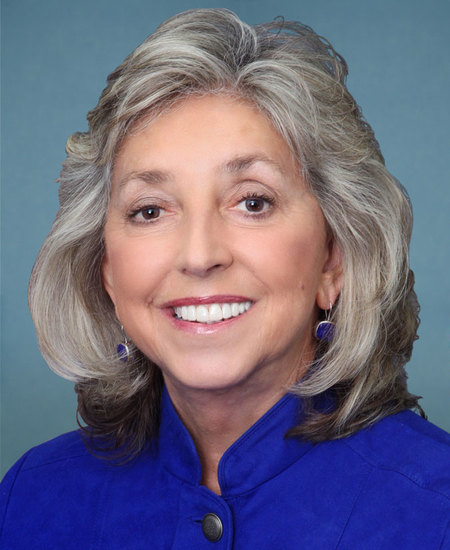
Rep. Dina Titus
Sponsored bills
This bill directs the Federal Aviation Administration (FAA) to require that medications and medical equipment for the emergency treatment of a known or suspected opioid overdose be included in an aircraft emergency medical kit; the FAA must, to the maximum extent possible, follow the guidance of the Aerospace Medical Association. In a 2019 guidance document to the FAA, the Aerospace Medical Association recommended including an opioid antagonist (e.g., naloxone or Narcan) in an aircraft emergency medical kit.
Maddy summaryHRES 439 is a non-binding resolution expressing the House of Representatives' support for keeping the U.S. Postal Service (USPS) as an independent federal agency, not subject to privatization. It highlights USPS's constitutional role, self-sustaining nature (relying on service revenue, not taxpayer funds), and its importance to rural communities, e-commerce, and over 600,000 employees. The resolution urges Congress to take action to preserve USPS's independence, emphasizing that privatization could raise prices, reduce services, and harm the nation's mail infrastructure. As a procedural resolution, it does not change law but formally states the House's position.
Maddy summaryThe AIR PUMP Act requires airlines to provide nursing crew members (like flight attendants and pilots) with reasonable break time to express breast milk for up to one year after their child's birth, as well as a private, non-bathroom space for this purpose. It specifically excludes breaks during critical flight phases and ensures accommodations won't compromise safety, security, or require significant costs (e.g., aircraft modifications). The bill includes anti-retaliation protections for employees who request accommodations or file complaints, and enforces these requirements through the Department of Labor using existing Fair Labor Standards Act mechanisms. This directly affects airline employees who are nursing parents and their employers, aligning airline workplace policies with federal breastfeeding protections.
Maddy summaryHR 3593, the Drone Infrastructure Inspection Grant Act, creates two federal grant programs to support the use of domestic drones for inspecting critical infrastructure. It provides grants to state and local governments (e.g., for inspecting bridges, power grids, or water systems) and to eligible educational institutions (e.g., for training drone operators) to purchase or lease U.S.-made drones that avoid foreign-controlled components. The bill limits federal funding to 50-75% of project costs and allocates $2 million for 2024 and $12 million annually through 2028. It requires grant recipients to use drones manufactured in the U.S. by non-foreign-controlled companies, with priority given to projects addressing safety risks across diverse communities.
Historic Preservation Fund Reauthorization Act This bill extends through FY2033 and increases funding for the National Park Service's Historic Preservation Fund. The funding is provided from revenues from Outer Continental Shelf oil and gas leases, and awards from the fund are made to states and other entities, including tribes and nonprofits.
Permit Reform In Mining for Energy and Defense Act or the PRIMED Act This bill makes certain actions taken by the Department of Defense to secure critical materials for energy infrastructure (e.g., minerals) eligible for an expedited environmental review by including those projects within the scope of covered projects under the Fixing America's Surface Transportation (FAST) Act.
Maddy summaryHRES 422 is a non-binding resolution recognizing National Public Works Week, observed annually during the week of May 21-27. It encourages Americans to honor public works professionals - including engineers, maintenance staff, and local government employees - who maintain critical infrastructure like roads, water systems, and public buildings. The resolution highlights their role in supporting community health, safety, and quality of life without creating new laws or requirements. As a formal tribute, it serves to raise public awareness of these workers' contributions.
Maddy summaryThe EVs for All Act of 2023 establishes a Department of Energy grant program to fund electric vehicle (EV) sharing services at public housing projects. Eligible entities - like public housing agencies, local governments, and partner nonprofits - can apply for grants to purchase used EVs, install charging equipment, and run community outreach. Grants prioritize projects in historically marginalized communities with high pollution or limited transportation access, require fair labor practices, and mandate affordable, non-discriminatory charging fees. The program requires grantees to report on usage, emissions reductions, and service costs while ensuring EVs meet domestic content and worker protection standards.
Maddy summaryThis bill requires that AM radio receivers be included as standard equipment in all new motor vehicles (such as cars and trucks) sold in the United States, with a rule to be issued by the Department of Transportation within one year. The rule must ensure AM radio is easily accessible on the dashboard and allows manufacturers to use digital AM radio technology instead of traditional AM. During the one-year period between the bill's enactment and the rule's effective date, manufacturers must clearly label vehicles without AM radio. The bill also directs a study to evaluate whether an alternative system could deliver emergency alerts as reliably as AM radio across the country, especially during crises.