

Maddy summaryJaime’s Law requires federal background checks for ammunition purchases by expanding existing firearm background check rules to include ammunition. It mandates that unlicensed buyers must transfer ammunition through a licensed dealer (e.g., a gun store), who conducts the background check before completing the sale. The law includes exemptions for transfers between family members, law enforcement, transfers due to death, immediate self-defense situations, and legitimate shooting or hunting activities (with specific conditions). It explicitly states the law does not create a national ammunition registry and does not override state laws on ammunition.
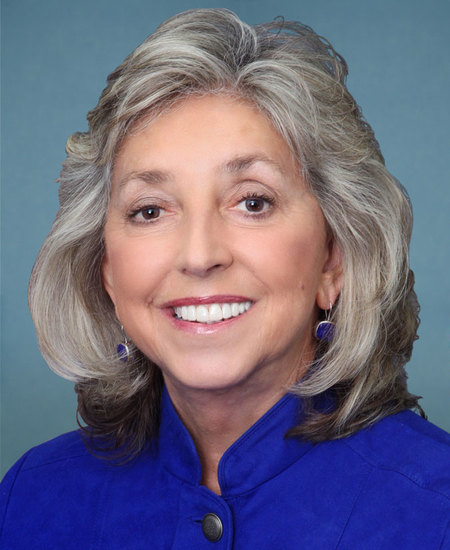
Rep. Dina Titus
Sponsored bills
Maddy summaryThe Afghan Adjustment Act creates a pathway for certain Afghans who directly supported U.S. missions in Afghanistan during the 20-year U.S. military presence to adjust to lawful permanent resident status (green card holders). It specifically targets Afghans who worked with U.S. forces or agencies, including military personnel, security personnel, and their families, who received "Chief of Mission approval" for special immigrant status. Key provisions include new vetting requirements (in-person interviews and biometric screening), exemption from immigration numerical limits, $20 million annually for implementation, and a task force to develop resettlement strategies. The bill also establishes a new category of special immigrant visas for at-risk Afghan allies and sets a two-year application deadline after guidance is published.
Maddy summaryThe Veteran Service Recognition Act of 2023 requires the Department of Defense, Homeland Security, and Veterans Affairs to study noncitizen veterans removed from the U.S. between 1990 and 2023, documenting their service history and reasons for removal. It establishes a system to identify noncitizen veterans before removal proceedings and creates a Military Family Immigration Advisory Committee to review cases and recommend against removal for veterans. The bill also creates a program to facilitate citizenship for noncitizen service members and provides pathways for previously removed noncitizen veterans to adjust to lawful permanent residence. These provisions directly affect noncitizen veterans and their family members facing immigration proceedings, aiming to better recognize military service in immigration decisions.
Maddy summaryHR 4588, the Senator Paul Simon Study Abroad Program Act of 2023, renames and enhances the existing "IDEAS" grant program to increase U.S. student participation in study abroad. It authorizes $10 million annually to fund competitive grants for colleges and universities (especially minority-serving institutions and those with world language programs), requiring grantees to demonstrate plans for expanding access to underrepresented students, ensuring diversity in participation, and prioritizing study in developing countries. The bill sets a goal of 1 million U.S. undergraduates studying abroad annually within 10 years, with a focus on low-income students, students of color, and community college attendees who are currently underrepresented. It mandates annual reports to Congress on program implementation and requires grantees to maintain health/safety protocols for students abroad.
Maddy summaryHR 4579, the Fairness for Farm Workers Act, amends the Fair Labor Standards Act to establish phased overtime requirements for agricultural workers. Starting in 2024, most farm employers must pay overtime for hours worked beyond 55 per week (reducing to 50 in 2025, 45 in 2026, and 40 in 2027), with small farms (25 or fewer employees) getting a 3-year delay on the full 40-hour standard. The bill also removes existing exemptions that allowed some agricultural employers to avoid overtime pay for certain workers. This directly affects farm workers in agriculture and their employers, requiring compliance with standard overtime rules previously not applied to this sector.
Legacies of War Recognition and Unexploded Ordnance Removal Act This bill authorizes humanitarian assistance to Vietnam, Laos, and Cambodia to clear landmines and other explosive remnants of war. Under the bill, the President may, from FY2024 through FY2029, provide humanitarian assistance to (1) develop national surveys of landmines and other explosive remnants of war; (2) clear such explosive remnants of war; (3) manage stockpiles of small arms, light weapons, and ammunition; (4) build capacity and improve physical security related to such explosive remnants of war; and (5) support survivors of incidents involving such explosive remnants of war, including by providing related medical assistance and prosthetic devices. The bill also requires the President to report to Congress about any assistance provided.
Maddy summaryHR 4550 creates a federal grant program to help public elementary, secondary, and preschool schools recruit and retain paraprofessionals (school support staff like teaching assistants). The bill directs the Secretary of Education to fund state education agencies, which then distribute subgrants to schools - prioritizing those serving high numbers of low-income students - to support activities like mentoring programs, professional development, and wage increases or certification assistance (e.g., for special education or English learner support). States must report annually on wage baselines, paraprofessional numbers, and program outcomes. This bill directly affects schools and paraprofessionals, with funding authorized for fiscal years 2024-2028.
Maddy summaryThis bill requires national parks to reduce disposable plastic products, primarily targeting plastic water bottles and food containers sold to visitors. Park directors must eliminate these sales where feasible after considering factors like operational costs, waste reduction, infrastructure for refill stations, and impacts on park vendors. Each park must also implement visitor education about water availability and report biennially on progress, including visitor satisfaction and safety metrics. The law directly affects all national park units, concessionaire businesses, and park visitors. It mandates a phased, practical approach without banning all plastics immediately.
Maddy summaryThe DISCLOSE Act of 2023 would increase transparency in political spending by requiring organizations making campaign-related disbursements over $10,000 to disclose the names and addresses of their major donors, including the top five funders for political communications. It would close loopholes allowing foreign nationals to secretly fund election activities through corporations or other entities by expanding the definition of prohibited foreign contributions. The bill would mandate "stand by every ad" disclosure requirements for political communications across all media, including audio, video, and internet ads, requiring clear identification of funders. It would also require reporting of disbursements related to Federal judicial nominations, which currently aren't subject to disclosure requirements. These provisions would apply to corporations, labor organizations, and certain nonprofits that engage in political activity.
Maddy summaryHR 3829, the Higher Education Marijuana Research Act of 2023, makes it easier for universities in states where marijuana is legal to conduct research. It prioritizes research license applications from colleges and universities, allows them to obtain marijuana from state or tribal regulators for medical, agricultural, or public health studies, and protects students and researchers from losing federal aid or facing immigration issues due to their participation. The bill also creates new $15 million annual grant programs through the NIH (for medical research) and USDA (for agricultural research), requiring reports on licensing and streamlining the process for academic marijuana studies. It directly affects institutions of higher education in states with legal marijuana markets, enabling them to study marijuana’s medical benefits and agricultural impacts without federal restrictions on their research activities.