

Maddy summaryHR 4566, the PRESUME Act, changes how veterans exposed to radiation during military service qualify for medical benefits. It prohibits the Department of Veterans Affairs from requiring veterans to provide evidence of a specific radiation dose to be classified as "radiation-exposed." This directly affects veterans who served in roles involving radiation exposure, such as those participating in atomic testing or working with nuclear materials. The bill streamlines eligibility by removing a key barrier to accessing medical benefits they are already entitled to under existing law.
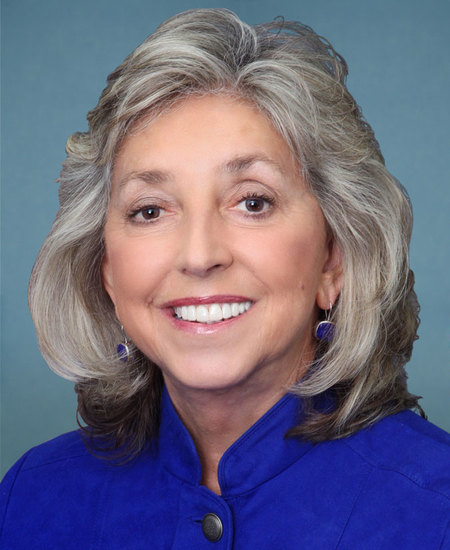
Rep. Dina Titus
Sponsored bills
Maddy summaryThis bill codifies the Young African Leaders Initiative (YALI) as a formal U.S. government program. It authorizes annual fellowships for African leaders aged 25-35 to participate in U.S.-based leadership training (including the Mandela Washington Fellowship) and establishes at least four regional leadership centers across sub-Saharan Africa for ongoing professional development in business, civic engagement, and public administration. The program requires annual congressional reports on progress and impacts, with implementation ending after five years. Directly affecting young African leaders (ages 18-35 for regional centers) in business, civic leadership, and governance, it provides structured training, networking, and technical assistance to strengthen U.S.-Africa partnerships.
Maddy summaryThis bill would authorize the U.S. government to confiscate Russian sovereign assets held in U.S. jurisdiction and use those funds to support Ukraine's reconstruction and humanitarian needs following Russia's invasion. It prohibits releasing these blocked assets until Russia fully compensates Ukraine or agrees to an international compensation mechanism. The bill establishes a "Ukraine Support Fund" to hold confiscated assets and requires regular congressional reporting on how these funds are allocated for Ukraine's recovery. It also includes provisions for international coordination with allies on sanctions and asset management related to Russia's invasion of Ukraine.
Maddy summaryThe SHIP Act imposes sanctions on foreign entities that knowingly handle Iranian petroleum, targeting those involved in port operations, transportation, refining, or ship-to-ship transfers of Iranian oil. Starting 90 days after enactment, the President must block assets, deny visas, and impose penalties on individuals or companies engaging in these activities, including family members or owners of sanctioned entities. It requires annual reports tracking Iran's oil exports, revenues, and key players like shipping companies and ports. The sanctions terminate if the President certifies Iran has stopped supporting terrorism and dismantled weapons programs.
Maddy summaryHR 6216 expands the Sloan Canyon National Conservation Area boundary from 48,438 to 57,728 acres and grants the Southern Nevada Water Authority rights-of-way for pipeline construction without requiring payment of rents or fees. The bill designates approximately 736,188 acres in Clark and Lincoln Counties as the Southern Paiute Wilderness, with specific provisions for water rights management and wildlife activities within the wilderness area. These changes aim to balance public land conservation with infrastructure needs and military activities in Southern Nevada, while maintaining protections for conservation resources and existing land uses.
Maddy summaryHR 6172, the AMMO Act, requires federal firearms licensees (dealers/manufacturers) to implement new rules for selling ammunition to non-licensed buyers. It prohibits transfers exceeding 100 rounds of .50 caliber or 1,000 rounds of other calibers within any 5-day period and mandates written certification from buyers confirming they haven’t exceeded these limits. Licensees must also conduct background checks through the National Instant Criminal Background Check System (NICS) before selling ammunition to non-licensed individuals, similar to firearm sales. The bill includes recordkeeping, signage, and reporting requirements for violations, with penalties including fines up to $250,000 for licensees and $50,000 for buyers making false statements.
Maddy summaryThe Train More Nurses Act (HR 6122) requires the Secretaries of Health and Human Services and Labor to jointly review all federal grant programs supporting the nursing workforce. Within one year of enactment, they must submit a report to Congress with recommendations to improve these programs. The report must specifically address three goals: increasing nurse faculty in underserved areas, creating pathways for experienced nurses (with 10+ years of clinical work) to become faculty, and expanding opportunities for licensed practical nurses to become registered nurses. This bill does not change existing programs but mandates a review and report to inform future policy decisions.
Maddy summaryHR 5976, the Youth Mental Health Research Act, establishes a new NIH research initiative led by the National Institute of Mental Health. The bill directs collaboration between three NIH institutes to coordinate research on youth mental health, focusing specifically on building community resilience for at-risk youth and improving how mental health services reach young people in schools, communities, and other settings where they live and work. It authorizes $100 million annually for fiscal years 2024 through 2028 to fund this research. The bill does not create direct services but aims to generate evidence to inform future mental health support strategies for young people.
This resolution commends the people of Ecuador, after recent elections, for their commitment to democracy, civil liberties, and economic prosperity. The resolution also urges the President to deepen bilateral ties between the two countries and to strengthen democracy, security, trade, rule of law, and broad-based economic well-being in the hemisphere.
Maddy summaryThis bill excludes veterans' disability and dependency payments from income calculations for HUD housing assistance programs. It directly affects veterans and their families receiving disability compensation under Title 38, U.S. Code, by ensuring these benefits don't reduce their eligibility or housing assistance amounts. Specifically, it prevents HUD from counting these payments when determining eligibility, benefit amounts, or rent calculations for assisted housing. The policy change applies solely to HUD-administered housing programs, not other federal benefits.