

Maddy summaryThis bill reauthorizes the Never Again Education program, which funds Holocaust education initiatives in schools. It extends the program's funding authorization period from ending after four fiscal years to continuing annually through fiscal year 2030. The bill modifies the existing law (Public Law 116-141) by updating the funding timeline without changing program requirements or eligibility. It directly affects the existing grant program supporting educational materials and teacher training on the Holocaust. The change ensures continued federal funding for these specific educational efforts until 2030.
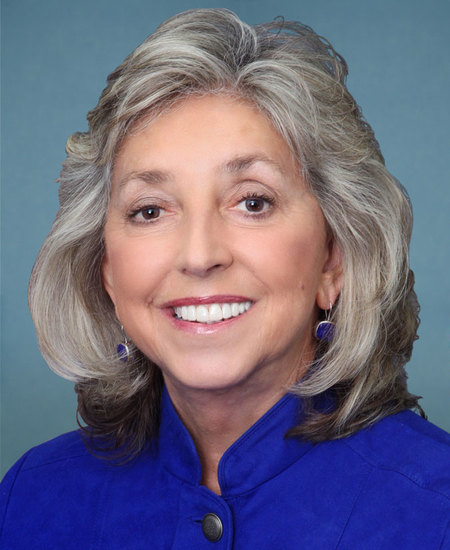
Rep. Dina Titus
Sponsored bills
Billionaire Minimum Income Tax Act This bill imposes a minimum tax on individual taxpayers whose net worth for the taxable year exceeds $100 million. The tax is equal to 25% of the sum of a taxpayer's taxable income, plus net unrealized gains for the taxable year. The tax may not exceed 40% of the amount by which the taxpayer's net worth exceeds $100 million.
Maddy summaryThis bill targets U.S. business activities that could help specific countries of concern (North Korea, China, Russia, and Iran) develop critical technologies. It requires the President to identify "covered sectors" (including semiconductors, artificial intelligence, quantum technology, hypersonics, and high-performance computing) and prohibit U.S. persons from engaging in certain activities involving these technologies with entities in countries of concern. The bill also mandates that U.S. persons submit notifications about certain activities involving these technologies, with requirements for public comment and transparency. It establishes reporting requirements for the President to Congress on implementation and impact, and includes provisions for national interest waivers.
Maddy summaryThis bill creates a presumption that certain health conditions are linked to military firefighting service. It applies to veterans who served at least five years in a firefighting military role (e.g., fire suppression specialists) and develop specific illnesses within 15 years of leaving service. The covered conditions include heart disease, lung disease, and multiple cancers (like leukemia, lymphoma, and lung cancer), with the VA automatically presuming service connection for these if they meet the 10% disability threshold. This simplifies benefit claims by shifting the burden of proof to the VA, rather than requiring veterans to prove their illness was caused by service. The law affects military firefighters who served in designated fire-related roles and seek VA disability benefits for qualifying conditions.
Maddy summaryHRES 793 is a resolution passed by the U.S. House of Representatives calling on Hamas to immediately release all 199 hostages taken during Hamas' October 7, 2023 attack on Israel. The resolution condemns Hamas for the attack, the taking of hostages, and threats against hostages, while stating that holding hostages violates international humanitarian law under the Geneva Conventions. It demands the immediate release of all hostages and expresses sympathy for victims and their families. As a symbolic resolution, it does not create legal obligations but formally expresses the House's position.
Maddy summaryThis bill requires major social media platforms (with at least 25 million U.S. monthly users) to publicly post their terms of service regarding foreign terrorist organizations and designated terrorists, including how users can flag violations and what actions (like removal or banning) may be taken. Platforms must submit detailed quarterly reports to the Attorney General tracking flagged content, enforcement actions, and how content was reviewed or removed - disaggregated by content type, media, and reporting method. Non-compliance triggers daily civil penalties of up to $5 million per violation. The law expires five years after enactment.
Maddy summaryHR 6451, the Mental Health Justice Act of 2023, provides $250 million in federal grants to states, tribes, and localities to hire mental health professionals as first responders for specific emergencies. It directs these professionals to replace police in situations involving mental health crises, substance use, or intellectual/developmental disabilities - such as when a 911 caller describes a mental health emergency or a first responder identifies someone needing mental health support. The bill requires grantees to train responders in de-escalation techniques, link individuals to community-based services (not incarceration), and report on outcomes like reduced arrests or use of force. It also mandates data collection on demographics and prevents funneling people into institutional settings, with annual reports to Congress on program effectiveness.
Maddy summaryHRES 881 is a symbolic House resolution commemorating the 50th anniversary of the Endangered Species Act of 1973. It honors the Act's role in preventing the extinction of species like the bald eagle and humpback whale, citing its success in protecting 99% of listed species. The resolution does not create new legal requirements or affect any specific group, as it serves solely as a ceremonial recognition of the Act's conservation achievements.
Maddy summaryThe UNLEADED Act requires the FAA to create an education program about unleaded aviation gasoline for pilots, flight schools, airport operators, maintenance technicians, and fixed-base operators. The program must publish online information on fuel compatibility, availability, required certifications, safety, and federal incentives, plus maintain a real-time tracking system for authorized unleaded fuels. The FAA must also coordinate annual training for fixed-base operator staff on fuel handling and safety. The program runs until December 31, 2030, with annual updates provided to Congress on progress. This directly affects general aviation users transitioning from leaded 100LL fuel to new unleaded alternatives.
Maddy summaryHR 6415, the CARE for First Responders Act, creates targeted mental health support for first responders, including law enforcement, firefighters, EMTs, and 911 operators (previously excluded from many services). It establishes a 24/7 confidential mental health hotline integrated with the 988 Suicide Lifeline, funds mobile crisis teams for disaster response, and mandates specialized training to reduce stigma and improve access to culturally competent care. The bill requires the development of peer support programs and education for responders and their families on mental health coping strategies. It authorizes $5 million annually (2024-2028) for grants to states and organizations to implement these services, specifically addressing the higher rates of mental health challenges and suicide among first responders compared to the general population.