

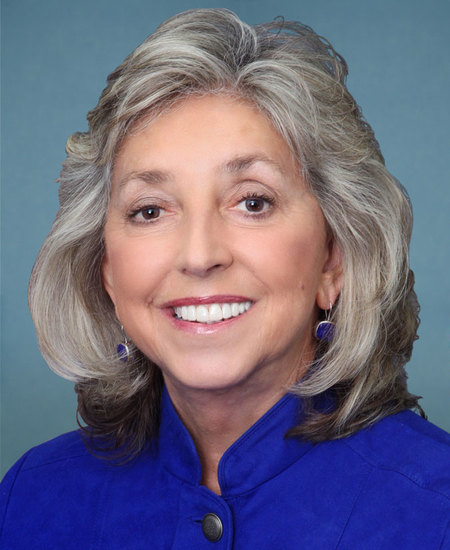
Photo of Dina Titus
D United States House · District 1 · Nevada On the 2026 ballot

Rep. Dina Titus

Compare
Total votes
2,837
all sessions
Attendance
96%
119 missed
Lower than 92% of chamber peers
With party
97%
of cast votes
Near the chamber average
Bipartisan score
1%
crosses aisle rarely
Near the chamber average
Sponsored
2,683
bills & resolutions
Higher than 97% of chamber peers
Committees
8
assignments
2,683 bills and resolutions

Sponsored bills

Total
2,683
Primary
132
Co-sponsor
2,551
This page
2,683
matching current filters
Co-sponsor HRES 1002
In committee · United States House · Co-sponsor
Recognizing the cultural and historical significance of Lunar New Year in 2024.

Maddy summaryHRES 1002 is a symbolic House resolution recognizing the cultural and historical significance of Lunar New Year (celebrated as the Year of the Dragon in 2024). It acknowledges the holiday's 4,000-year history in China, its celebration across Asia (including Seollal and Tết), and its significance to Asian Americans and others in the U.S. The resolution expresses respect for those observing the holiday and wishes them a happy new year, but it does not create new laws, policies, or funding. As a ceremonial resolution, it has no direct effect on legislation or constituents.

In committee Feb 7, 2024 1 co-sponsor
Co-sponsor HR 7288
In committee · United States House · Co-sponsor
Armenian Protection Act of 2024

Maddy summaryHR 7288, the Armenian Protection Act of 2024, repeals the waiver authority that allows the President to bypass restrictions on U.S. aid to Armenia. Specifically, it prevents the waiver of Section 907 of the Freedom Support Act for fiscal years 2024 and 2025, which currently blocks U.S. assistance to Armenia due to historical disputes. This bill directly affects Armenia's eligibility for certain U.S. foreign aid programs by removing the possibility of executive branch waivers for those years. The key mechanism is the permanent removal of the waiver option under the specified appropriations law, changing the policy landscape for U.S.-Armenia aid relations.

In committee Feb 7, 2024 1 co-sponsor
Primary HR 7263
In committee · United States House · Lead sponsor
VISITOR Act

Maddy summaryThe VISITOR Act redirects specific visa-related fees - such as those from Diplomatic Programs and Fraud Prevention accounts - to fund consular services aimed at reducing visa processing times. It requires the State Department to transfer unobligated fee balances to the Consular and Border Security Programs account to support these services. The bill sets a concrete goal: ensuring 80% of nonimmigrant visa applicants receive interviews within three weeks of applying, while allowing exceptions for security or resource constraints. This directly affects nonimmigrant visa applicants (e.g., tourists, business travelers) by potentially speeding up their processing. The policy change focuses on reallocating existing fee collections, not creating new visa categories or altering eligibility.

In committee Feb 6, 2024 0 co-sponsors
Co-sponsor HRES 991
In committee · United States House · Co-sponsor
Condemning all acts of violence, oppression, and abuse against ethnic minorities in the Democratic Republic of the Congo.

Maddy summaryThis resolution condemns violence, oppression, and abuse against ethnic minorities in eastern Democratic Republic of the Congo (DRC), particularly targeting Rwandophones like the Banyamulenge and Congolese Tutsi communities. It urges the DRC government to investigate security forces and armed groups (including the M23 rebel group) for human rights abuses, hold perpetrators accountable, and improve protections for displaced civilians. The resolution also calls for U.S. actions such as appointing a special envoy for the Great Lakes region, prioritizing refugee access for affected groups, and coordinating sanctions against human rights abusers - though it is a symbolic statement, not a binding law.

In committee Feb 1, 2024 1 co-sponsor
Primary HR 7178
In committee · United States House · Lead sponsor
Water Conservation Economic Adjustment Act

Maddy summaryThe Water Conservation Economic Adjustment Act amends an existing federal economic development program to provide assistance to communities facing water shortages caused by drought and extreme heat. It adds a new funding category allowing regional economies to receive support for reducing industrial water use that depletes local supplies and upgrading water infrastructure. This change directly affects areas experiencing climate-driven water scarcity, enabling them to adapt their water management practices without creating new programs. The bill modifies an existing law to expand eligibility for assistance, focusing on practical solutions for water conservation and infrastructure resilience.

In committee Feb 1, 2024 0 co-sponsors
Co-sponsor HR 7165
In committee · United States House · Co-sponsor
Credit for Caring Act of 2024

Maddy summaryThe Credit for Caring Act of 2024 creates a new federal tax credit for family caregivers. It allows eligible caregivers to claim a credit equal to 30% of qualified caregiving expenses (like home modifications, medical supplies, or respite care) exceeding $2,000 per year, capped at $5,000 annually. To qualify, caregivers must earn over $7,500 in income and provide care for a relative (like a spouse or parent) certified by a healthcare provider as needing long-term care for at least 180 days. The credit phases out for higher earners, with a $75,000 income threshold for single filers and $150,000 for joint returns.

In committee Jan 31, 2024 1 co-sponsor
Co-sponsor HR 7132
In committee · United States House · Co-sponsor
Housing Supply and Affordability Act

Maddy summaryHR 7132 creates a federal grant program to help state and local governments, tribes, and Native Hawaiian organizations develop and implement housing plans. Grants fund both planning (creating strategies) and implementation (putting strategies into action) to increase housing supply and affordability while avoiding displacement of current residents. At least 10% of funds must support rural communities, and recipients must report annually on progress and submit final evaluations after three years. The program requires comprehensive plans addressing housing needs, land use reforms, and community engagement to expand housing options.

In committee Jan 30, 2024 1 co-sponsor
Co-sponsor HR 7127
In committee · United States House · Co-sponsor
FAIR Act

Maddy summaryHR 7127, the FAIR Act, establishes pay adjustments for federal employees in 2025. It increases base pay by 4% for most federal workers under statutory pay systems and for "prevailing rate" employees (like those in specific geographic areas), while raising locality pay rates by 3.4%. The bill directly affects all federal employees receiving pay under these systems, as it modifies their 2025 salary calculations. These changes are based on statutory formulas under Title 5 of the U.S. Code, with no new policy mechanisms beyond the specified percentage increases. The adjustments apply to pay rates in effect as of the end of fiscal year 2024.

In committee Jan 30, 2024 1 co-sponsor
Co-sponsor HR 7145
In committee · United States House · Co-sponsor
SWIMS Act of 2024

Maddy summaryThe SWIMS Act of 2024 bans the captivity of orcas, beluga whales, false killer whales, and pilot whales for public display in the United States. It prohibits exporting, importing, or taking these animals for display - except for relocation to a sanctuary meeting specific welfare standards or release into the wild. The bill also makes it illegal to breed these species for public display. This directly affects marine parks and aquariums that currently display these animals, preventing them from acquiring new animals for exhibits or breeding them for that purpose.

In committee Jan 30, 2024 1 co-sponsor
Co-sponsor HR 6920
In committee · United States House · Co-sponsor
Improving SCRA Benefit Utilization Act

Maddy summaryThis bill amends the Servicemembers Civil Relief Act (SCRA) to improve access to existing financial protections for active-duty service members, reservists, and their dependents. It requires military financial literacy training to include SCRA consumer protections (like interest rate limits), mandates notifications about these benefits at key service milestones (e.g., when entering service or being mobilized), and clarifies that creditors must apply the SCRA interest rate cap to *all* pre-service debts, not just specified ones. Creditors must also provide multiple submission methods (online, mail, fax) for servicemembers to submit required documents. These changes aim to make SCRA benefits easier to understand and utilize without creating new financial obligations.

In committee Jan 30, 2024 1 co-sponsor
Showing 1,081 to 1,090 of 2,683 bills