

Fire Fighters and EMS Employer-Employee Cooperation Act This bill requires the Federal Labor Relations Authority to determine whether a state substantially provides fire and emergency medical services (EMS) personnel the right to form and join a labor organization; recognition by fire and EMS employers of the employees' labor organization, agreement to bargain with the organization, and reduction of any agreements to writing in a contract or memorandum of understanding; the right to bargain over hours, wages, and terms and conditions of employment; and arbitration or other mechanisms to resolve an impasse in collective bargaining negotiations. The bill makes the authority responsible for (1) determining the appropriateness of units for labor representation; (2) supervising elections; (3) conducting hearings and resolving complaints of unfair labor practices; and (4) protecting the right of employees to form, join, or assist any labor organization, or to refrain from doing so. An employer, fire and EMS personnel, or labor organization may not engage in a lockout, sickout, work slowdown, strike, or any other organized job action that will measurably disrupt the delivery of emergency services and is designed to compel an employer, fire and EMS personnel, or labor organization to agree to the terms of a proposed contract.
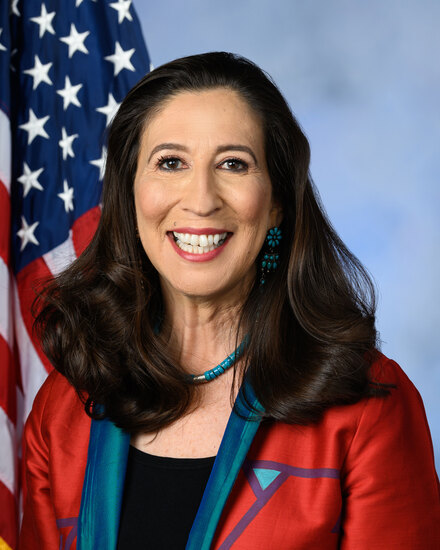
Rep. Teresa Leger Fernandez
Sponsored bills
Tax Fairness for Workers Act This bill allows an above-the-line tax deduction for union dues and expenses. (An above-the-line deduction is subtracted from gross income and is available whether or not a taxpayer itemizes other deductions.) The bill also reinstates the miscellaneous itemized tax deduction for unreimbursed expenses attributable to the performance of services as an employee (Under current law, all miscellaneous itemized deductions are suspended through 2025).
Mental Health for Latinos Act of 2021 This bill requires the Substance Abuse and Mental Health Services Administration to develop and implement an outreach and education strategy regarding behavioral health issues among the Hispanic and Latino populations. The strategy must promote behavioral and mental health and reduce stigma associated with mental health conditions and substance use disorders. The strategy must also address the impact of the COVID-19 pandemic on the mental and behavioral health of those populations.
Comprehensive Care for Alzheimer's Act This bill allows the Center for Medicare and Medicaid Innovation (CMMI) to test a Dementia Care Management Model that provides comprehensive care to Medicare beneficiaries with Alzheimer's disease or a related dementia. Under the model, participating health care providers receive payment under Medicare for comprehensive care management services that are provided to individuals with diagnosed dementia, excluding Medicare Advantage enrollees, hospice care recipients, and nursing home residents. Required services include medication management, care coordination, and health, financial, and environmental monitoring, as well as trainings and other support services for unpaid caregivers. Providers must furnish services through interdisciplinary teams and must ensure access to a team member or primary care provider 24-7. The CMMI must set payments and determine quality measures for the model in accordance with specified requirements. The bill also allows the CMMI to design a similar model under Medicaid.
Commission to Study and Develop Reparation Proposals for African Americans Act This bill establishes the Commission to Study and Develop Reparation Proposals for African Americans. The commission shall examine slavery and discrimination in the colonies and the United States from 1619 to the present and recommend appropriate remedies. The commission shall identify (1) the role of the federal and state governments in supporting the institution of slavery, (2) forms of discrimination in the public and private sectors against freed slaves and their descendants, and (3) lingering negative effects of slavery on living African Americans and society.
Healthy Families Act This bill provides for paid and unpaid sick leave for employees to meet their own medical needs and those of their families. It requires employers with 15 or more employees to provide their employees with at least one hour of earned paid sick leave for every 30 hours worked, up to a maximum of 56 hours of paid sick leave in a year. An employer with fewer than 15 employees may also provide the same amount of paid sick leave, but may opt out of such requirement, in which case such employer must provide its employees at least 56 hours of unpaid leave in a year. An employee may use sick leave for absences (1) resulting from a physical or mental illness, injury or medical condition; (2) resulting from obtaining professional medical diagnosis or care, or preventive medical care; (3) to care for a child, parent, spouse, a domestic partner, or other blood or close relative; and (4) resulting from domestic violence, sexual assault, or stalking. The bill makes it unlawful for any employer to interfere with, restrain, or deny the exercise of an employee's right to accrue sick leave as provided by this bill. An employee may take legal action to enforce the right to sick leave granted by this bill and the Department of Labor must investigate complaints of violations of the requirements of this bill. Labor is authorized to conduct a public awareness campaign to educate and inform the public of the requirements for paid sick leave provided by this bill.
Electric Power Infrastructure Improvement Act This bill allows a tax credit through 2031 for investment in a qualifying electric power transmission line property. The bill defines qualifying electric power transmission line property as (1) any overhead, submarine, or underground transmission facility that is capable of transmitting electricity at a voltage of not less than 275 kilovolts, has a transmission capacity of not less than 500 megawatts, is an alternating current or direct current transmission line, and delivers power produced in either a rural area or offshore; and (2) conductors or cables, or other specified equipment, necessary for the proper operation of the facility.
Teaching Asian Pacific American History Act This bill requires entities (e.g., institutions of higher education, libraries, and museums), in order to be eligible for certain grants administered by the Department of Education (ED), to include Asian Pacific American history in their teaching of American history. It also requires Asian Pacific American history to be included in tests administered by the National Assessment of Educational Progress (NAEP). Specifically, the bill mandates the inclusion of Asian Pacific American history as a required component of American history for such entities to be eligible for American History and Civics Academies' competitive grants. These grants support the establishment of (1) Presidential Academies for Teachers of American History and Civics, which offer workshops to teachers of American history and civics to strengthen their knowledge and prepare them to teach in these subjects; and (2) Congressional Academies for Students of American History and Civics, which support high school students in developing an understanding of these subjects. (Currently, Asian Pacific American history is not a required component of American history for either academy.) In addition, ED must give priority to grant applicants that align their activities with programs and resources of the Smithsonian Institution's Asian Pacific American Center. The bill also requires the inclusion of Asian Pacific American history in tests administered by the NAEP, which measures student academic achievement in various subjects.
Water Affordability, Transparency, Equity, and Reliability Act of 2021 This bill increases funding for water infrastructure, including funding for several programs related to controlling water pollution or protecting drinking water. Specifically, it establishes a Water Affordability, Transparency, Equity, and Reliability Trust Fund. The fund may be used for specified grant programs. The bill increases the corporate income tax rate to 24.5% to provide revenues for the fund. In addition, the bill revises requirements concerning the clean water state revolving fund (SRF) and the drinking water SRF. It also creates or reauthorizes several grant programs for water infrastructure.
This resolution condemns Iranian state-sponsored terrorist attacks against U.S. citizens and officials and Iranian dissidents and expresses support for the people of Iran who are engaged in legitimate and peaceful protests against the Iranian regime.