

Maddy summaryHRES 996 is a resolution introduced by multiple House members to impeach Kristi Lynn Arnold Noem, the Secretary of Homeland Security, for alleged violations of law and the Constitution. It outlines three articles of impeachment: obstructing congressional oversight by denying access to detention facilities and withholding funds, violating public trust through warrantless arrests and excessive force (including tear gas on children), and self-dealing by awarding federal contracts to associates without competitive bidding. If approved by the House, this resolution would formally charge Noem, triggering a Senate trial to determine her removal from office. The resolution itself does not enact new policy but initiates the constitutional impeachment process against a sitting Cabinet official.
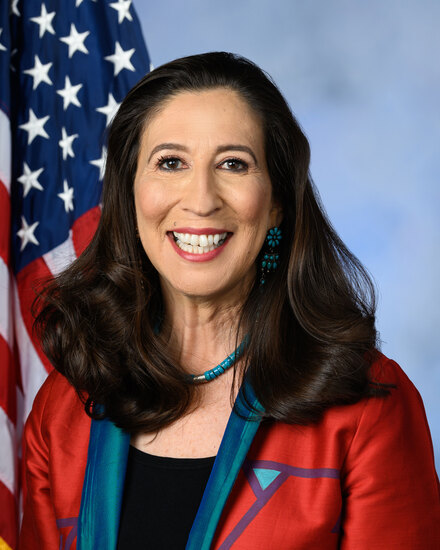
Rep. Teresa Leger Fernandez
Sponsored bills
Maddy summaryHR 6476, the Relief for Farmers Hit with PFAS Act, creates a federal grant program to assist farmers and agricultural communities affected by unsafe levels of PFAS (chemicals used in industrial products) in soil or water. Eligible governments (states, tribes, territories) can receive grants to fund specific actions, including compensating farmers for contaminated land or products, covering health monitoring for affected residents, investing in remediation equipment, conducting PFAS research, and developing educational programs. Grants prioritize direct financial assistance to producers experiencing losses due to contamination and require annual reports on fund usage. The program is authorized with $500 million for fiscal years 2026-2029, targeting communities with PFAS-contaminated agricultural land or water used for farm production.
Maddy summaryHR 6088, the *Restoring Food Security for American Families and Farmers Act of 2025*, repeals specific sections (10101-10108) from a prior reconciliation law. This action revives previous provisions related to food security programs that were modified by those repealed sections. The bill directly affects federal food assistance and agricultural support programs by restoring their prior legal framework. It does not create new policies but reverses recent changes to existing food security measures.
Maddy summaryThe MORE Act (HR 5068) would remove cannabis from the federal list of controlled substances, effectively decriminalizing it at the federal level while establishing a new tax on cannabis products. The bill creates an Opportunity Trust Fund that would distribute tax revenues to support communities disproportionately impacted by cannabis prohibition, including funding for expungement programs, job training, and equitable licensing initiatives for minority business owners. It also includes provisions to prevent discrimination based on cannabis use in federal programs, immigration proceedings, and workplace policies. The bill would require federal courts to expunge non-violent cannabis convictions and establish a process for resentencing individuals currently serving time for such offenses. These provisions aim to address racial disparities in cannabis enforcement and create more equitable opportunities in the legal cannabis industry.
Maddy summaryThis bill authorizes the U.S. Forest Service to fund contracts and grants with state forestry agencies, local nonprofits, universities, tribal governments, and regional coalitions to collect native seeds and produce seedlings for ecosystem restoration. It specifically directs these funds toward activities like maintaining seed orchards and growing seedlings for replanting vegetation in degraded landscapes. The law modifies existing programs under the Infrastructure Investment and Jobs Act and the Public Land Management Act to include these seed and seedling initiatives. This directly supports organizations working on restoring forests, grasslands, and other habitats using locally adapted native plant materials.
Maddy summaryHR 909, the Crime Victims Fund Stabilization Act of 2025, modifies how funds from the False Claims Act are deposited into the Crime Victims Fund. It specifies that from 2025 through 2029, certain False Claims Act proceeds (specifically those for qui tam plaintiff payments and government damage reimbursements) cannot be deposited into the fund. This change directly affects the composition of the Crime Victims Fund by excluding these specific revenue streams during the specified period. The bill does not create new benefits or alter victim services; it only adjusts fund allocation rules for existing False Claims Act revenues.
Maddy summaryThis bill amends the Higher Education Act to require colleges and universities receiving federal funds to implement evidence-based programs preventing alcohol and substance misuse among students and staff, replacing outdated terms like "drug abuse" with "substance misuse." It establishes a $15 million annual grant program (2027-2031) to fund recovery support services, integrated mental health and substance use care, overdose prevention, and campus-wide crisis response training. Institutions must certify compliance with these programs and report on implementation to Congress. The law directly affects all eligible higher education institutions, mandating updated prevention frameworks and collaboration with health agencies.
Maddy summaryThis concurrent resolution (HCONRES 69) commemorates the 15th anniversary of the January 8, 2011, Tucson shooting that killed six people and injured 13, including former Congresswoman Gabby Giffords. It honors the victims, survivors, and Giffords - now a prominent advocate for gun violence prevention - and recognizes her leadership in promoting civility and reducing gun violence. The resolution also commends Tucson residents and first responders for their resilience and reaffirms Congress’s commitment to respectful dialogue and opposing political violence. As a ceremonial resolution, it does not create new laws or policies.
Maddy summaryThis resolution (HRES 969) expresses support for designating the week beginning September 8, 2025, as "National Hispanic-Serving Institutions Week." It recognizes colleges and universities with at least 25% Hispanic undergraduate enrollment (known as Hispanic-Serving Institutions or HSIs) and their role in serving diverse, low-income students. The resolution does not create new policies or funding but encourages public observance through ceremonies and activities to honor HSIs’ contributions to higher education access and economic mobility. It applies symbolically to all 615+ HSIs across the U.S. and Puerto Rico.
Maddy summaryThis bill expands tax benefits for military personnel by adding drone operators to the existing combat zone tax exclusion under the Internal Revenue Code. It specifically includes "the operation of a remotely piloted aircraft in a combat zone" and related intelligence/support activities certified by the Secretary of Defense as directly supporting combat operations. The change affects military personnel who operate drones in active combat zones, extending tax-free compensation they previously received. This provision modifies existing tax law to cover drone crews' service, applying to compensation received after the bill's enactment.