

Maddy summaryThis bill requires federal agencies collecting demographic survey data to begin including questions on sexual orientation, gender identity, and variations in sex characteristics (intersex traits) within 360 days of enactment. Agencies must review existing surveys to identify gaps, develop privacy-protective methods for collecting this data (including anonymization and data destruction protocols), and incorporate it into relevant reports within three years. The law applies to all federal surveys that collect standard demographic data (like race, ethnicity, and age), such as the census or health surveys, but does not compel individuals to disclose their status. It emphasizes maintaining confidentiality, allows limited agency waivers if standards can't be met, and mandates a congressional report on implementation within two years.
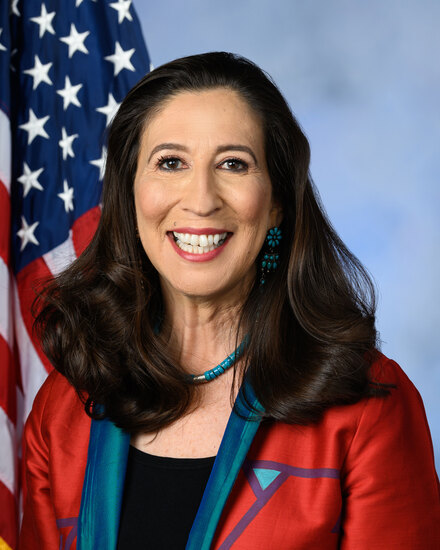
Rep. Teresa Leger Fernandez
Sponsored bills
Maddy summaryThe Neighborhood Homes Investment Act creates a new tax credit for developers who rehabilitate or build affordable homes in distressed communities. The credit is calculated based on the difference between rehabilitation costs and the sale price, with homes required to be sold at affordable prices to qualified homeowners with incomes up to 140% of the local median family income. The bill targets specific "qualified census tracts" defined by high poverty rates, low homeownership, and below-average home values. Developers must ensure homes are sold to qualified homeowners who use them as primary residences for at least five years, with additional safeguards to prevent program abuse and ensure fair housing practices.
Maddy summaryHR 3850, the Pride In Mental Health Act of 2023, establishes a federal grant program to improve mental health and substance abuse services for LGBTQ+ youth (including nonbinary, intersex, and Two Spirit individuals). The bill directs the Health and Human Services Secretary to fund eligible organizations to provide trauma-informed care, cultural competency training for caregivers, school bullying prevention guidelines, and family support resources. It explicitly prohibits grant funds from being used for conversion therapy or advertising related to such therapy. The bill also requires data collection on LGBTQ+ youth mental health and a federal survey to measure psychological distress.
Maddy summaryHR 3879, the Supporting Families through Addiction Act of 2023, provides federal grants to nonprofit organizations that support families with members struggling with substance use disorder. The bill authorizes $5 million annually (2024-2028) to fund community-based family support services, including education, stigma reduction, and connecting families to treatment resources. Grants cover up to 85% of costs and require organizations to be led by experts, including families with lived experience. This directly affects families navigating addiction in their households by expanding access to evidence-based support programs and improving provider knowledge about family impacts.
Maddy summaryHR 3817, the Mental Health Workforce and Language Access Act of 2023, creates a federal grant program to help community health centers hire bilingual mental health staff who can communicate directly with patients who have limited English proficiency. The bill allocates up to $10 million annually (2024-2029) to fund these grants, prioritizing health centers where at least 10% of patients primarily speak a language other than English. Health centers receiving grants must use funds to recruit qualified staff - such as licensed counselors or supervised trainees - who speak both English and another language fluently, and to report on program effectiveness to Congress. This directly affects patients with limited English proficiency seeking behavioral health services at participating community health centers.
Maddy summaryHRES 483 is a symbolic resolution recognizing June 2023 as "Immigrant Heritage Month" to celebrate immigrants and their children for their contributions to U.S. health, safety, diversity, and prosperity. It highlights immigrants' roles in critical sectors like healthcare (including 27% of physicians) and the economy (e.g., 44% of Fortune 500 companies founded by immigrants or their descendants). The resolution urges the House to celebrate immigrant contributions, welcome immigrants, and work toward "smart and just immigration policy." As a non-binding resolution, it does not change laws but formally acknowledges immigrants' historical and ongoing impact on U.S. society.
Maddy summaryThe American Family Act establishes a monthly child tax credit of $250 per month for each child under age 6 and $300 per month for each child aged 6-18, with income limits of $150,000 for joint filers and $112,500 for other filers. The credit is refundable, meaning it can be paid even if the taxpayer owes no income tax, and will be adjusted annually for inflation. The bill includes detailed rules for determining eligibility, including requirements that the child resides with the taxpayer for more than half the month and provisions to prevent fraud through recapture of improperly received payments. The credit will be paid monthly in advance rather than as a single annual payment, with specific mechanisms for calculating and distributing the payments.
Maddy summaryThe Urban Indian Health Confer Act (HR 630) requires federal health agencies, including the Indian Health Service, to consult with urban Indian organizations when implementing health care programs for Native Americans. It amends the Indian Health Care Improvement Act to mandate that the Secretary of Health and Human Services must confer with these organizations to the maximum extent practicable. This directly affects urban Indian organizations - which provide health services to American Indians and Alaska Natives in cities - and federal agencies managing Indian health care. The key provision is a procedural requirement for collaboration, ensuring urban Native communities' input in health care planning without creating new funding or services.
Maddy summaryHR 698, the Assault Weapons Ban of 2023, prohibits the sale, manufacture, transfer, and possession of specific firearms and ammunition devices commonly referred to as "assault weapons" and "large capacity magazines" in interstate commerce. The bill defines "semiautomatic assault weapons" to include rifles like AR-15s and AK-47s, as well as firearms with specific features such as folding stocks, pistol grips, threaded barrels, and detachable magazines holding more than 15 rounds. It exempts law enforcement, military, antique firearms, and weapons already lawfully owned before the law's enactment (known as "grandfathered" weapons). The bill also requires new identification markings on these weapons and large capacity magazines, and adds background check requirements for transfers of grandfathered weapons.
Maddy summaryThe Universal School Meals Program Act of 2023 would establish a universal school meals program providing free breakfast and lunch to all children enrolled in participating schools, regardless of family income. Key provisions include eliminating income-based eligibility requirements for school breakfast and lunch programs, setting specific reimbursement rates ($2.80 for breakfast and $4.63 for lunch with annual inflation adjustments), and prohibiting schools from collecting debt for unpaid meals or "shaming" students. The bill also replaces references to "free or reduced price" with "economically disadvantaged students" in related laws and establishes new methods for identifying children from low-income backgrounds. This legislation would directly affect all public schools participating in the National School Lunch Program and School Breakfast Program.