

Maddy summaryThe Historic Preservation Enhancement Act increases annual funding for the Historic Preservation Fund from $150 million to $300 million starting in fiscal year 2025. It mandates that at least 40% of these funds go to State Historic Preservation Offices and 20% to Tribal Historic Preservation Offices each year, with automatic adjustments for growing tribal office numbers. The bill authorizes funding for specific programs including African American Civil Rights Initiatives, Equal Rights Grants, Survey Grants for underrepresented communities, and Paul Bruhn Revitalization Grants. It also establishes procedures for presidential allocation submissions to Congress and ensures funding continuity during government shutdowns through continuing resolutions.
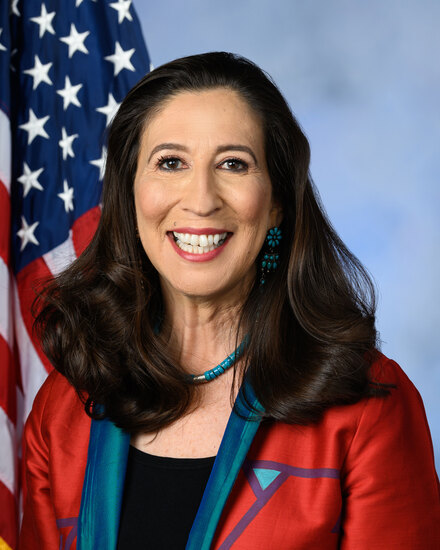
Rep. Teresa Leger Fernandez
Sponsored bills
Maddy summaryThis bill approves new agreements that amend the Compact of Free Association between the United States and the Federated States of Micronesia, the Republic of the Marshall Islands, and the Republic of Palau. It incorporates related agreements including fiscal procedures and trust fund agreements that govern how U.S. funding is managed and distributed to these nations. The bill provides funding for 2024-2043 to support programs like healthcare, education, veterans' services, and economic development in the Freely Associated States. It establishes reporting requirements and oversight mechanisms for federal agencies implementing these agreements. The bill directly affects U.S. federal agencies, the Freely Associated States, and U.S. funding mechanisms for these Pacific Island nations.
Maddy summaryThis bill (HR 7516) updates the Indian Health Care Improvement Act to clarify and improve reimbursement for Native American patients who pay out-of-pocket for authorized "purchased/referred care" services through the Indian Health Service (IHS). It requires the IHS to establish procedures within 120 days to reimburse patients within 30 days of receiving documentation (electronically or in-person) for such care. The bill replaces outdated terms like "contract health care" with "purchased/referred care" throughout the law and clarifies that the IHS is not liable to debt collectors for these payments. It directly affects Native American patients who receive IHS-authorized care outside of regular IHS facilities.
Maddy summaryThis bill amends existing federal laws to authorize the USDA Forest Service to fund native seed and seedling programs. It allows the agency to provide contracts, grants, or agreements to state forestry agencies, local nonprofits, and universities for collecting native seeds and producing seedlings. These funds will support habitat restoration projects by enabling the collection of native seeds and the production of seedlings for replanting degraded lands. The key mechanism is creating a formal process within current law to streamline these conservation activities, directly affecting state and local conservation groups working on ecosystem recovery.
Maddy summaryThis bill extends Medicare payment adjustments for physicians and other practitioners through 2025 instead of ending in 2024. It specifically adds a 4.73% payment increase for services provided between January 1, 2025, and January 1, 2026. The legislation modifies existing Medicare payment rules to stabilize practice revenues during transition periods. It directly affects doctors and healthcare providers who bill Medicare for patient services. The key change is the extended timeframe and the defined 4.73% rate for the 2025-2026 period.
Maddy summaryThis bill makes permanent Medicare telehealth flexibilities for Indian health programs and urban Indian organizations. It allows patients in tribal communities to receive covered telehealth services from home (not just medical facilities) and expands coverage to include audio-only visits starting January 1, 2025. The policy directly affects tribal health providers, urban Indian organizations, and Medicare beneficiaries living in tribal communities who rely on these services. These changes ensure consistent access to telehealth care under Medicare without requiring physical clinic visits for eligible patients.
Maddy summaryHR 8796, the "Stop Comstock Act," removes outdated restrictions from federal law that previously banned the distribution of materials related to contraception and abortion as "obscene" or "indecent." The bill amends Title 18 and the Tariff Act by deleting references to "indecent," "immoral," "unlawful abortion," and "procuring abortion" from provisions governing obscene materials. It clarifies that the law only prohibits "obscene materials" in commerce, eliminating broad restrictions on reproductive health information. This directly affects internet platforms, healthcare providers, and individuals sharing reproductive health resources by removing legal barriers to their distribution.
Maddy summaryThis bill requires Medicare Advantage plans to implement electronic prior authorization systems by 2027 and publish detailed data on their approval and denial rates for medical services by 2026. It directly affects Medicare Advantage plans (private insurers offering Medicare coverage) and their enrollees (seniors 65+), mandating transparency about prior authorization decisions, processing times, and appeal outcomes. Key provisions include requiring plans to report annual statistics on request approvals/denials, average processing times, and use of technology, with this data published publicly by the Centers for Medicare & Medicaid Services. The bill also sets timelines for plan responses to prior authorization requests and mandates reports to Congress on implementation and impacts.
Maddy summaryThe Essential Caregivers Act of 2024 requires nursing homes and similar facilities to allow residents to designate essential caregivers who provide emotional support or assistance with daily activities. During emergencies when regular visitation is restricted, facilities must permit at least one essential caregiver access to residents daily and cannot deny access without following specific procedures. Facilities may deny access for a maximum of 7 days during emergencies (or 14 days with state approval), and must provide a written explanation and appeal process if access is denied. The bill establishes a 48-hour appeal process for residents and caregivers to challenge denials, with facilities required to prove violations during appeals. This law applies to Medicare skilled nursing facilities, Medicaid nursing facilities, intermediate care facilities, and certain inpatient rehabilitation facilities.
Maddy summaryThis bill adds 1,000 new medical residency positions (500 in 2024 and 500 across 2025-2028) specifically for training in addiction medicine, addiction psychiatry, or pain medicine. It directly affects hospitals that have or will establish approved residency programs in these fields. Hospitals receiving these positions must use them for addiction-related training for five years, with unused positions redistributed if requirements aren't met. The goal is to expand the healthcare workforce addressing the substance use disorder crisis by increasing specialized training opportunities.