

Maddy summaryHR 5970, the SNAP Tribal Food Sovereignty Act of 2023, allows federally recognized tribes to manage their Supplemental Nutrition Assistance Program (SNAP) benefits locally through contracts or compacts with the USDA. Tribes must request this option via a tribal resolution, replacing the current federal administration of SNAP for tribal members. The agreements would follow the same rules as existing tribal self-determination contracts under the Indian Self-Determination Act. This change aims to support tribal self-governance over nutrition assistance programs.
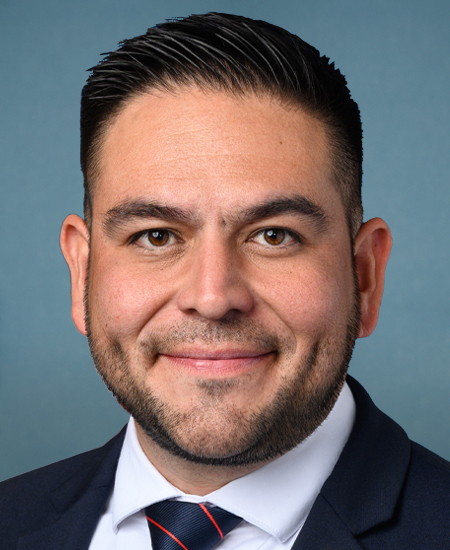
Rep. Gabe Vasquez
Sponsored bills
Maddy summaryThe Affordable Connectivity Program Extension Act of 2024 allocates $7 billion in funding for the Affordable Connectivity Program (ACP) during fiscal year 2024. The ACP provides subsidies to low-income households to help cover the cost of internet service and connected devices like laptops or tablets. This funding ensures the program can continue supporting eligible households throughout the year, with the money remaining available until fully spent. The bill extends existing program funding without changing eligibility criteria or service requirements.
Maddy summaryHR 1147, the Whole Milk for Healthy Kids Act of 2023, allows schools participating in the National School Lunch Program to offer whole milk as an option during lunch. It amends the school lunch law to explicitly permit schools to serve flavored and unflavored whole milk alongside reduced-fat, low-fat, and fat-free milk choices for students. The bill also requires the Secretary of Agriculture to adjust meal regulations to account for saturated fat from whole milk, ensuring it doesn't count against meal fat limits. This change directly affects participating schools and the students who receive school lunches, expanding their milk beverage options.
Maddy summaryThis bill amends the Equal Credit Opportunity Act to require lenders to collect and report data on loans to LGBTQI-owned businesses. It specifically adds "LGBTQI-owned" to existing categories for data collection, includes sexual orientation, gender identity, and intersex status as protected characteristics in lending data, and defines an "LGBTQI-owned business" as one where over 50% of ownership/control and net profit/loss accrues to self-identifying LGBTQI individuals. The policy change directly affects financial institutions that report lending data to the government, mandating they track and disclose these new categories. This provides concrete data on lending practices for LGBTQI business owners, who face documented barriers in accessing credit.
Maddy summaryThe BOOST Act creates a 75% tax credit (up to $400) for individuals who purchase qualified signal boosters or related equipment for their principal residence in an area designated as "unserved" by the FCC's Rural Digital Opportunity Fund. It specifically covers devices that strengthen wireless signals for broadband internet access in homes located in these underserved areas. The credit is limited to one taxable year per individual and expires after 2027. The bill also requires the IRS and FCC to establish guidelines for reporting qualifying sales.
Maddy summaryHRES 793 is a resolution passed by the U.S. House of Representatives calling on Hamas to immediately release all 199 hostages taken during Hamas' October 7, 2023 attack on Israel. The resolution condemns Hamas for the attack, the taking of hostages, and threats against hostages, while stating that holding hostages violates international humanitarian law under the Geneva Conventions. It demands the immediate release of all hostages and expresses sympathy for victims and their families. As a symbolic resolution, it does not create legal obligations but formally expresses the House's position.
Maddy summaryThis bill creates a pathway to conditional permanent residency for certain undocumented immigrants working in critical sectors. It directly affects individuals present in the U.S. without lawful status as of January 1, 2023 - including DACA recipients - who have worked at least 100 days in one of the designated "covered professions" (like healthcare, education, agriculture, food service, construction, or essential infrastructure work). To qualify, applicants must maintain continuous U.S. presence, work 100 days annually for two years, and meet specific criminal inadmissibility standards. If eligible, their conditional status automatically converts to full permanent residency after two years, without being subject to annual visa quotas.
Maddy summaryHR 3601, the Student Veteran Work Study Modernization Act, expands eligibility for a Veterans Affairs work-study allowance to veterans enrolled at least half-time in rehabilitation, education, or training programs - lowering the previous requirement from three-quarter-time. The bill establishes a five-year pilot program to test this change, requiring the VA to apply the same allowance rules to these veterans as to other participants, except for the enrollment threshold. It also mandates annual reports to Congress tracking participation numbers, four-year degree completion rates, and full-time VA employment outcomes for participants. The policy directly affects veterans seeking education benefits while balancing academic and personal responsibilities.
Maddy summaryThis bill requires military commanders to approve leave for active-duty service members and their dependents seeking abortion care without needing to disclose the specific procedure. It mandates reimbursement for travel costs to clinics providing abortion services when local access is unavailable and protects the privacy of those using this leave. The bill explicitly prohibits any negative consequences for service members who request or take such leave. It directly affects military personnel and their families by ensuring timely, private, and accessible abortion care without command interference.
Maddy summaryHR 6282, the Humane Accountability Act, requires the Department of Homeland Security (DHS) and Department of Health and Human Services (HHS) to jointly submit a report to Congress within one year of the bill's enactment. The report must detail specific incidents in immigration detention, including assaults requiring medical care, sexual assaults with investigation findings, detainee deaths, and complaints about abuse, neglect, or lack of legal access. Following this report, the Government Accountability Office (GAO) must then provide Congress with recommendations to address these issues within 90 days. The bill focuses on increasing transparency and accountability in immigration detention facilities, directly affecting CBP, ICE, and ORR custody operations.