

Maddy summaryThis bill makes permanent Medicare coverage for telehealth services provided by Federally Qualified Health Centers (FQHCs) and Rural Health Clinics (RHCs), including audio-only visits. It directly affects Medicare beneficiaries who use these services and the FQHCs/RHCs delivering them by removing location restrictions - allowing telehealth visits to occur regardless of the patient's geographic location. Key provisions include permanently covering audio-only telehealth (previously temporary), treating telehealth visits as equivalent to in-person visits for payment, and ensuring costs for telehealth are included in FQHC/RHC payment calculations. These changes simplify access to telehealth for rural and underserved communities while maintaining consistent Medicare reimbursement for providers.
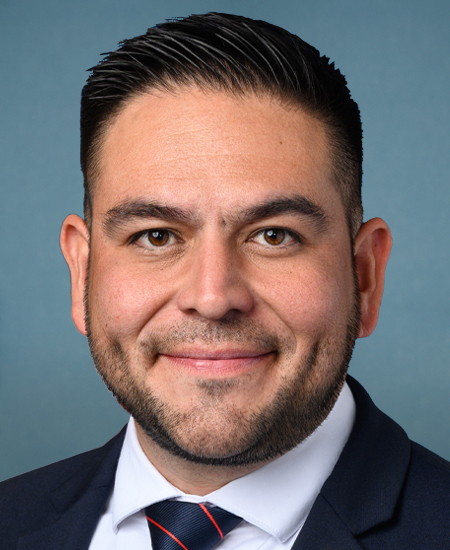
Rep. Gabe Vasquez
Sponsored bills
Maddy summaryThe Social Security 2100 Act would significantly enhance Social Security benefits for millions of Americans by increasing monthly payments for retirees, disabled workers, widows/widowers, and children. Key provisions include raising the minimum benefit for long-term low earners, improving cost-of-living adjustments using a more accurate index, eliminating the 5-month waiting period for disability benefits, and extending child benefits to age 26. The bill also changes how Social Security taxes are calculated by applying them to income above $400,000 and establishes a unified Social Security Trust Fund to manage program finances. Most provisions would apply to benefits payable from 2025 through 2034, affecting all current and future Social Security beneficiaries.
Maddy summaryThis bill simplifies regulations for rural health clinics (RHCs) by reducing administrative burdens. It allows RHCs to contract with physician assistants and nurse practitioners (instead of requiring direct employment), updates the definition of "rural" to exclude areas with 50,000+ residents, and removes outdated lab service requirements by requiring only "prompt access" to clinical labs. These changes directly affect RHCs, enabling them to more flexibly staff and operate while complying with state practice laws. The amendments take effect January 1, 2024, applying to services provided on or after that date.
Maddy summaryHR 3561, the PATIENT Act of 2023, requires hospitals, health insurance plans, and pharmacy benefit managers to publicly disclose detailed pricing information for healthcare services and drugs. Hospitals must publish standard charges for 300+ shoppable services, including gross charges, payer-specific negotiated rates, and discounted cash prices, with updates required annually. Health plans must provide real-time information on in-network rates, cost sharing, deductibles, and prior authorization requirements for covered services. The bill establishes enforcement mechanisms, including civil monetary penalties for non-compliance, with fines ranging from $300 per day for small hospitals to $5 million for large hospitals that fail to comply with the transparency requirements.
Maddy summaryThe Strengthening Tribal Families Act of 2023 requires U.S. states receiving federal child welfare funding to explicitly comply with the Indian Child Welfare Act (ICWA) of 1978. It amends federal law to mandate that state child welfare agencies follow ICWA standards in cases involving Native American children, including timely tribal notice and proper placement decisions. The bill establishes specific metrics for measuring compliance, such as tracking how often courts return cases for insufficient "active efforts" and documenting foster care or adoption placements. States must submit biennial reports to Congress on their progress, and a new federal process will develop standardized compliance assessment tools by 2024. This directly affects state child welfare agencies, tribal organizations, and Native American families involved in custody proceedings.
Maddy summaryThe LPOE Modernization Trust Fund Act (HR 3135) establishes a trust fund to modernize U.S. land border ports of entry. It is funded by 25% of certain immigration and border fees (like the immigrant user fee and land border inspection fees), plus up to $1.6 billion from existing customs processing fees. Funds must be used for specific infrastructure projects: building new ports, expanding existing facilities, purchasing inspection technology, repairing infrastructure, and hiring CBP staff. The bill requires annual reports on fund usage and creates an oversight board with industry and government representatives to prioritize projects.
Maddy summaryThis bill regulates pharmacy benefit managers (PBMs) working with Medicare Part D prescription drug plans. It prohibits PBMs from earning income based on drug prices or rebates (requiring flat fees instead), mandates equal reimbursement for all network pharmacies, and requires PBMs to report how much of drug rebates they pass through to Medicare plans. The law also mandates annual compliance certifications and requires the government to publish aggregated transparency data (without revealing specific plan details) starting in 2024. These changes directly affect Medicare Part D plans and the seniors who rely on them for prescription drug coverage.
Maddy summaryHR 2474, the "Strengthening Medicare for Patients and Providers Act," changes how Medicare pays physicians for services. It replaces the previous two-part payment system (used through 2025) with a single annual payment rate update starting in 2024. This update will be based on the Medicare Economic Index (MEI), which tracks costs for medical providers. The change directly affects Medicare-certified doctors and clinics who receive payments under the physician fee schedule.
Maddy summaryThis bill would require Medicare to cover FDA-approved blood tests that screen for multiple cancers simultaneously (like breast, lung, or colorectal cancer) for beneficiaries. It directly affects Medicare recipients aged 65+ who could access these new screenings once per year, without prior authorization. The key provision adds "multi-cancer early detection screening tests" to Medicare's covered services under Part B, defining them as blood tests analyzing cell-free DNA, while maintaining existing coverage for standard screenings like mammograms. The bill does not change current coverage for individual cancer screenings but ensures Medicare keeps pace with new medical technology.
Maddy summaryThis bill expands Medicare Part B coverage to include specific pharmacist services, directly affecting Medicare beneficiaries and pharmacists who provide these services. It adds new coverage for pharmacist evaluations and treatments related to certain illnesses (like COVID-19, flu, or strep throat) and public health emergencies, requiring payment at 80% of the lesser of actual charge or 85% of physician payment rates (100% during emergencies). The bill also prohibits balance billing for these services, ensuring beneficiaries pay only the standard Medicare copayment. These changes aim to improve access to pharmacist care during health crises while aligning payment with existing physician service frameworks.