

Maddy summaryThis bill extends existing programs that provide payments to counties and states with federal land, primarily to support local schools and communities. It updates key deadlines, extending secure payments through 2026, special project authorities through 2029, and county fund expenditure authority through 2028. A new pilot program allows regional foresters to appoint resource advisory committee members directly, with this authority ending October 1, 2028. These changes directly affect rural counties and states managing federal lands, maintaining current funding mechanisms without altering eligibility or payment amounts.
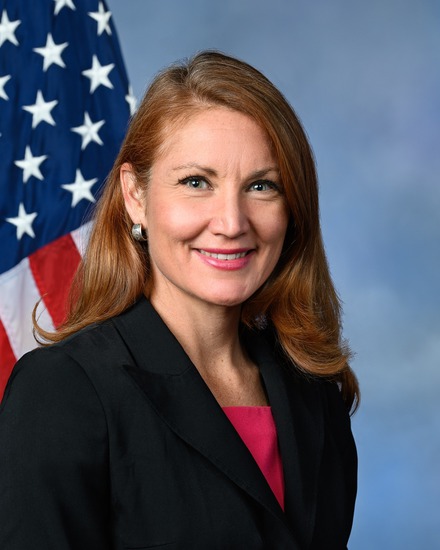
Rep. Melanie A. Stansbury
Sponsored bills
Maddy summaryHR 5031 reauthorizes and updates the Joint Chiefs Landscape Restoration Partnership program, which helps restore forests and natural resources. The bill expands the program's purposes to include wildfire recovery and enhancing soil/water resources, while requiring better coordination between the Natural Resources Conservation Service and Forest Service. It extends the program's authorization period through 2028 and adds new requirements for considering forest management plans and post-wildfire impacts. This directly affects landscape restoration projects in wildfire-prone areas and natural resource management efforts across participating states.
Maddy summaryHR 4845, the Food Secure Strikers Act of 2023, amends the Food and Nutrition Act to remove a restriction that previously disqualified workers from the Supplemental Nutrition Assistance Program (SNAP) if they were on strike. The bill changes eligibility rules so that striking workers are no longer automatically ineligible for SNAP benefits solely because they are participating in a labor strike. This change directly affects workers involved in strikes who rely on SNAP for food assistance, ensuring they can access benefits during labor disputes. The key provision removes specific language from Section 6(d) of the Food and Nutrition Act that had barred strike participants from SNAP enrollment.
Maddy summaryThe Tribal Access to Clean Water Act of 2023 provides dedicated federal funding to address water infrastructure gaps in Native communities. It allocates $100 million annually (2024-2028) through the USDA for technical assistance and water system construction, $20 million for Indian Health Service sanitation facilities, and $100 million for operation/maintenance of existing water systems. The bill specifically targets tribes and Native Hawaiian communities, requiring no matching funds and prioritizing the most urgent needs. This directly supports tribes in accessing existing infrastructure funding, developing self-sustaining water utilities, and maintaining facilities for public health and safety.
Maddy summaryThe John R. Lewis Voting Rights Advancement Act of 2023 would strengthen the Voting Rights Act of 1965 by updating the criteria for which states and localities must obtain federal preclearance before changing voting practices. It would establish new standards for proving vote dilution and vote denial by requiring courts to consider historical discrimination, racial polarization in voting, and whether voting practices disproportionately burden minority voters. The bill would also require states and localities to provide public notice of voting changes and share demographic data about polling locations. These changes would primarily affect jurisdictions with a history of voting rights violations, aiming to prevent discriminatory voting practices before they take effect.
This resolution expresses support for the goals and ideals of PCOS Awareness Month. Polycystic ovary syndrome (PCOS) is caused by a hormone imbalance. Symptoms can include infertility, weight gain, excess hair growth, and acne.
Maddy summaryThe Humane Cosmetics Act of 2023 bans cosmetic animal testing in the United States, prohibiting companies from conducting or contracting such testing after its enactment (effective 1 year later). It also bans selling or transporting cosmetics developed using animal testing conducted after that date within U.S. interstate commerce. The law directly affects cosmetic manufacturers, retailers, and suppliers operating in the U.S. market, requiring them to use non-animal testing methods for safety evaluations. Exceptions exist for foreign regulatory requirements or when no alternative testing methods are available for specific ingredients.
Maddy summaryThis bill creates federal grants to help hospitals with emergency departments improve follow-up care for patients experiencing acute mental health crises. It directly affects emergency departments licensed to treat mental health emergencies and the patients treated there, aiming to reduce gaps in transitioning to ongoing care. Grants can fund coordination with community providers, expand psychiatric bed availability, implement telehealth support in EDs, and establish follow-up systems like phone check-ins. The bill authorizes $15 million annually (2024-2028) for these programs, requiring hospitals to demonstrate needs and coordinate with local health systems before receiving funds.
Maddy summaryThe No Tax Breaks for Union Busting Act would deny tax deductions for employers who attempt to influence employees' decisions about union activities, including unfair labor practices like firing workers for organizing or using captive audience meetings. It targets expenses related to union-busting tactics, such as consulting fees and other costs used to sway workers' opinions about collective bargaining. Employers would need to report these expenses on tax returns and would no longer be able to deduct them from taxable income. The bill aims to prevent employers from using tax-deductible expenses to influence union elections, aligning with existing rules that deny tax deductions for political spending. It would apply to expenses incurred in taxable years beginning 240 days after enactment.
Maddy summaryThis bill creates a new grant program to fund partnerships between Hispanic-serving institutions (HSIs) and local school districts with high Hispanic/Latino enrollment (at least 25% Hispanic/Latino students and 50% poverty rate). It authorizes $150 million for fiscal year 2024 to support specific activities like aligning high school coursework with college requirements, providing college application assistance, addressing non-academic barriers (such as housing and food insecurity), and developing teacher pipeline programs. The grants require eligible partnerships to report on outcomes, disaggregating data by student demographics to measure impact on Hispanic/Latino students' college enrollment, persistence, and completion rates. The program directly affects HSIs, qualifying school districts, and the Hispanic/Latino students they serve, aiming to close educational gaps through targeted collaboration.