

Maddy summaryThe Access to Family Building Act establishes legal rights for individuals seeking fertility care and health care providers offering assisted reproductive technology (ART) services. It prohibits states or localities from imposing unreasonable restrictions on ART access - such as excessive costs, health barriers, or arbitrary limitations - that don’t advance safety or health outcomes. The bill allows patients, providers, or insurers to sue to enforce these rights, while explicitly preserving state health/safety regulations that protect patient safety. It does not override existing state insurance laws or require changes to medical facility safety standards. This bill directly affects patients pursuing fertility treatment, fertility clinics, and health insurers covering ART services.
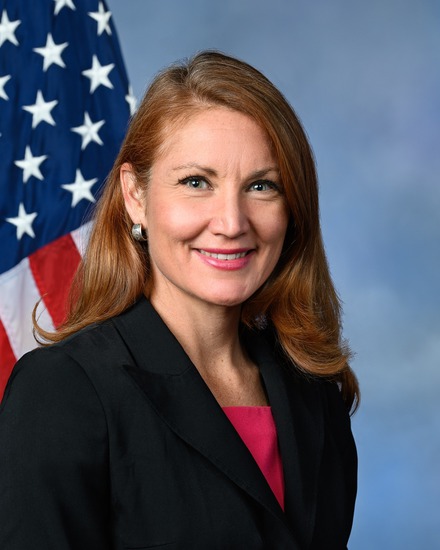
Rep. Melanie A. Stansbury
Sponsored bills
Maddy summaryHR 2029, the "Stop Comstock Act," amends federal obscenity laws to remove outdated restrictions on abortion and contraception. It deletes references to "indecent" materials and abortion-related language from Title 18 (e.g., removing "or means for procuring abortion" from section 552 and revising definitions in sections 1461 and 1462). The bill clarifies that federal law does not prohibit the distribution of materials related to abortion or contraceptives, updating how "obscene" is defined. These changes directly affect federal enforcement of obscenity laws, particularly regarding medical information and devices. The bill focuses on modernizing statutory language to align with current legal standards for protected speech and healthcare access.
Metastatic Breast Cancer Access to Care Act This bill expedites payment of Social Security Disability Insurance (SSDI) benefits and eligibility for Medicare coverage for those with metastatic breast cancer (i.e., breast cancer that has spread to other sites in the body). Specifically, the bill eliminates the 5-month waiting period for SSDI benefits and the subsequent 24-month waiting period for Medicare coverage for individuals with metastatic breast cancer. Under current law, individuals generally must wait 5 months after the onset of disability to begin receiving SSDI benefits and an additional 24 months to become eligible for Medicare.
Resident Education Deferred Interest Act or the REDI Act This bill allows borrowers in medical or dental internships or residency programs to defer student loan payments until the completion of their programs.
Maddy summaryThis bill blocks new U.S. defense export licenses to the United Arab Emirates (UAE) or its government agencies. It prohibits the export of specific military equipment (listed in U.S. regulations) until the President certifies the UAE is not supplying military aid to Sudan's Rapid Support Forces. The restriction applies to defense articles covered under U.S. export rules, including weapons and related technology. The bill directly affects U.S. defense exporters and the UAE government's ability to obtain new military equipment from the U.S.
Maddy summaryThis bill requires the Transportation Security Administration (TSA) to transition its workforce from a special personnel management system to the standard federal personnel system under Title 5 of the U.S. Code by December 31, 2025. It protects TSA employees by ensuring no reduction in pay, benefits, or retirement rights during the transition, while preserving collective bargaining rights for screening agents. The legislation also mandates consultation with labor unions during the process and requires several reports on workforce issues including recruitment, harassment policies, and workplace safety.
Maddy summaryThis bill would expand Medicare to cover dental, vision, and hearing services for beneficiaries 65 and older (and some younger people with disabilities), effective January 1, 2026. It would provide 100% coverage for preventative dental services in 2026, with basic and major dental services gradually increasing to 80% coverage by 2029. Vision benefits would include 80% coverage for annual eye exams and specific limits on eyeglasses, frames, and contact lenses ($100 per year for lenses, $100 every two years for frames, $200 every two years for contacts). Hearing services would include 80% coverage for hearing exams and hearing aids, with a limit of one hearing aid per ear every 48 months. The bill also adds oral health professionals to the United States Preventive Services Task Force to help guide coverage decisions.
Maddy summaryHR 2064 establishes a federal grant program through HUD to provide up to $30,000 in assistance per household for first-time homebuyers purchasing qualifying homes. The program helps low-to-moderate income individuals (earning ≤120% of local median income, or 150% in high-cost areas) cover down payments, closing costs, or home modifications needed for occupancy. Recipients must live in the home as a primary residence for 5 years; failure to do so requires partial repayment proportional to non-occupancy. The bill authorizes $6.7 billion annually (2026-2030), reserves 3% for tribes, and excludes assistance from federal taxation.
Maddy summaryThis bill adjusts probationary periods for certain federal employees who were involuntarily separated between January 20, 2025, and January 20, 2029. It allows eligible employees (those separated while on probation in an Executive agency) to count their prior service time toward a new probationary period when rehired into a similar position with their former agency. Specifically, the new probation period equals the original required duration minus the time already served in their previous federal role. The law expires on January 20, 2029, and applies only to appointments matching the employee’s prior position.
Maddy summaryThe Feed Our Families Act of 2025 ensures SNAP (Supplemental Nutrition Assistance Program) benefits continue for 90 days during the first government funding lapse in a fiscal year. It appropriates emergency funds from the Treasury to cover SNAP operations for the initial 90 days of a lapse in discretionary appropriations for the program. These funds are held in reserve and can only be used to maintain SNAP program services during that period. The bill directly affects millions of low-income households relying on SNAP benefits by preventing immediate disruptions during early government shutdowns.