

Maddy summaryHR 3376 creates the Water Affordability, Transparency, Equity, and Reliability Trust Fund, funded by increasing the corporate tax rate from 21% to 24.5% starting in 2025, with annual funding capped at $35 billion or 1/20th of 20-year infrastructure needs. The bill allocates funds to clean water programs (42%), safe drinking water programs (42.5%), household water well systems (1%), colonias assistance (0.5%), and Indian health services (3%), requiring specific prioritization of low-income and minority communities for many programs. It mandates an EPA study on water affordability, discriminatory practices, and civil rights violations in water service, including data collection on service disconnections affecting vulnerable populations. The bill also includes provisions for lead service line replacement, PFAS contamination response, and job training grants for water system operators with specific requirements to prioritize low-income communities.
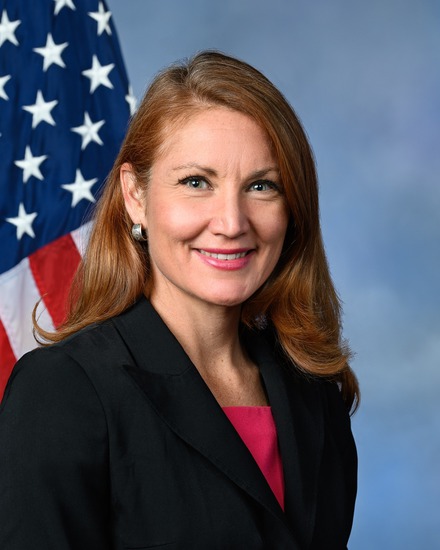
Rep. Melanie A. Stansbury
Sponsored bills
Saving Our Veterans Lives Act of 2025 This bill requires the Department of Veterans Affairs (VA) to implement a program to provide, upon request, a firearm lockbox (or voucher for such item) to eligible individuals. Currently, there is a pilot program under which certain veterans may be prescribed a lockbox by a VA clinician. The VA must also provide information with respect to the benefits of and options for secure firearm storage. The VA must develop an informational video on the secure storage of firearms as a suicide prevention strategy and publish the video on its website. Additionally, the VA must publish information to inform individuals who participate in the lockbox program that such lockboxes are not for resale. The VA must also implement a public education campaign to educate eligible individuals about the availability of lockboxes under the program and that participation in the program does not affect the rights of an individual with respect to the lawful ownership of a firearm.
Maddy summaryThe Rural Broadband Modernization Act would create a federal program to fund broadband infrastructure in rural areas through grants, loans, and loan guarantees. It establishes a minimum service standard of 100 Mbps symmetrical broadband for all rural households, prioritizing projects for communities without any existing broadband service (or with inadequate service) and requiring at least 90% of households in a service area to be unserved. The program would allocate $500 million annually from 2026-2030, with funds distributed based on the number of small communities (under 2,500 residents) in each state. Eligible applicants include local governments, tribal entities, and private companies that can demonstrate they'll meet the service requirements within 5 years.
Maddy summaryThe MIL FMLA Act expands the Family and Medical Leave Act to provide military families with additional leave options. It allows eligible employees to take up to 26 workweeks of leave during a 12-month period to care for a covered servicemember (active duty member or veteran), regardless of the employee's family relationship to the servicemember. The bill adds new definitions to include domestic partners, grandparents, siblings, and other extended family members as eligible caregivers, and creates a new "veteran leave" provision for employees who are covered servicemembers needing leave due to service-related serious injury or illness. These changes aim to better support military families by providing more comprehensive leave options for caregiving needs related to military service.
Maddy summaryHR 3306, the Truth in Tariffs Act, requires retailers selling goods to U.S. consumers to clearly display the portion of a product's price caused by applicable tariffs (called a "tariff surcharge"). This applies to most retailers but exempts small businesses as defined by the Small Business Act. The Federal Trade Commission (FTC) will enforce this rule, treating violations as unfair or deceptive practices under existing law, with penalties similar to those for other FTC violations. The law takes effect 30 days after enactment, covering tariffs imposed by the President after January 20, 2025.
Maddy summaryHR 3243, the Therapeutic Fraud Prevention Act of 2025, bans the provision of paid conversion therapy aimed at changing a person's sexual orientation or gender identity, and prohibits advertising such therapy as effective, safe, or without risk. It directly affects LGBTQ+ individuals and their families who might be targeted by these practices, as professionals have determined conversion therapy is ineffective and harmful. The law treats violations as deceptive acts under consumer protection laws, empowering the Federal Trade Commission and state attorneys general to enforce it through civil actions. It explicitly excludes legitimate gender transition support and non-discriminatory counseling from the ban.
Maddy summaryThis bill creates annual emergency grants for farm workers affected by covered disasters. It directly helps migrant and seasonal farm workers who lose income or cannot work due to events like hurricanes, wildfires, pandemics, or extreme weather. Grants fund immediate relief (food, shelter), rebuild community capacity, and support long-term resilience against future disasters. Eligible organizations, including farm worker groups or qualified nonprofits, receive funds to distribute aid without time limits.
Maddy summaryHR 3246, "Violet’s Law," amends the Animal Welfare Act to require federal research facilities to create plans for placing eligible animals (dogs, cats, nonhuman primates, guinea pigs, hamsters, or rabbits) no longer needed for research. It directs federal departments and agencies operating such facilities to develop standards within one year of enactment to facilitate adoption or placement with qualified organizations like animal rescue groups, sanctuaries, or shelters. Animals must be certified by a licensed veterinarian as free of infectious disease or physical issues endangering health before release. This applies directly to all U.S. federal agencies conducting animal research, mandating concrete steps to transition animals out of research settings into permanent care.
Maddy summaryThe HOME Act of 2025 prohibits landlords and sellers from charging "unconscionably excessive" rental or home sale prices during a federally declared affordable housing crisis. The Secretary of Housing and Urban Development (HUD) must determine crisis periods using metrics like mortgage rates, median home prices, and disaster declarations, with restrictions limiting crisis periods to 30 days (renewable). Violations are enforced by HUD and state attorneys general, with penalties funding affordable housing through the Housing Trust Fund. The law also requires HUD to monitor housing markets, investigate excessive investor purchases, and review anti-competitive practices in rental markets.
Maddy summaryHR 3184, the PFAS Alternatives Act, funds research to develop turnout gear (firefighter safety clothing) without harmful PFAS chemicals, directly affecting firefighters who wear this gear. It authorizes $25 million annually (2025-2029) for grants to eligible organizations to research and test PFAS-free gear, requiring partnerships with firefighting groups to translate findings into practice. The bill also allocates $2 million yearly (2027-2031) for training programs on safe gear use and decontamination. Its goal is to reduce firefighters' exposure to chemicals linked to occupational illnesses during operations.