

Maddy summaryThis bill expands the requirement for federal firearm licensees (FFLs) to report multiple firearm sales. It modifies existing law to require reporting on all firearms, not just handguns (pistols or revolvers), when a single transaction involves two or more firearms. This change directly affects FFLs who sell multiple firearms at once, such as in dealer-to-dealer transfers or large retail sales. The key mechanism is updating the legal definition in the statute to include every type of firearm, streamlining the reporting process under current federal law.
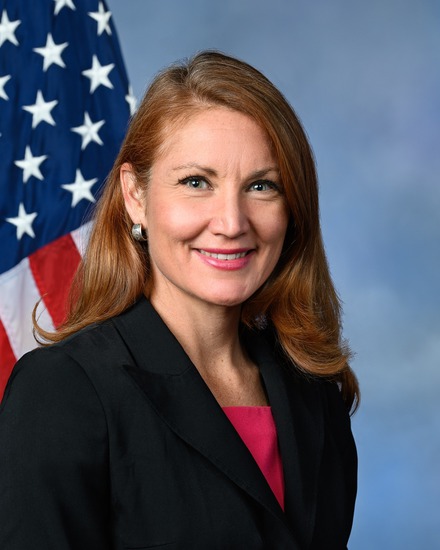
Rep. Melanie A. Stansbury
Sponsored bills
Maddy summaryHRES 550 is a non-binding House resolution recognizing June 2025 as LGBTQIA+ Pride Month. It formally encourages all U.S. citizens to celebrate Pride Month to learn about LGBTQIA+ history, including the Stonewall Inn and Compton's Cafeteria uprisings. The resolution affirms that LGBTQIA+ rights are human rights and emphasizes the ongoing struggle for equality. It has no legal effect but serves as a symbolic statement of support for the LGBTQIA+ community and its history.
Maddy summaryThe AMMO Act (HR 4227) regulates ammunition sales by requiring background checks for all non-licensed buyers, limiting bulk purchases to 100 rounds of .50 caliber or 1,000 rounds of other calibers within a 5-day period, and mandating recordkeeping for dealers. It directly affects licensed ammunition dealers and individuals purchasing ammunition, requiring dealers to collect identification, written certifications, and maintain records for two years. The bill establishes penalties including fines up to $250,000 for dealers and up to 5 years in prison for false statements, and requires annual reporting on violations. Dealers must post signage about these restrictions and verify identities through government-issued photo IDs. The law will take effect 120 days after enactment.
Maddy summaryThe No Secret Police Act of 2025 requires U.S. Immigration and Customs Enforcement (ICE) and other Department of Homeland Security officers working on border security or immigration enforcement to visibly display their official badges or uniforms and provide identification during detentions or arrests. It prohibits officers from wearing face coverings that conceal their face during these interactions. The bill also mandates that the Department report to Congress about tactical gear policies and research technology to improve badge visibility in different conditions like weather or lighting. These changes aim to increase transparency in immigration enforcement encounters.
Maddy summaryThe CONNECT for Health Act of 2025 expands Medicare telehealth coverage by removing geographic restrictions that limited where patients could receive care, expanding the types of health care providers who can offer telehealth services, and eliminating the requirement for an in-person visit before receiving telemental health services. The bill includes specific provisions to support telehealth use for Native American health facilities, rural health clinics, and Federally Qualified Health Centers. It requires the Centers for Medicare & Medicaid Services to collect and publish data on telehealth usage and impacts, and to develop resources to improve accessibility for people with disabilities and limited English proficiency. Program integrity measures are added to monitor telehealth billing practices and prevent fraud while maintaining coverage for telehealth services during public health emergencies.
Maddy summaryHR 4212, the SHADE Act, establishes a federal grant program to plant trees in historically underserved urban areas. It directly affects cities and communities in "redlined areas" (low-income neighborhoods historically denied loans) or "intra-urban heat islands" (city zones with high temperatures and low tree cover). The bill authorizes $50 million annually (2026-2036) for grants to states, local governments, tribes, or qualifying nonprofits to fund tree planting, maintenance for 5 years, and community engagement plans. Grants prioritize projects that avoid displacing residents and require planting non-invasive tree species suited to the local environment.
Maddy summaryHR 4152, the Safe Storage Saves Lives Act, requires gun sellers to offer a compatible gun lock with every firearm sale. It directly affects licensed gun retailers, who must make such locks available at the point of purchase. The bill amends federal law to mandate that sellers provide a secure storage device compatible with the firearm, with violations subject to $1,000 civil penalties. Funds from these penalties must be used for distributing free/reduced-cost locks or public awareness campaigns about safe storage.
Maddy summaryHR 4150, the Advancing Maternal Health Equity Under Medicaid Act, increases federal Medicaid funding for states that expand maternal health services. It requires states to spend more on specific maternal care (like prenatal/postpartum visits, telehealth, home visits, and mental health support) than they did in 2019, with the federal government covering 90% of the additional cost starting in 2025. The bill directly affects pregnant and postpartum individuals covered by Medicaid by expanding access to defined maternal health services. States must use the extra funds to improve service quality and capacity without reducing existing state funding for these services.
Maddy summaryThe Women's Health Protection Act of 2025 would protect access to abortion services across the United States by prohibiting states from imposing restrictions that are more burdensome than those on comparable medical procedures. The bill directly affects people seeking abortion care and health care providers by banning restrictions such as mandatory in-person visits, requirements for specific tests, limitations on telemedicine, and rules based on a patient's reason for seeking abortion. It prohibits state laws that single out abortion for unnecessary restrictions while allowing post-viability abortions when necessary to protect a patient's life or health. The bill preempts conflicting state laws and provides enforcement mechanisms through private lawsuits and actions by the Attorney General.
Maddy summaryThis bill prohibits state officials from blocking abortion access for patients traveling from other states, including restricting providers who offer legal abortions in their state to out-of-state patients. It protects people traveling across state lines for legal abortions, those assisting such travel, and the interstate transport of FDA-approved abortion medication. Violations can be challenged by the Justice Department or affected individuals through civil lawsuits seeking injunctions and damages. The law applies broadly across all states, territories, and tribal nations, defining "abortion service" to include both medical procedures and related care.