

Maddy summaryThis bill authorizes $30 million annually (2026-2030) to fund grants for partnerships between sexual assault programs and health/wellness providers, behavioral health programs, and disability services. It directly supports survivors of sexual assault - especially adult survivors of childhood abuse - by requiring grantees to develop trauma-informed, culturally relevant services like therapy, housing assistance, and care coordination. Eligible recipients include state/tribal coalitions, nonprofit rape crisis centers, and tribal organizations, which must use funds for specific activities including prevention, screening, and staff training while protecting survivor privacy. Grantees must report on program effectiveness, and the bill also updates existing law to explicitly include sexual assault in related provisions.
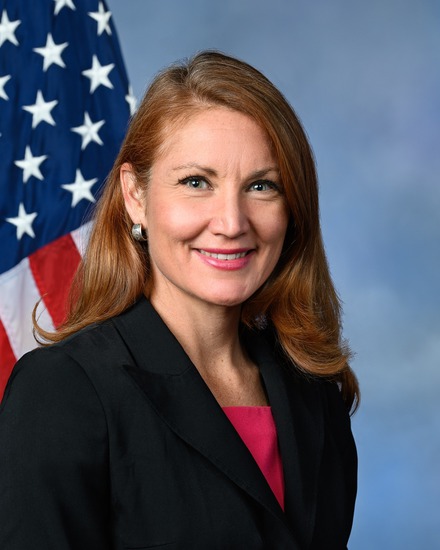
Rep. Melanie A. Stansbury
Sponsored bills
Maddy summaryThis bill establishes the Office of Climate Change and Health Equity within the Department of Health and Human Services to coordinate federal efforts addressing climate change's health impacts. It requires the creation of a National Strategic Action Plan to identify communities most affected by climate-related health threats - including environmental justice communities, medically underserved communities, and Tribal communities - and develop strategies for preparedness and response. The plan must address specific health impacts like extreme heat, air pollution, infectious diseases, and mental health effects, while prioritizing health equity and environmental justice. The bill also creates a Science Advisory Board to provide expert guidance and authorizes funding for these initiatives over several years. These provisions are designed to strengthen the health sector's ability to respond to climate change impacts across the United States.
Maddy summaryThis bill requires all federal agencies to set specific equity goals in their strategic and performance plans, mandating at least one goal or 20% of total goals focused on improving services for underserved communities and individuals. It establishes an "Agency Equity Advisory Team" with 10+ agency roles (including civil rights, data, and human capital leaders) and creates an "Equity Subcommittee" to coordinate across agencies on equitable practices. The bill also updates data officer responsibilities to prioritize equitable data collection, use, and sharing, including collaboration with community groups and state/local governments. It directly affects all federal agencies and aims to reshape how government services are delivered to populations systematically excluded from economic, social, and civic opportunities.
Maddy summaryThis resolution (HRES 585) is a symbolic congressional statement recognizing that extreme weather events - like heatwaves, wildfires, and poor air quality - pose unique health risks to children, including respiratory issues, heat illness, mental health impacts, and disruptions to education. It calls on Congress to prioritize rapid, equitable solutions tailored to children’s needs, such as improved school air filtration, accessible emergency alerts, and child-focused disaster planning. The resolution specifically highlights vulnerable groups like young farmworkers, pregnant people, and children in urban heat islands. As a non-binding resolution, it does not create new laws but urges future legislation and funding to address these climate-related health threats for children.
Maddy summaryThis bill restricts donations to Presidential Libraries and Centers (organizations established to commemorate former presidents) by limiting who can contribute and how much they can give. It prohibits donations from foreign nationals, lobbyists, federal contractors, people seeking pardons, and others during a president's term and for two years after leaving office, with an annual aggregate limit of $10,000 per donor (adjusted for inflation). Libraries must report all donations over $200 quarterly, including donor details, and publish this information publicly. The law aims to increase transparency and prevent undue influence by restricting certain sources of funding for these institutions.
Maddy summaryThis bill would require cosmetic suppliers to provide brand owners with detailed safety information about ingredients, including environmental and health hazards, chemical properties, and testing results. It creates a new FDA list of "nonfunctional constituents" (chemicals with no purpose in the product but potentially harmful to health or the environment) and mandates testing for these substances. Suppliers must provide certificates of analysis showing levels of these substances before selling to brand owners. The bill also establishes recordkeeping requirements for the entire cosmetic supply chain to facilitate recalls or investigations. These requirements apply to cosmetic manufacturers, suppliers, and brand owners, with the FDA responsible for implementation and enforcement.
Maddy summaryThis bill would fund research into health impacts from chemicals in cosmetics used by communities of color and professional salon workers, with $7.5 million allocated for each research area. It requires cosmetic manufacturers to provide safety data sheets in multiple languages (English, Spanish, Vietnamese, Chinese, Korean) for salon products containing hazardous chemicals. The bill establishes two national resource centers to provide education, training, and culturally appropriate materials about safer cosmetic choices for underserved populations. It also regulates synthetic braids as cosmetics under FDA safety standards, requiring warning labels if safety standards aren't met.
Maddy summaryThis bill would require cosmetic brand owners to disclose all ingredients, including fragrances and flavors, on their websites and product packaging. Starting 1 year after enactment, brand owners must list all ingredients in descending order on their websites, including the functional purpose of fragrance ingredients. By 2 years after enactment, product packaging must list all ingredients and include a link to health information for products containing certain hazardous chemicals identified in EPA, California, EU, and other official lists. The bill creates a master list of hazardous chemicals that the Food and Drug Administration must maintain and update, which would be publicly available. This affects all cosmetic manufacturers and brand owners selling products in interstate commerce, giving consumers more transparency about potentially harmful ingredients.
Maddy summaryThis bill prohibits U.S. Immigration and Customs Enforcement (ICE) from using federal funds to detain or transport U.S. citizens during civil immigration enforcement actions. It directly affects ICE operations by blocking funding for any activity that would hold or move citizens outside the U.S. under immigration laws. The key mechanism is a specific funding restriction in the bill text, stating no funds may be used for detaining or transporting citizens. This applies to all civil immigration enforcement activities defined under the Immigration and Nationality Act. The bill does not create new enforcement powers but limits how existing funds can be spent.
Maddy summaryThe Toxic-Free Beauty Act of 2025 bans 15 specific harmful chemicals and contaminants in cosmetic products, directly affecting manufacturers and retailers selling cosmetics in the U.S. market. It prohibits ingredients like formaldehyde, mercury, certain parabens, phthalates, and triclosan, while setting strict limits for contaminants such as lead and 1,4-dioxane in products. The law includes a non-preemption clause allowing states to maintain or enforce stricter rules than federal standards, and the ban will take effect for products introduced into interstate commerce starting January 1, 2027. This legislation aims to reduce consumer exposure to chemicals linked to health risks by defining key terms like "contaminant" and "intentionally added ingredient."