This resolution recognizes that Black women are experiencing high, disproportionate rates of maternal mortality and morbidity in the United States and that Black Maternal Health Week is an opportunity to deepen the national conversation about Black maternal health.
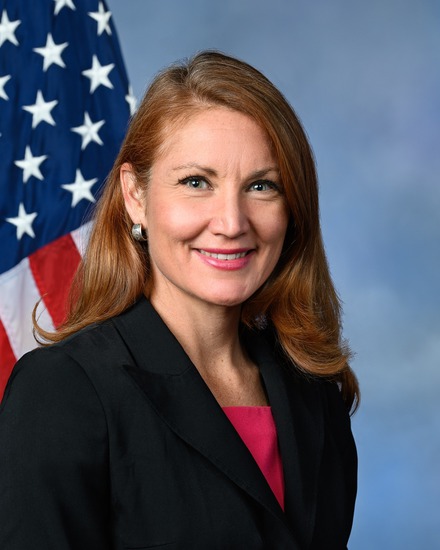
Rep. Melanie A. Stansbury
Sponsored bills
Excess Urban Heat Mitigation Act of 2022 This bill requires the Department of Housing and Urban Development (HUD) to establish a grant program for state, tribal and local governments; metropolitan planning organizations; and certain nonprofits (or consortia of nonprofits) to carry out activities to mitigate heat in urban areas. HUD must coordinate with the Environmental Protection Agency on the program.
Safe Workplaces Act This bill requires the Occupational Safety and Health Administration (OSHA) to promulgate an occupational safety and health standard on reducing the threat of workplace violence, including firearm violence. Additionally, the National Institute for Occupational Safety and Health must study and make recommendations about ways to reduce workplace violence. OSHA must consider those recommendations when promulgating the workplace safety and health standard.
Feed Hungry Veterans Act of 2022 This bill expands eligibility for the Supplemental Nutrition Assistance Program (SNAP) for certain disabled veterans, including those determined to be catastrophically disabled.
Targeting Resources for Equitable Access to Treatment for Long COVID Act or the TREAT Long COVID Act This bill requires the Department of Health and Human Services to award competitive grants to create or expand the capacity of clinics that treat patients with persistent, long-term symptoms following recovery from acute COVID-19 (i.e., Long COVID). Eligible recipients include federally qualified health centers, rural health clinics, urban Indian health centers, and state and local health departments.
Energy Security and Independence Act of 2022 This bill addresses domestic industrial base and manufacturing capabilities for specified energy-efficiency and renewable energy systems and technologies (e.g., electric transportation systems), including by establishing a program to provide financial assistance for the construction of new facilities that manufacture components of specified energy-efficiency and renewable energy systems and technologies (or to retool, retrofit, or expand such facilities).
IHS Contract Support Cost Amendment Act This bill allows tribes to receive contract support costs for activities that would otherwise be carried out by the Department of the Interior or the Department of Health and Human Services for direct operation of a program, but for which the costs are not fully covered by the amount of funds required by the Indian Self-Determination and Education Assistance Act of 1975.
Protection from Abusive Passengers Act This bill addresses the banning of abusive passengers from commercial aircraft flights. Abusive passenger is defined as any individual who engages in behavior that results in a civil penalty or conviction for assaulting, threatening, or intimidating a crew member or passenger on an aircraft flight, or who takes any action to interfere with security screening personnel or any security system related to civil aviation security. It requires the Federal Aviation Administration or the Attorney General to provide the identity, including the full name and date of birth, and gender of all abusive passengers to the Transportation Security Administration (TSA). The TSA must maintain a list of abusive passengers and develop and make publicly available policies and procedures for handling individuals included on the list. Any individual on the list shall be prohibited from boarding any commercial aircraft flight until the individual is removed from such list. Additionally, all abusive passengers shall be permanently ineligible to participate in the TSA PreCheck or the U.S. Customs and Border Protection's Global Entry programs, with specified exceptions.
Burma Unified through Rigorous Military Accountability Act of 2022 or the BURMA Act of 2022 This bill imposes sanctions pertaining to Burma (Myanmar) and addresses related issues. The President must impose property- and visa-blocking sanctions on certain foreign persons (i.e., an individual or entity), including those that (1) knowingly operate in Burma's defense sector, (2) are responsible for or complicit in undermining Burma's democratic processes, or (3) are senior leaders in Burma's military or government. The Department of the Treasury must prohibit or impose strict conditions on certain accounts used to facilitate transactions for such sanctioned persons. The President may impose sanctions on Myanma Oil and Gas Enterprise if such sanctions would support certain objectives, including reducing the Burmese military's ability to undermine democracy in Burma. Before removing certain foreign persons from a list of specially designated nationals and blocked persons (commonly known as the SDN list), the President must certify to Congress that the person in question has not knowingly engaged in certain activities, such as supporting terrorism. The bill authorizes Department of State and U.S. Agency for International Development activities in Burma and the surrounding region to support democracy activists, humanitarian assistance, and reconciliation efforts. The State Department may (1) continue to assist organizations supporting political prisoners in Burma, and (2) provide assistance to entities investigating crimes against humanity. The President must direct U.S. representatives to the United Nations to vote and advocate for certain actions related to Burma, such as cutting off assistance to Burma's government.

This resolution expresses support for legislation to provide child care assistance to all working families that need it; make childcare affordable and available to meet various job schedules; guarantee that all families eligible for childcare will receive it; improve the quality of childcare; expand access to Head Start and preschool services; and provide sufficient federal, state, and local investment to ensure resources for both high-quality jobs and affordable childcare.