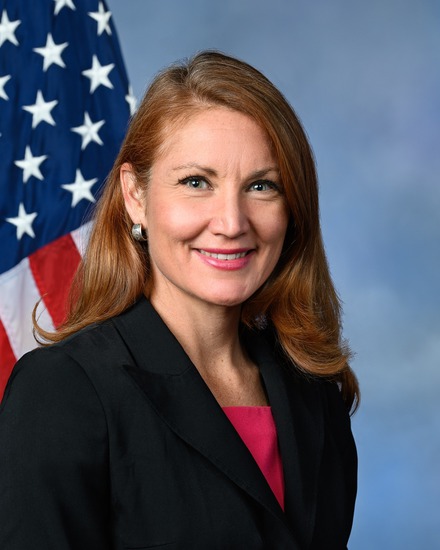
Photo of Melanie A. Stansbury
D United States House · District 1 · New Mexico On the 2026 ballot

Rep. Melanie A. Stansbury

Compare
Total votes
2,694
all sessions
Attendance
98%
52 missed
Near the chamber average
With party
98%
of cast votes
Higher than 85% of chamber peers
Bipartisan score
1%
crosses aisle rarely
Lower than 86% of chamber peers
Sponsored
1,707
bills & resolutions
Higher than 90% of chamber peers
Committees
5
assignments
1,707 bills and resolutions

Sponsored bills

Total
1,707
Primary
56
Co-sponsor
1,651
This page
1,707
matching current filters
Co-sponsor HR 3764
In committee · United States House · Co-sponsor
Ocean-Based Climate Solutions Act of 2022

Ocean-Based Climate Solutions Act of 2022 This bill establishes a variety of requirements to reduce carbon emissions and protect oceans, coastal habitats, marine mammals, and fish populations from climate change and other threats.

In committee Dec 30, 2022 1 co-sponsor
Co-sponsor HR 2780
In committee · United States House · Co-sponsor
Insular Area Climate Change Act

Insular Area Climate Change Act This bill provides support through programs and financial assistance for climate change planning, mitigation, adaptation, and resilience in U.S. territories (American Samoa, Guam, Northern Mariana Islands, Puerto Rico, and the U.S. Virgin Islands) and the Freely Associated States (Micronesia, Marshall Islands, and Palau). For example, the bill requires the Technical Assistance Program of the Department of the Interior's Office of Insular Affairs to provide technical assistance for climate change planning, mitigation, adaptation, and resilience to the territories and Freely Associated States. It also establishes an Insular Area National Program Office within the Environmental Protection Agency to build and strengthen infrastructure to withstand natural disasters, expand renewable energy and energy efficiency, and provide technical assistance in the territories and Freely Associated States. Additionally, the bill establishes several grant programs to assess and reduce the impacts of climate change, expand renewable energy and energy efficiency, or expand sustainable infrastructure to withstand natural disasters in the territories and Freely Associated States.

In committee Dec 30, 2022 1 co-sponsor
Co-sponsor HR 2021
In committee · United States House · Co-sponsor
Environmental Justice For All Act

Environmental Justice For All Act This bill establishes several environmental justice requirements, advisory bodies, and programs and modifies the scope of environmental review under the National Environmental Policy Act of 1969. The bill sets forth provisions to address the disproportionate adverse human health or environmental effects of federal laws or programs on communities of color, low-income communities, or tribal and indigenous communities. It also prohibits disparate impacts on the basis of race, color, or national origin as discrimination. Aggrieved persons may seek legal remedy when faced with such discrimination. In addition, the bill directs agencies to follow certain requirements concerning environmental justice. For example, agencies must prepare community impact reports that assess the potential impacts of their actions on environmental justice communities under certain circumstances. It also raises coal, oil, and gas royalty rates to create a funding source to support fossil fuel-dependent communities and displaced workers as they transition away from fossil fuel industries. Additionally, the bill creates a variety of advisory bodies and positions, such as the White House Environmental Justice Interagency Council. Among other things, the council must issue an environmental justice strategy. It also establishes requirements and programs concerning chemicals or toxic ingredients in certain products. For example, the bill (1) requires certain products (e.g., cosmetics) to include a list of ingredients or warnings; and (2) provides grants for research on designing safer alternatives to chemicals in certain consumer, cleaning, toy, or baby products that have an inherent toxicity or that are associated with chronic adverse health effects. Finally, it creates a variety of funding programs, such as a grant program to enhance access to park and recreational opportunities in urban areas.

In committee Dec 30, 2022 1 co-sponsor
Co-sponsor HR 3285
Signed into law · United States House · Co-sponsor
21st Century President Act

21st Century President Act This act revises the definition of immediate family for purposes of a criminal offense involving a threat to kill, kidnap, or inflict bodily harm on a former President or a member of the immediate family of a former President. Specifically, it replaces gender-specific references to a former President's wife and widow with the gender-neutral terms spouse and surviving spouse .

Signed into law Dec 27, 2022 1 co-sponsor
Co-sponsor HR 4042
In committee · United States House · Co-sponsor
Aviation Funding Stability Act of 2021

Aviation Funding Stability Act of 20 21 This bill provides continuing appropriations to the Federal Aviation Administration (FAA) from the Airport and Airway Trust Fund if an appropriations bill for the FAA has not been enacted before a fiscal year begins or a joint resolution making continuing appropriations for the FAA is not in effect. The bill provides appropriations at the rate of operations that was provided for the prior fiscal year to continue programs, projects, and activities for which funds were provided in the preceding fiscal year.

In committee Dec 23, 2022 1 co-sponsor
Co-sponsor HR 9648
In committee · United States House · Co-sponsor
Bus Rapid Transit Act

Bus Rapid Transit Act This bill directs the Federal Transit Administration (FTA) to establish a grant program to provide grants to state, local, and tribal governments for the design and implementation of bus rapid transit systems, including for the redesign, retrofit, renovation, update, and repair of existing bus systems. As a condition of receiving a grant, eligible entities must certify that fares for riding the bus rapid transit system shall not increase solely due to improvements carried out with grant funds and for any reason for at least one year after completion of a project funded by the bill. In carrying out the program, the FTA must prioritize projects located in economically disadvantaged communities.

In committee Dec 22, 2022 1 co-sponsor
Co-sponsor HR 8770
In committee · United States House · Co-sponsor
Expanding the VOTE Act

Expanding the Voluntary Opportunities for Translations in Elections Act or the Expanding the VOTE Act This bill expands access to voting materials for individuals with limited proficiency in the English language, including by establishing incentive grants for states and political subdivisions to provide translated voting materials. Additionally, the bill directs the Government Accountability Office to study the impact of (1) reducing the threshold requirement under Section 203 of the Voting Rights Act of 1965, and (2) expanding the definition of language minorities to include native speakers of additional languages.

In committee Dec 21, 2022 1 co-sponsor
Co-sponsor HR 2930
Signed into law · United States House · Co-sponsor
Safeguard Tribal Objects of Patrimony Act of 2021

Safeguard Tribal Objects of Patrimony Act of 2021 This act prohibits the exportation of Native American cultural items and archaeological resources that were illegally obtained; provides for the return of such items, including voluntary returns; and establishes and increases related criminal penalties. Specifically, the act makes it a federal crime to export, attempt to export, or otherwise transport from the United States Native American cultural items and archaeological resources without obtaining an export certification. U.S. Customs and Border Protection must detain any item requiring an export certification that does not have one. The act requires the Department of the Interior and the Department of State to each designate a liaison to facilitate and hold trainings and workshops on the voluntary return of human remains and cultural items. Additionally, Interior must refer individuals and organizations to Indian tribes and Native Hawaiian organizations to facilitate the voluntary return of human remains and cultural items; convene an interagency working group; and convene a Native working group consisting of representatives of Indian tribes and Native Hawaiian organizations to provide advice on issues concerning the return of, and illegal trade in, human remains and cultural items. The act also increases the maximum criminal penalties for violating the Native American Graves Protection and Repatriation Act. In particular, the act increases from 5 years to 10 years the maximum prison term for an individual convicted of a second or subsequent violation of selling, purchasing, using for profit, or transporting for sale or profit human remains or cultural items that were illegally obtained.

Signed into law Dec 21, 2022 1 co-sponsor
Co-sponsor HR 1193
Signed into law · United States House · Co-sponsor
Cardiovascular Advances in Research and Opportunities Legacy Act

Cardiovascular Advances in Research and Opportunities Legacy Act This act addresses research, education, and awareness concerning valvular heart disease and its treatment. This disease is caused by damage to or disease affecting any valve that controls blood flow in the heart. The National Institutes of Health may conduct or support research on the disease in consultation with the National Heart, Lung, and Blood Institute (NHLBI). The NHLBI must also conduct a workshop on mitral valve prolapse, which occurs when the valve between the chambers of the left side of the heart seals improperly. The Department of Health and Human Services (HHS) must develop best practices to treat valvular heart disease. HHS may also carry out other projects to increase education and awareness of the disease.

Signed into law Dec 20, 2022 1 co-sponsor
Co-sponsor HR 263
Signed into law · United States House · Co-sponsor
Big Cat Public Safety Act

Big Cat Public Safety Act This act revises requirements governing the trade of big cats (i.e., species of lion, tiger, leopard, cheetah, jaguar, or cougar or any hybrid of such species) under the Lacey Act to limit the possession, breeding, and exhibition of big cats. The Lacey Act prohibits any person from importing, exporting, buying, selling, transporting, receiving, or acquiring big cats across state lines or the U.S. border. However, some exemptions are provided for certain entities, such as universities and wildlife sanctuaries. (Sec. 3) The act expands the Lacey Act prohibitions to include a prohibition on possessing or breeding big cats. Breeding means facilitating propagation or reproduction (whether intentionally or negligently), or failing to prevent propagation or reproduction. Owners of big cats that were born before this act's enactment may keep their big cats, but the owners must register them with the U.S. Fish and Wildlife Service. The act modifies the list of entities that are exempt from prohibitions to export, buy, sell, transport, receive, acquire, possess, or breed big cats. The modified list includes exemptions for entities or facilities exhibiting animals to the public if they (1) hold a Class C license in good standing under the Animal Welfare Act, and (2) do not allow individuals to come into direct physical contact with big cats. However, direct contact is allowed if the individual is a trained professional, a veterinarian, or directly supporting conservation programs that do not involve commercial activities and meet other specified restrictions. (Sec. 4) A person who knowingly violates the act must be fined not more than $20,000, or imprisoned for no more than five years, or both. The act considers each violation to be a separate offense. The offense must be deemed to have been committed not only in the district where the violation first occurred, but also in any district in which the defendant may have taken or been in possession of the prohibited wildlife species. (Sec. 5) The act extends forfeiture provisions to fish, wildlife, or plants that are bred or possessed; thus, big cats bred or possessed in violation of the act are subject to forfeiture. (Sec. 6) The Department of the Interior must issue regulations to implement this act.


Signed into law Dec 20, 2022 1 co-sponsor
Showing 1,261 to 1,270 of 1,707 bills