

Maddy summaryThis bill expands eligibility under federal health benefits programs to include employees of Tribal Colleges and Universities (TCUs), alongside existing Indian tribes, tribal organizations, and urban Indian organizations. It amends the Indian Health Care Improvement Act to explicitly allow TCUs (defined under the Higher Education Act) to participate in the Federal Employees Health Benefits (FEHB) Program, enabling their employees to purchase coverage. Additionally, it creates a new "Tribal Insurance Administrative Account" under Title 5 to collect a capped administrative fee (max 3% of average premiums) from tribal employers using the FEHB Program, funding the program's administration. The changes directly affect tribal entities and TCUs seeking to provide federal health benefits to their employees.
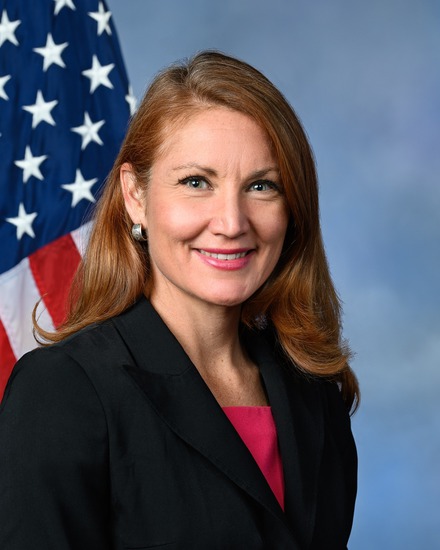
Rep. Melanie A. Stansbury
Sponsored bills
Maddy summaryHCONRES 37 is a non-binding congressional resolution expressing that Congress views climate change as an emergency requiring a massive national mobilization. It states that human-caused climate change severely impacts U.S. economic well-being, health, safety, and national security, and urges the President to use existing authorities to accelerate climate action. The resolution does not create new laws or funding but emphasizes the need for urgent, equitable efforts to reduce emissions, address environmental injustice, and support vulnerable communities disproportionately affected by climate impacts. It cites rising global temperatures, extreme weather costs ($165 billion in U.S. disasters in 2022), and the Inflation Reduction Act as context, while clarifying it does not declare an actual national emergency.
Maddy summaryHR 3073 creates a federal grant program to fund community-based mental wellness and resilience initiatives. It provides planning grants (up to $250,000) for organizations to form community networks and assess needs, followed by program grants (up to $500,000 annually for 4 years) to implement evidence-based programs. The bill requires grantees to use a public health approach, collect community input, and develop strategic plans addressing protective factors and risk factors for mental wellness. At least 20% of funds must support rural communities, and programs must involve diverse community groups like schools, faith organizations, health professionals, and local government. The bill authorizes $36 million over 2024-2028 to support these community-led efforts.
Maddy summaryThis bill removes a restriction that previously barred people in jail or prison while awaiting trial from receiving Medicaid health benefits. It directly affects individuals in custody pending legal proceedings by allowing states to provide Medicaid coverage for their medical care during this time. The bill also allocates $50 million in planning grants to help states develop systems to enroll these individuals, recruit healthcare providers who can serve them, and establish electronic billing for services provided in correctional facilities or through outpatient care. Key provisions require states to assess healthcare needs, eliminate policy barriers, and create plans to increase provider participation in Medicaid for this population.
Maddy summaryHR 1590 designates the Department of Veterans Affairs clinic in Gallup, New Mexico (located at 2075 South NM Highway 602) as the "Hiroshi Hershey Miyamura VA Clinic." This bill honors Hiroshi Hershey Miyamura, a Medal of Honor recipient who served in the 442nd Infantry Regiment during WWII and later in the Korean War. The designation updates all official U.S. references to the clinic to include his name, recognizing his military service and community contributions. The bill has no funding or policy changes; it solely changes the clinic's official name.
Maddy summaryHR 3056, the Research Advancing to Market Production for Innovators Act, aims to improve the commercialization of technologies developed by small businesses through the SBIR and STTR programs. The bill requires federal agencies to consider commercialization potential in peer reviews, designate Technology Commercialization Officials to assist small business awardees, and establish annual commercialization impact assessments measuring outcomes like product sales, outside investment, and patent activity. It also creates a prioritized patent examination program to help small businesses protect intellectual property more efficiently without additional fees. These changes apply to all federal agencies administering SBIR and STTR programs and directly affect small businesses receiving these awards.
Maddy summaryHR 3062, the Chaco Cultural Heritage Area Protection Act of 2023, withdraws federal lands surrounding Chaco Culture National Historical Park (a UNESCO World Heritage Site) from oil and gas leasing and development. The bill terminates non-producing oil and gas leases on these lands and prevents new leasing on federal land within the designated Chaco Cultural Heritage Withdrawal Area, directly affecting oil and gas developers and protecting cultural resources. It specifically aims to safeguard the landscape, sacred sites, and visitor experience at Chaco Culture National Historical Park - used for cultural practices by Pueblo tribes, Navajo Nation, and Hopi Tribe - while preserving existing tribal trust land rights. The withdrawal covers approximately 140,000 acres in New Mexico, excluding tribal trust lands and existing mineral rights.
Maddy summary# Summary of EDUCATORS for America Act Provisions This comprehensive legislation makes significant changes to educator preparation, certification, and support systems, with a strong focus on loan forgiveness and retention of educators in high-need settings. ## Key Provisions: 1. **Enhanced Loan Forgiveness Programs**: - Creates new "Educator Loan Forgiveness Programs" under sections 428J and 460 of the Higher Education Act - Provides 100% loan forgiveness for educators who complete 5 years of qualifying service in high-need schools or early childhood education programs - Offers monthly loan forgiveness/cancellation during the service period (in addition to annual forgiveness) 2. **Expanded Eligibility**: - Defines "high need school" as schools where: * Over 30% of students meet poverty measures * School is identified for comprehensive support * School is Bureau of Indian Education funded * School is operated by Tribal educational agencies - Includes Tribal early childhood programs, Native Hawaiian education systems, and Bureau of Indian Education programs as eligible settings - Special rule for educators providing instruction in Native American languages 3. **"Qualifying Educator" Definition**: - Includes elementary/secondary teachers (with full certification) - Includes school leaders (with full certification) - Includes early childhood educators and program directors - Includes educators working in Native American language instruction regardless of certification status 4. **New Support Programs**: - Centers of Excellence for teacher preparation at institutions serving underrepresented populations - Recruitment and completion grants for underrepresented students in education - Resiliency grants for technology integration and educator workforce partnerships - Doctoral fellowships to diversify faculty in high-need education areas 5. **Implementation Details**: - Monthly loan credit program for eligible educators in income-driven repayment plans - Allows counting of partial service years under specific conditions - Prevents double benefits with other service programs - Allows for promotions within qualifying schools without losing eligibility This legislation aims to create a more diverse, stable, and well-prepared educator workforce by reducing financial barriers to entering and remaining in the education profession, particularly in high-need schools and early childhood education settings.
Maddy summaryThe Protecting America's Workers Act expands workplace safety protections to public employees, including those working for state and local governments who were previously excluded from some OSHA protections. It strengthens whistleblower protections by prohibiting retaliation against employees who report safety concerns, refuse to perform dangerous tasks, or report work-related injuries. The bill requires employers to promptly report work-related deaths and hospitalizations, prohibits policies that discourage injury reporting, and mandates posting of employee safety rights information. It also increases penalties for safety violations and improves access to information for victims and families during workplace investigations. These changes apply to all employers covered by OSHA, with specific implementation timelines for state and local government workplaces.
Maddy summaryThis bill protects living organ donors from insurance discrimination by prohibiting life, disability, and long-term care insurers from denying coverage, raising premiums, or altering policy terms solely because someone donated an organ while alive. It also updates the Family and Medical Leave Act to include recovery from organ donation surgery as a qualifying health condition, allowing donors to take protected leave for this purpose. Additionally, the bill requires the Health and Human Services Secretary to update public educational materials about living donation benefits, risks, and insurance protections within six months of enactment. These changes directly affect living organ donors, insurers, employers, and healthcare systems by ensuring fair access to insurance and workplace leave.