VA Employee Fairness Act of 2021 This bill repeals provisions excluding any matter or question concerning professional conduct or competence; peer review; or the establishment, determination, or adjustment of employee compensation from the applicability of collective bargaining rights for Veterans Health Administration employees.
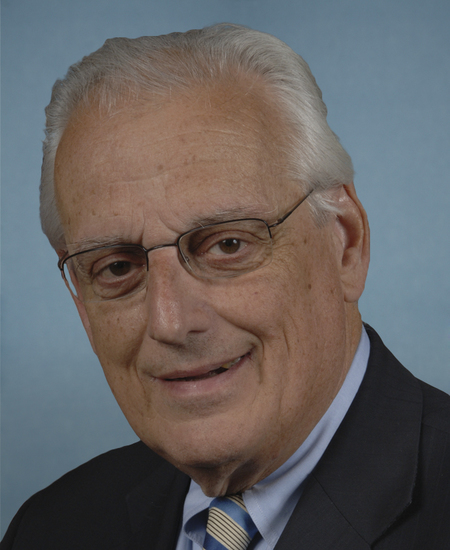
Rep. Bill Pascrell, Jr.
Sponsored bills
Maddy summaryHRES 1522 is a symbolic resolution condemning the November 19, 2022, mass shooting at Club Q, an LGBTQ+ nightclub in Colorado Springs that killed five people and injured 22. It honors the victims, offers condolences to their families, and expresses support for those impacted by the attack. The resolution also highlights the broader context of anti-LGBTQ+ violence and hate, including the Pulse nightclub tragedy, and calls for an end to anti-LGBTQ+ hate and violence. As a ceremonial resolution, it contains no new laws or funding but serves as a formal statement of solidarity with the LGBTQ+ community.
Respect for Marriage Act This act provides statutory authority for same-sex and interracial marriages. Specifically, the act replaces provisions that define, for purposes of federal law, marriage as between a man and a woman and spouse as a person of the opposite sex with provisions that recognize any marriage between two individuals that is valid under state law. (The Supreme Court held that the current provisions were unconstitutional in United States v. Windsor in 2013.) The act also replaces provisions that do not require states to recognize same-sex marriages from other states with provisions that prohibit the denial of full faith and credit or any right or claim relating to out-of-state marriages on the basis of sex, race, ethnicity, or national origin. (The Supreme Court held that state laws barring same-sex marriages were unconstitutional in Obergefell v. Hodges in 2015; the Court held that state laws barring interracial marriages were unconstitutional in Loving v. Virginia in 1967.) The act allows the Department of Justice to bring a civil action and establishes a private right of action for violations. The act does not (1) affect religious liberties or conscience protections that are available under the Constitution or federal law, (2) require religious organizations to provide goods or services to formally recognize or celebrate a marriage, (3) affect any benefits or rights that do not arise from a marriage, or (4) recognize under federal law any marriage between more than two individuals.

International Violence Against Women Act of 2022 This bill requires a U.S. global strategy to prevent and respond to violence against women and girls. The bill establishes in the Department of State an Office of Global Women's Issues, which shall be headed by an Ambassador-at-Large for Global Women's Issues. The Ambassador-at-Large shall (1) coordinate U.S. government efforts regarding gender equality and the advancement of women and girls in foreign policy, and (2) develop or update periodically a U.S. global strategy to prevent and respond to gender-based violence. The bill establishes in the U.S. Agency for International Development the position of Senior Coordinator for Gender Equality and Women's Empowerment who shall coordinate policies, programs, and funding regarding gender equality and women's empowerment.
The Jackie Walorski Maternal and Child Home Visiting Reauthorization Act of 2022 This bill reauthorizes through FY2027, increases funding for, and modifies the Maternal, Infant, and Early Childhood Home Visiting Program. This program supports home visits for expectant and new parents who live in communities that are at-risk for poor maternal and child health outcomes. Changes to the program include setting out requirements for allocating program funds; increasing the percentage of funds reserved for tribal entities; establishing a publicly available dashboard that reports program outcomes; requiring activities to reduce unnecessary data collection, reporting, and other administrative requirements of the program; and allowing for virtual home visits (provided certain conditions are met). The bill also reduces funding for the Medicare Improvement Fund.
Lymphedema Treatment Act This bill provides for Medicare coverage of lymphedema compression treatment items. Specifically, the bill provides for coverage of standard and custom fitted gradient compression garments and other approved items that are prescribed by a physician or other specified health care professional to treat lymphedema.
New York-New Jersey Watershed Protection Act This bill requires the U.S. Fish and Wildlife Service to establish the New York-New Jersey Watershed Restoration Program, a nonregulatory program, to coordinate restoration and protection activities among government entities and conservation partners throughout the watershed. The bill also establishes the New York-New Jersey Watershed Restoration Grant Program, a voluntary grant and technical assistance program, to provide competitive matching grants to certain entities to implement restoration and protection activities for the watershed.
Prevent All Soring Tactics Act of 2022 or the PAST Act of 2022 This bill addresses the practice of soring horses. The soring of horses includes various actions taken on horses' limbs to produce higher gaits that may cause pain, distress, inflammation, or lameness. Specifically, the bill expands soring regulation and enforcement at horse shows, exhibitions, sales, and auctions, including by establishing a new system for inspecting horses for soring. In addition, the bill increases penalties for violations.
Maddy summaryHRES 1459 is a symbolic House resolution formally acknowledging the service and sacrifices of veterans who served during the Korean War (1950-1953) and current Korean Defense Veterans stationed in South Korea. It recognizes the contributions of approximately 1.8 million U.S. military personnel who served under the UN Command, including the 36,574 U.S. service members who died. The resolution specifically honors the ongoing service of nearly 25,000 U.S. personnel currently stationed in South Korea to maintain the armistice. As a non-binding resolution, it does not create new benefits or policy changes but serves as a formal statement of congressional recognition.
Maddy summaryHJRES 53 proposes a constitutional amendment to ban slavery and involuntary servitude as a criminal punishment. Currently, the 13th Amendment to the U.S. Constitution permits such punishments for crimes, creating a legal loophole. If ratified by 3/4 of state legislatures, this amendment would eliminate that exception nationwide, making it unconstitutional to impose forced labor or slavery as part of criminal sentences. The change would directly affect all states' criminal justice systems, particularly prison labor practices, by prohibiting these punishments for any offense.