

Maddy summaryHR 4121, the Right to Contraception Act, establishes a federal statutory right for individuals to access contraceptives and contraception services without government restriction or coercion, directly affecting all people seeking reproductive care and health care providers. The bill prohibits state or federal laws that limit access to contraceptives (defined broadly to include devices, drugs, and fertility methods), prevent individuals from obtaining or using them, or allow providers to refuse services based on personal beliefs. It preempts conflicting state laws, requires any restrictions to be justified by "clear and convincing evidence" of advancing access with no less restrictive alternative, and allows private lawsuits to challenge violations. The Act applies nationwide to all health care providers and individuals, protecting access regardless of factors like race, income, or location.
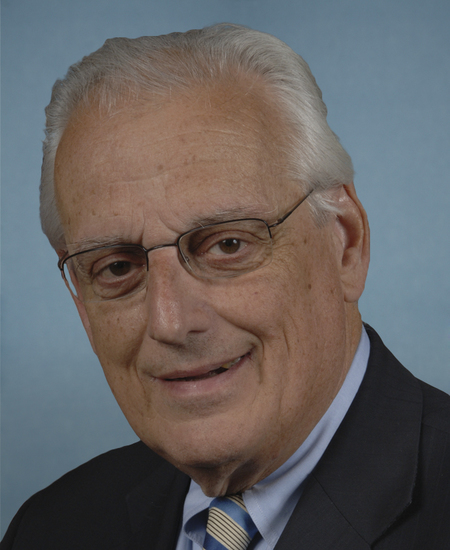
Rep. Bill Pascrell, Jr.
Sponsored bills
Lady Liberty Act of 2023 This bill sets a floor of 125,000 for the maximum number of refugees who may be admitted into the United States each fiscal year. Under current law, the President sets the annual cap on refugee admissions at the beginning of each fiscal year. (The cap for FY2023 was 125,000, but in some years it had been lower. For example, the cap for FY2021 was 15,000.)
Maddy summaryHR 4172, the Hate Crimes Commission Act of 2023, establishes a 12-member United States Commission on Hate Crimes to investigate trends and improve responses to hate crimes. The commission, appointed by Senate and House leaders plus the Attorney General and Secretary of Health and Human Services, will examine hate crime increases since 2015, factors driving them, and strategies to reduce underreporting to the FBI’s National Incident-Based Reporting System. It will also assess successful bias prevention efforts and online hate crime prevalence. Within one year of its formation, the commission must submit a report to Congress and the President with recommendations for federal agencies and community-based prevention programs. This bill directly affects local law enforcement agencies through reporting requirements and federal agencies through proposed policy changes.
Maddy summaryThe American Dream and Promise Act of 2023 would create two pathways to permanent residency for certain immigrants. The "Dream Act" portion would provide conditional permanent resident status to individuals who entered the U.S. as children, have lived continuously in the U.S. since January 1, 2021, and meet educational requirements (such as completing high school, earning a degree, or enrolling in education programs). The "American Promise Act" portion would provide permanent residency to individuals eligible for Temporary Protected Status (TPS) or Deferred Enforced Departure (DED) as of specific dates (January 1, 2017, or January 20, 2021). The bill includes provisions for background checks, fee exemptions for low-income applicants, and processes for removing conditional status after meeting specific criteria like completing higher education or earning income.
Maddy summaryHR 4021, the Fair and Open Skies Act, amends U.S. aviation law to require that the Department of Transportation consider labor standards when reviewing international air transport agreements. Specifically, it adds "preventing the undermining of labor standards" as a mandatory factor in the public interest test for approving such agreements under 49 U.S.C. § 40101. This change directly affects international airlines seeking to operate flights to or from the U.S. and the DOT, which must now evaluate whether proposed agreements could weaken U.S. labor protections. The bill updates existing provisions by replacing outdated language about "agreements with the United States Government" and explicitly including labor standards in the evaluation criteria.
Airline Employee Assault Prevention Act This bill modifies the requirements for the Employee Assault Prevention and Response Plans that must be submitted by air carriers. Specifically, the bill requires that, within 90 days of enactment, commercial air carriers submit an Employee Assault Prevention and Response Plan to the Transportation Security Administration (TSA) for review and acceptance. Currently, air carriers must submit the plan only to the Federal Aviation Administration (FAA). (These plans must include certain protocols for reporting verbal or physical assaults and for the notification of law enforcement.) The FAA, in consultation with the TSA, must submit a report to Congress on all of the Employee Assault Prevention and Response Plans submitted by commercial air carriers. The plans must be listed by each air carrier. The bill also specifies that current protections against interference with federal, airport, or air carrier employees who have airport security duties include employees performing ticketing, check-in or baggage claim, or boarding functions.
Maddy summaryHR 3985 establishes a new Office within the U.S. Department of State to monitor and combat Islamophobia abroad. The bill requires the State Department to appoint a Special Envoy who will coordinate efforts to track Islamophobic incidents globally and mandate specific reporting in three key State Department documents. These reports must detail physical violence against Muslims or Muslim institutions, hate propaganda in media, government responses, religious freedom protections, and anti-bias education efforts in foreign countries. The provisions apply to annual human rights, foreign assistance, and religious freedom reports, requiring detailed descriptions of Islamophobia occurrences and governmental actions. The new reporting requirements become effective 180 days after the bill's enactment.
Maddy summaryHR 3967, the Student Loan Tax Relief Act, changes tax rules to exempt certain forgiven student loans from being counted as taxable income. It directly affects borrowers whose loans were forgiven through federal programs, state initiatives, institutions of higher education, or qualifying private lenders (as defined under the Truth in Lending Act). The key provision removes the tax burden on forgiven amounts for loans used for postsecondary education, including those from government entities, schools, or specific private lenders. This change applies to loan discharges occurring after January 31, 2022.
Maddy summaryThe Neighborhood Homes Investment Act creates a new tax credit for developers who rehabilitate or build affordable homes in distressed communities. The credit is calculated based on the difference between rehabilitation costs and the sale price, with homes required to be sold at affordable prices to qualified homeowners with incomes up to 140% of the local median family income. The bill targets specific "qualified census tracts" defined by high poverty rates, low homeownership, and below-average home values. Developers must ensure homes are sold to qualified homeowners who use them as primary residences for at least five years, with additional safeguards to prevent program abuse and ensure fair housing practices.
Reduce Excessive Decibels and Unwanted Commotion and Emissions to Heighten Enforcement and Limitation of Intrusive Chopper Operations to Protect Towns and Enhance Residents from Noise Act of 2023 or the REDUCE HELICOPTER Noise Act of 2023 This bill directs the Federal Aviation Administration (FAA) to establish and maintain a database for the Aircraft Noise Ombudsman to receive, collect, and provide access to information regarding helicopter noise complaints. Under the bill, an owner or operator of a helicopter that receives any complaint from an individual must submit the information to the ombudsman within 48 hours. The submission must include a description of any action the owner or operator is taking or plans to take to address the complaint (to the extent that the owner or operator is the subject of the submitted complaint). Individuals may also directly submit a helicopter noise complaint to the ombudsman. Within 48 hours of receiving a noise complaint submission, the ombudsman must (1) determine which owner or operator is the subject of the complaint, (2) determine whether the complaint is meritorious, and (3) input meritorious complaints into the database. In the case of a complaint not submitted by an owner or operator of a helicopter that is the subject of the complaint, the bill establishes requirements for FAA notification and owner or operator response. A violation of the database requirements is subject to civil penalties. The bill also requires any individual or entity that has registered a helicopter or that has at least a 10% ownership interest in a registered helicopter to submit specific information to the FAA to be verified. The bill also includes additional verification requirements for the issuance of dealers' certificates of registration.