

Stronger Communities through Better Transit Act This bill requires the Department of Transportation (DOT) to establish a grant program to support operating projects for public transportation and related service improvements, particularly in underserved communities and areas of persistent poverty. Specifically, the bill requires DOT to allocate funding under the program for urbanized areas, states, and Indian tribes that are recipients of funds under either the Federal Transit Administration's (FTA's) Urbanized Area Formula Funding program or Formula Grants for Rural Areas program. Eligible recipients may use funding for operating costs associated with projects that improve public transportation service for transit-dependent populations and support increased transit ridership (e.g., service expansion, information technology enhancements, and workforce development). DOT must apportion the funding so that recipients receive funds that are proportional to their share of operating costs. The bill also provides for an increased federal cost share for operating assistance for projects or programs carried out in areas of persistent poverty or underserved communities. DOT must set up a multimodal access measurement interface for public agencies to aid transit agencies in determining and reporting on access to jobs and essential services. A grant recipient must (1) report specific information to the FTA for inclusion in the National Transit Database, and (2) survey transit riders and non-riding residents regarding transit service improvements. Further, the bill expands the purposes of the public transportation programs to include supporting public transportation's role in combating climate change through growing/retaining transit ridership.
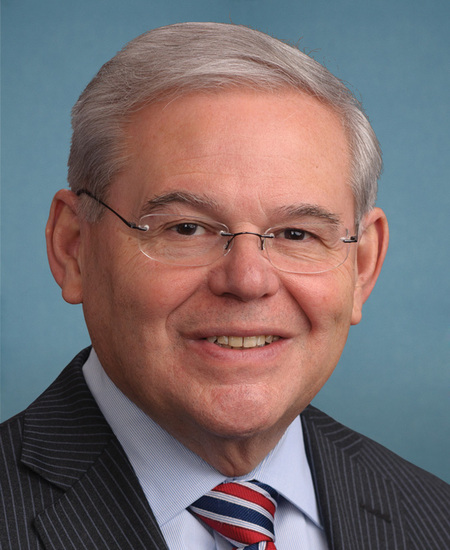
Rep. Robert Menendez
Sponsored bills
Maddy summaryHRES 407 is a symbolic House resolution designating May 10, 2025, as "National Asian American, Native Hawaiian, and Pacific Islander Mental Health Day." It directly recognizes the mental health disparities faced by AANHPI communities, including lower service utilization rates and higher youth suicide rates. The resolution encourages federal, state, and local health agencies to improve mental health awareness and access for these communities. It does not create new laws or funding but formally supports efforts to address cultural barriers in mental health care. The designation aligns with May's existing observances of AANHPI Heritage Month and Mental Health Awareness Month.
Maddy summaryHR 3368, the "Born in the USA Act of 2025," prohibits federal funding for Executive Order 14160 (which aimed to restrict birthright citizenship for children born in the U.S.). The bill directly affects federal agencies that might implement the executive order by blocking their use of funds for that purpose. Its key provision is a funding ban targeting the executive order and any similar future policies, without changing citizenship law. The bill does not alter birthright citizenship rights but prevents federal resources from being used to enforce the controversial executive order. It is a procedural measure focused on funding, not a substantive policy change to citizenship rules.
Maddy summaryHR 3367, the "Improving Training for School Food Service Workers Act of 2025," requires school food service workers in public schools to receive mandatory training during paid working hours. The bill mandates that training must be offered in-person when appropriate, include hands-on practice, and cost workers nothing. If training occurs outside regular hours, workers must be paid at their regular rate (including overtime), consulted about scheduling, and protected from penalties for not attending. This law amends the Child Nutrition Act of 1966 and does not override existing state or local labor laws governing employer-employee relationships.
Maddy summaryHRES 400 is a ceremonial resolution recognizing May as Asian American, Native Hawaiian, and Pacific Islander Heritage Month. It formally celebrates the historical contributions of these communities to U.S. history and society, as documented in the resolution’s preamble. The resolution does not create new laws, allocate funding, or change policies - it serves solely as a symbolic acknowledgment by the House of Representatives. It highlights the diversity of these communities and their ongoing impact, referencing their growth, cultural milestones, and historical challenges. This recognition aligns with the existing statutory designation of May for Heritage Month under U.S. Code.
Maddy summaryThis bill amends the Higher Education Act to clarify eligibility for Public Service Loan Forgiveness (PSLF). It corrects a technical wording error in the law that previously required borrowers to be *currently employed* in public service at the time of application. The change specifies that borrowers only need to have *completed* 10 years (120 payments) of qualifying public service employment to qualify. This directly affects federal student loan borrowers working in government or nonprofit roles who were previously disqualified due to the outdated wording. The amendment removes a barrier preventing eligible borrowers from receiving loan forgiveness they earned.
Maddy summaryHR 3243, the Therapeutic Fraud Prevention Act of 2025, bans the provision of paid conversion therapy aimed at changing a person's sexual orientation or gender identity, and prohibits advertising such therapy as effective, safe, or without risk. It directly affects LGBTQ+ individuals and their families who might be targeted by these practices, as professionals have determined conversion therapy is ineffective and harmful. The law treats violations as deceptive acts under consumer protection laws, empowering the Federal Trade Commission and state attorneys general to enforce it through civil actions. It explicitly excludes legitimate gender transition support and non-discriminatory counseling from the ban.
Maddy summaryHR 3184, the PFAS Alternatives Act, funds research to develop turnout gear (firefighter safety clothing) without harmful PFAS chemicals, directly affecting firefighters who wear this gear. It authorizes $25 million annually (2025-2029) for grants to eligible organizations to research and test PFAS-free gear, requiring partnerships with firefighting groups to translate findings into practice. The bill also allocates $2 million yearly (2027-2031) for training programs on safe gear use and decontamination. Its goal is to reduce firefighters' exposure to chemicals linked to occupational illnesses during operations.
Maddy summaryHRES 384 is a non-binding House resolution recognizing Cinco de Mayo's cultural and historical significance. It commemorates Mexico's 1862 victory at the Battle of Puebla against French forces, highlighting its role in Mexico's fight for independence and freedom. The resolution encourages U.S. citizens to observe Cinco de Mayo through ceremonies and activities, acknowledging its importance to Mexican and Mexican-American communities. As a ceremonial resolution, it has no legal effect or policy changes.
Maddy summaryHR 3196, the Improving Helicopter Safety Act of 2025, prohibits civil helicopter flights within a 20-mile radius of the Statue of Liberty National Monument, effective 60 days after enactment. This directly affects helicopter tour operators and commercial flight services near the monument, with exceptions for emergency response (law enforcement, medical services), infrastructure maintenance, and certain news/media flights. The bill requires the FAA to issue implementing regulations within 90 days to enforce the no-fly zone. The law aims to enhance safety and reduce disruptions in this high-traffic tourist area while allowing essential operations.