Cuban Family Reunification Parole Act of 2022 This bill directs the Department of State to restart processing applications under the Cuban Family Reunification Parole Program. (The program, which was suspended in 2017, allows eligible U.S. citizens and lawful permanent residents to apply for parole for family members in Cuba, who can then enter the United States while waiting for immigrant visas.) The State Department must prioritize applications filed before this bill's enactment and ensure that the adjudication of such applications begin no later than six months after this bill's enactment date.
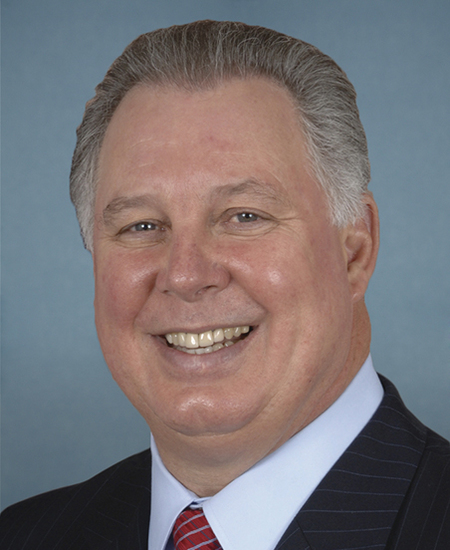
Rep. Albio Sires
Sponsored bills
Fire Sale Loophole Closing Act This bill imposes restrictions on the transfer of business inventory firearms by a firearms importer, manufacturer, or dealer whose license is revoked or denied. An individual who violates the restrictions is subject to criminal penalties—a fine, prison term of up to one year (or five years if the violation was willful), or both.
Protecting Immigrants From Legal Exploitation Act of 2021 This bill establishes that certain acts of immigration-related fraud shall be punished by fines, imprisonment, or both. The bill provides for such punishment for a person who knowingly or recklessly executes a scheme or artifice in a matter arising under immigration law to (1) defraud any person; or (2) obtain anything of value from any person through false pretenses, representations, or promises. A person who knowingly and falsely represents that such person is an attorney or accredited representative in any matter arising under immigration law shall be subject to such punishment. The Department of Justice (DOJ) may seek civil injunctions to stop an immigration service provider from further engaging in fraudulent conduct or willfully misrepresenting the provider's authority to provide representation in immigration matters. An alien who left the United States based on erroneous advice from a person engaged in immigration practitioner fraud or the unauthorized practice of law shall not be barred from reentering the country. An alien may withdraw an application for immigration benefits that was prepared or submitted by an individual engaging in immigration practitioner fraud or the unauthorized practice of law, if the alien had no prior knowledge of the individual's fraudulent or unauthorized status. The Department of Homeland Security (DHS), the Department of State, and DOJ shall develop procedures for allowing such an alien to submit corrected filings. DHS and DOJ shall establish a program to provide grants to eligible nonprofit organizations to provide direct legal services to aliens.
Customer Non-Discrimination Act This bill prohibits discrimination based on sex, sexual orientation, and gender identity with respect to public accommodations and facilities. Specifically, the bill defines and includes sex, sexual orientation, and gender identity among the prohibited categories of discrimination or segregation. The bill expands the definition of public accommodations to include places or establishments that provide (1) exhibitions, recreation, exercise, amusement, gatherings, or displays; (2) goods, services, or programs; and (3) transportation services. Protections against discrimination based on race, color, religion, sex, sexual orientation, gender identity, or national origin shall include protections against discrimination based on (1) an association with another person who is a member of such a protected class; or (2) a perception or belief, even if inaccurate, that an individual is a member of such a protected class. The bill prohibits the Religious Freedom Restoration Act of 1993 from providing a claim, defense, or basis for challenging such protections. The bill prohibits an individual from being denied access to a shared facility, including a restroom, a locker room, and a dressing room, that is in accordance with the individual's gender identity. The bill also prohibits the provision of less favorable treatment with respect to pregnancy, childbirth or related medical conditions as compared to other physical conditions.

Improving Diaper Affordability Act of 2021 This bill treats diapers as qualified medical expenses for purposes of certain health savings accounts and spending arrangements. The bill prohibits a state or local government from imposing a sales tax on the retail sale of diapers.
Disabled Access Credit Expansion Act of 2021 This bill modifies the tax credit allowed to eligible small businesses for expenditures to provide access to disabled individuals to increase (1) the maximum allowable amount of such credit to $20,500, and (2) the limitation on the gross receipts of such businesses to $2.5 million for purposes of determining eligibility for the credit. The bill directs the Department of Justice (DOD) to carry out an ADA (Americans with Disabilities Act) Mediation Program to facilitate voluntary mediation to resolve disputes arising under the ADA and to provide training for mediators. DOD must report to Congress on its ADA Information Line (a toll-free line to provide information and materials to the public about ADA requirements).
Daniel Anderl Judicial Security and Privacy Act of 2021 This bill generally prohibits federal agencies and private businesses from publicly posting the personally identifiable information (e.g., home addresses) of federal judges and their immediate family members. It also (1) requires information to be removed upon written request from the federal judge concerned, (2) prohibits data brokers from purchasing or selling such information, and (3) establishes programs to protect such information at the state and local level and to enhance security for judges.
Ending Homelessness Act of 2021 This bill expands the housing choice voucher program and provides assistance to homeless individuals and families. Specifically, the bill provides FY2022-2025 funding for the expansion of the housing choice voucher program for certain extremely low income families. Furthermore, beginning in FY2026, the bill creates and funds an entitlement to housing choice vouchers for certain extremely low income families. Eligibility for the entitlement expands annually, extending to low-income families by FY2030. The bill also reduces the geographic area used to calculate an area's fair market rent for purposes of voucher payment standards and prohibits the use of criminal history in determining eligibility for certain housing assistance. Additionally, the bill prohibits housing discrimination on the basis of a renter's source of income or a renter's veteran status. The bill also provides additional FY2022-FY2026 funding for the Department of Housing and Urban Development (HUD) to assist the homeless, including to award emergency relief grants in jurisdictions with the highest need and award grants to provide outreach and coordinate services. Furthermore, the bill provides additional FY2022-FY2026 funding for the Housing Trust Fund, which provides affordable housing for extremely low-income and very low-income families. While this additional funding is available, HUD must ensure that priority for occupancy in assisted units is given to individuals and families who are homeless. Finally, the bill permanently reauthorizes certain homeless assistance grants and makes permanent the U.S. Interagency Council on Homelessness.
Housing is Infrastructure Act of 2021 This bill generally addresses housing affordability and infrastructure. The bill authorizes the Department of Housing and Urban Development (HUD) to provide grants, programs, and other support related to public housing, affordable housing preservation and construction, and mortgage access. The bill also establishes and funds the National Investment Authority (NIA) which must design, finance, and implement a strategy of long-term national economic growth and development. The NIA must select projects that coordinate investment of public and private capital in equitable, inclusive, and sustainable growth of the economy. Furthermore, the bill establishes the National Infrastructure Bank (NIB) to implement the strategy by engaging in credit market activities that support public and private investment in critical public infrastructure projects. The bill gives the NIA bond issuing authority and authorizes the Board of Governors of the Federal Reserve System to purchase these bonds. The Federal Reserve must lend funds on a short-term basis upon the request of the NIB and other subsidiaries. Additionally, the Department of the Treasury must provide for a line of credit not to exceed 100% of the NIA's total assets. Finally, the bill (1) authorizes HUD to provide support for fair housing organizations, and (2) requires consultation with a fair housing enforcement organization as part of an application for certain housing grants or funds.
Fair and Equal Housing Act of 2021 This bill prohibits discrimination, in the context of various housing practices, against individuals based on their sexual orientation or gender identity.