

Family and Medical Insurance Leave Act or the FAMILY Act This bill entitles every employee to a family and medical leave insurance (FMLI) monthly benefit payment of two-thirds of the employee's regular pay, limited to a maximum of $4,000, for not more than 60 days of qualified caregiving. The bill establishes the Office of Paid Family and Medical Leave within the Social Security Administration to administer the FMLI program. An FMLI benefit payment must be coordinated with any periodic benefits received under a state or local temporary disability insurance or family leave program. The bill imposes a tax on employers, employees, and self-employed individuals to fund FMLI benefits. It also establishes the Federal Family and Medical Leave Insurance Trust Fund to hold tax revenues.
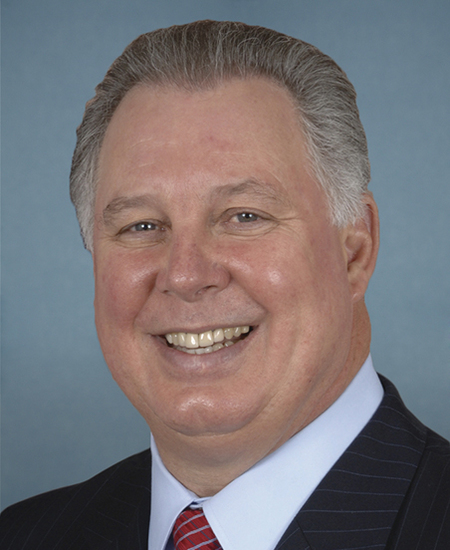
Rep. Albio Sires
Sponsored bills
Scientific Integrity Act This bill revises provisions regarding the release of scientific research results by federal agencies. Each agency that funds, conducts, or oversees scientific research must (1) adopt and enforce a scientific integrity policy that includes requirements such as that scientific conclusions are not based on political considerations, and (2) submit such policy to the Office of Science and Technology Policy (OSTP) for approval. Each agency must make such policy available to the public and submit such policy to Congress. Agencies and the OSTP must periodically review the policies. The Government Accountability Office shall review implementation of the policies. Each agency shall (1) appoint a Scientific Integrity Officer, (2) establish a process for dispute resolution consistent with the scientific integrity policy, and (3) establish a specified training program for current and new employees.
FEMA Climate Change Preparedness Act This bill requires the Federal Emergency Management Agency (FEMA) to (1) revise its 2018-2022 Strategic Plan to ensure that the plan explicitly mentions climate change and addresses the implications of climate change on homeland security and near- and long-term national disaster risk, and (2) ensure that future strategic plans do likewise. The Department of Homeland Security must establish, as a subcommittee of the National Advisory Council, the Climate Change Subcommittee, which shall advise FEMA on how to best incorporate climate change, including risk assessments and strategies for adaptation and mitigation, into and throughout FEMA's policies, plans, programs, and operations. FEMA must publish as a report, submit to specified congressional committees, and make available to Congress and the public, a comprehensive assessment of climate change risks and preparedness.
Air Traffic Noise and Pollution Expert Consensus Act of 20 21 This bill requires the Federal Aviation Administration to enter into an arrangement with the National Academies of Sciences, Engineering, and Medicine to examine and report on the various health impacts of air traffic noise and pollution.
Green Bus Act of 2021 This bill requires all buses purchased or leased with Federal Transit Administration funds to be zero-emission beginning on October 1, 2029. The Department of Transportation (DOT) must issue an annual best practices report on zero-emission bus programs to help states and transit agencies implement zero-emission bus fleets. DOT must give preference in awarding grants under the low or no emission program to transit agencies who have completed a full fleet transition plan. The federal share of the cost of any zero-emission bus purchased or leased in accordance with this bill shall be 90%.
Safe Scooters Act This bill requires the National Highway Traffic Safety Administration to conduct a study on the (1) behavior of individuals using electric scooters while under the influence of alcohol or drugs; (2) involvement of electric scooters in traffic accidents; and (3) effects on pedestrian, scooter user, and motorist safety resulting from the lack of laws governing the use of electric scooters and a lack of training on their safe operation.
Safe and Quiet Skies Act of 2021 This bill sets forth requirements for commercial air tour flights. Among other requirements, the bill prohibits tour flights within a half mile of military installations, national cemeteries, national wilderness areas, national parks, and national wildlife refuges; prohibits tour flights from operating at an altitude of less than 1,500 feet; requires tour flights over occupied areas (e.g., residential, commercial, and recreational areas) to be no louder than 55dbA; and allows states and localities to impose additional requirements that are stricter than the minimum federal requirements.
Rail Audit Transparency Act This bill requires the Federal Railroad Administration (FRA) to provide Congress with notice of when a comprehensive safety assessment is being conducted on an intercity or commuter rail transit agency. Specifically, the FRA must (1) provide notice within 10 days after it initiates an assessment to specified congressional committees and each Member of Congress who represents a state in which the service that is subject of the assessment is located, and (2) report the findings of the assessment within 90 days after completion to such committees and Members.
This resolution recognizes the contributions of frontline workers and other essential personnel and reaffirms the responsibility of Congress to meet the needs of those workers and the elderly during the COVID-19 (i.e., coronavirus disease 2019) pandemic.
Keep Our Promise to America's Children and Teachers Act or the Keep Our PACT Act This bill provides funding through FY2031 for grant programs operated by local educational agencies to provide supplementary educational and related services to low-achieving students and other students who attend elementary and secondary schools with relatively high concentrations of students from low-income families. Additionally, the bill permanently reauthorizes the grant program to assist states and outlying areas in providing special education and related services to children with disabilities.